
Supplementary Material I.
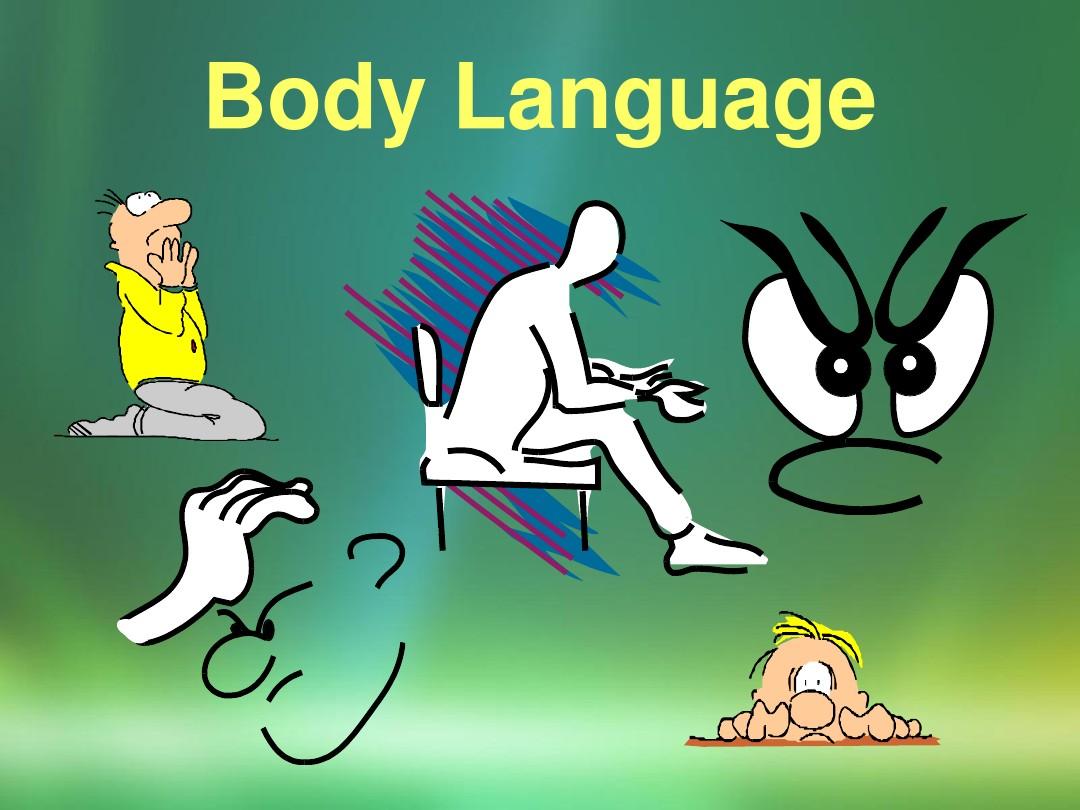
You are going to watch a video clip Secrets of Body Language, and then do the following exercises.
1. Please get familiar wtih the words given below and then choose the best answer to complete each of the statements.
Word Tips
betray v. 背叛;叛变 psychopath n. 精神病患者
glare n. 刺眼的强光;怒视 pitch n. 音高
poise n. 姿势;姿态 crook n. <口>骗子
dissect v. 仔细分析;细心研究
1) That a gesture can hide a lie implies ________.
A) seeing is believing
B) body language can betray us
C) body language functions a lot in social interaction
D) gestures are difficult to understand
2) Research has shown that ________ of human communication is verbal communication.
A) 93% B) 7% C) 63% D) 37%
3) ________ is/are NOT mentioned when the speaker talks about non-verbal communication.
A) The tone of voice B) Facial expressions
C) Glaring appearance D) Different gestures
2. Watch the video clip again and then fill in each blank with only one word.
Body language, as another way of communication, can say a lot (1) ________ the words. In this
special, experts will dissect the body, the voice and the face to (2) ________ its hidden meanings. In
daily interaction, even if we (3) ________ on every word, we cannot get all the message from a
speaker, for most of what he conveys is through (4) ________ communication. That is really a
fascinating world. When we (5) ________ our celebrities with our fresh eyes, we can find that the truth
leaks out through their body language although they make great efforts ot conceal that.
3. Watch the video the third time and get familiar with the following expressions from the video.
Useful Expressions:
hang on every word Beyond the words lies ......
Research has shown that ...... equip ... with ...
We put all the significance on ......
4. Now create a dialogue with a partner according to the following situation with the help of the useful expressions.
| Situation: A and B are talking about body language in different cultural contexts. |
Supplementary Material II.
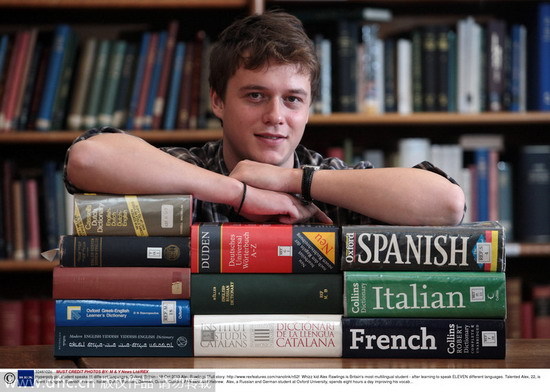
Watch a vedio of an open lecture on language to see how much you understand. While watching, take some notes. Then check your notes with the English subtitles.
https://www.bilibili.com/video/BV1Sx411N7Tz/?spm_id_from=333.788.videocard.5
Supplementary Material III.


Watch a TED talk How language shapes the way we think. Then tell others what you know from the talk.
https://www.bilibili.com/video/BV1N4411f7r5?from=search&seid=13674380170123734494
Supplementary Material IV.
 Learning a foreign language can be difficult, but if you follow certain techniques, soon you'll be able to learn any language. Although there's no easy way to go about it, with some hard work and practice, you can be fluent in no time.
Watch another TED talk Five Techniques to Speak any Language and write down the major points.
https://www.bilibili.com/video/BV1bb411t7Jt?from=search&seid=7929415316932052610

