
Supplementary Materials I - Weather Reports
Listen to two weather reports and choose the best answer to each of the following questions.
Report One
1. Which season does this weather report take place in?
A. Summer B. Spring C. Winter D. Fall
2. What kind of day is it?
A. An overcast day B. A mild day C. A chilly day D. A rainy day
3. What is the temperature?
A. Ten degrees B. Minus ten C. Fifteen below D. Plus fifteen
4. Tomorrow it will probably _______.
A. snow B. rain C. stay sunny D. be clear
5. What does the weather reporter suggest using?
A. A raincoat B. Sunglasses C. An umbrella D. The radio
Report Two
1. Which season would this weather report most likely take place in?
A. Summer B. Spring C. Winter D. Fall
2. Where is the weather report taking place?
A. In the newsroom B. At the weather office C. On Mount Raven D. In a ski chalet
3. Which of the following is mentioned as part of tomorrow's forecast?
A. A blizzard B. Heavy rain C. Light snow D. Mild temperatures
4. It will feel so cold tomorrow because of the ________.
A. humidity B. wind C. freezing rain D. coming winter
5. The weather reporter suggests that skiers should ________.
A. stay indoors B. beware of frost C. dress warmly D. go skiing
Supplementary Material II - Wind Power
New Words
hub n. (轮)毂 rod n. 杆;竿 rate v. 被认为;被评价为
withstand v. 耐受,承受(酷热、严寒、高压等
blade n. 桨叶;叶片状物 grid n. 输电网 silo n. 仓房
Jan Bolluyt 简●博勒特(人名) sulfur dioxide n. 二氧化硫
[Cultural Notes]
Spirit Lake: a small town in Iowa, U.S.A. It was founded in 1879. It was named after thelake to the north of the town which was called Minnewaukon or "Lake of the Spirit" in the language of the nativeAmerican Indians who originally lived there. 斯皮里特莱克

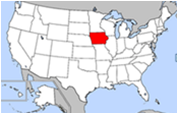
Iowa: a state in the Midwestern region of the U.S.A. It wassettled by Americans in the early 1830s, and officially became a state in 1846.The city of Des Moines is the state capital. 爱荷华(美国中西部州)
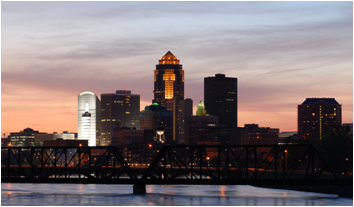
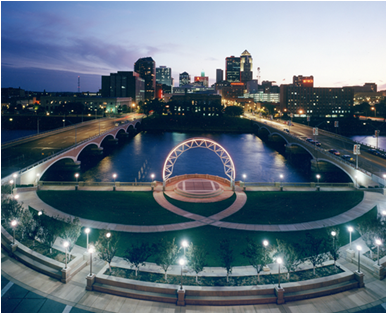
Des Moines: the capital of Iowa, U.S.A. From 1910 to 1920, Des Moines expanded rapidly aslocal coal deposits were developed. It is now the focus of Iowa’s most populous metropolitan area. 得梅因(美国爱荷华州首府)
Before Viewing
A | Prior Knowledge. Work with a partner and find the meaning of the following phrases. Then tell your partner what you know about each of these energy sources.
Kinds of renewable energy:
a. hydroelectric power b. solar power c. wind power d. biomass
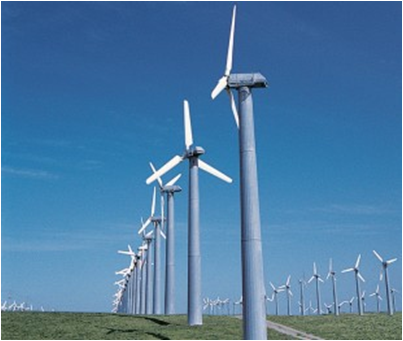
B | Look at the photo below and read the information. Then complete the passage with the words given.
< countryside; impressive; tornadoes; distributes; power grid; unpredictable >
A wind turbine consists of a hub, blades, and a foundation.
The Power of the Wind
Wind power is called "renewable energy" because we will never run out of wind. farmers in the (1) _______ used to take advantage of this fact. In many countries, each farm had its own windmill, which provided a small amount of power. Nowadays, large wind turbines are connected to the (2) _______ - the system that produces and (3) _______ electrical power over a large area.
Modern wind turbines are tall, (4) _______ structures. They have several blades that turn when the wind blows. The blades surround a hub, and the whole structure rests on a foundation at the bottom.
Besides being renewable, wind power does not pollute the atmosphere with carbon. On the other hand, the cost of building wind turbines is quite high, and the wind itself can be (5) _________. On some days there may be hardly any wind at all, and occasionally, (6) ________ may produce extremely high winds.
While Viewing
A. Read the statements and answer choices. Then watch the video and choose the correct word or phrase to complete each staement.
1. The wind turbines in the video were built by a _______.
a. power company b. city c. school
2. Altogether, _______ wind turbine(s) were bilt in the Spirit Lake school district.
a. one b. two c. three
3. Other wind turbines have been built on _______ in the area.
a. farms b. buildings c. oil fields
4. Students keep a record of _______ saved by using wind turbines ot proide power to the school.
a. biomass b. hydroelectric power c. fossil fuels
B. Note-Taking. Watch the video again and write down the nubers you hear.
1. This turbine stands __________ feet to the hub height.
2. The turbine is held in place by steel rods that go ________ feet down into a solid foundation.
3. It's rated to stand up to _________ -mile-an-hour winds.
4. Farmer Charles Goodman figures he'll make an extra _________ dollars a year...
5. These turbines provide enough energy to power a city like Des Moines. That's _________ homes!
After Viewing
Critical Thinking.

