Supplementary Material I
Words and expressions
taboo (n.): (宗教或社会习俗的)禁忌,忌讳
Tongan (a.): 汤加的
tribe (n.): 部落
gesture (n.): 手势;姿势
sacred (a.): 受崇敬的,神圣的
journalist (n.): 新闻工作者
oblige (v.): 迫使;使(某人)负有义务
curse (n.): 诅咒;骂人话
Proper names
James Cook 詹姆斯 . 库克(英国航海家和探险家)
Iran 伊朗(亚洲国家)
Middle East 中东(地中海与阿拉伯海之间的亚洲地区,包括土耳其、伊朗等国家)
George W. Bush 乔治 . W. 布什(美国前总统)
Thailand 泰国(亚洲国家)

A. What is a taboo? To know about some taboos in different cultures may help us have a better understanding of each other and reduce the risk of cultural misunderstanding when communicating. Now watch a video clip and check (√) the aspects of taboos mentioned in the video clip.
□ 1 body language
□ 2 topics to talk about
□ 3 personal space
□ 4 language
□ 5 table manners
□ 6 dressing
□ 7 housing decoration
□ 8 writing
□ 9 drinking
□ 10 festival celebration
B. Watch the video clip again and complete the following table with what you hear.
| Taboos or customs | Countries or areas |
| It's seen as impolite when pointing at anyone with your 1) ___________________. | most parts of Asia |
| A thumbs-up gesture is not accepted. |
|
| Pointing the bottom of your 2) _______________ at someone is seen as extreme rudeness, and could easily get you into trouble. |
|
| Putting your feet up on a chair, and certainly any place near where someone might put their head, is also seen as very 3) _____________. |
|
| Don't eat animals such as dogs. | Western countries |
| The sound of your mouth while eating noodles is a sign of how much you 5) ______________ the food. | Japan |
| It's polite to 6) _______________ your plate of food, even if you're not satistied with it. Leaving food might mean you don't like it, and it's also seen as being 7) ___________________. | many 8) ________________ countries |
| The hosts are obliged to fill the plate agin when the guests eat up what's offered. | some 9) ________________ countries |
| Filling in an official form 10) __________________, maybe even an arrival card, is seen as bad form and perhaps a very bad sign. | parts of Asia |
| Saying something 11) __________________ about someone's mother or father is a global taboo. | all over the world |
| A curse with a parent in it is seen as the 12) _____________ thing you could possibly say. | Russia |
C. You have learned some taboos around the world from the video clip. Work in groups and discuss the following questions.
Supplementary Material II
Words and Expressions
ethnic group (n.) 族群
ritual (a.) 作为仪式一部分的
rhythm (n.) 有规律的模式
deed (n.) 行为
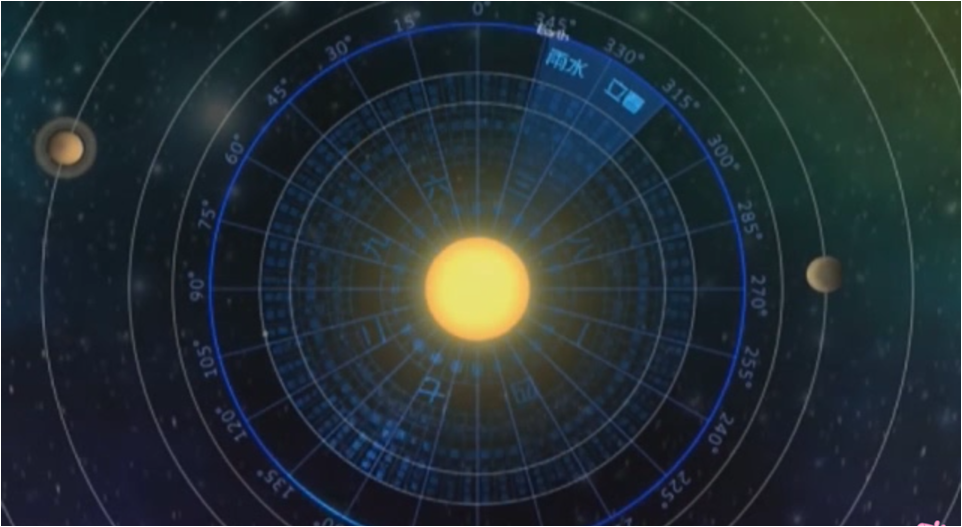
A. The Twenty-four Solar Terms (Jie Qi) is the wisdom of our ancestors and carries our cultural identity. Now watch a video clip and match each Jie Qi in Column A with people's activities in Column B.
Column A 1 Beginning of Summer 2 Fresh Green 3 Winter Solstice | Column B a. People go hiking and have outings, and remember their ancestors. b. Southerners eat glue puddings, while northerners eat dumplings. c. Banshan people hold traditional activities to keep fit such as eating black sticky rice and climbing mountains. |
B. Watch the video clip again and fill in the blanks with what you hear.
1 The Twenty-four Solar Terms is a ________________________ system through which the Chinese people attempt to understand the _____________________ and how they relate to the natural world.
2 This tradition has touched almost every _____________________ of Chinese people's lives. When a specific _________________ begins,people arrange farming and daily life according to that solar term's ____________________.
3 This thinking encourages Chinese ___________________ for the laws of nature and the rhythm of life. It also creates the ideal of social life featuring ____________________ with an emphasis on harmony.
C. Work in groups and discuss the following questions.

