-
1 课前
-
2 课中
-
3 课后

 Part B Container Transport
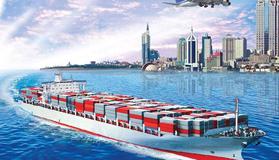
The containers have standardizeddimensions.They can be loaded and unloaded,stacked(堆放),transported efficiently over long distances,and transferred from one mode of transport to another without being opened.The handlingsystem is usually mechanized(机械化的) so that all handling is done with cranes(吊车)and special forklift trucks(叉车). All containers are numbered and tracked using computerized systems.
The container transport system is an element inglobalization. Containerization also reduces congestion in ports,significantly shortens shipping time and reduces losses from damage and theft.
Container Standards
There are five common standard lengths : 20ft(6.1m), 40ft(12.2m),45ft(13.7m), 48ft (14.6m) and 53ft(16.2m).Container capacity is often expressed in twenty-foot equivalent units(TEU). (FEU=Forty-foot Equivalent Unit) An equivalent (等价的,相等的)unit is a measure (尺寸)of containerized cargocapacity equal to one standard 20ft(length)*8ft(width) container.The maximum gross mass(总重) for a 20ft(6.1m)dry cargo container isnormally 24000kg, and for a 40-ftcontainer [including the 2.87m(9ft 6in) high cube高柜]it is 30480kg.
ISO(International StandardizedOrganization) standardcontainers are intended for intercontinental(洲际间的) traffic, ISO 668:2013 establishes a classification(分类;类别,等级)of series 1 (系列1)freight containersbased on external(外部的)dimensions, and specifies the associated ratings(评级;等级)and , whereappropriate, the minimum internal(内部的) and door opening (开门)dimensions for certain types of containers.(asof Fri 1-2)
Types of ContainerLoading
Full Container Load (FCL)整箱货
Full container load (FCL)is loadedand unloaded under the risk and account (账户)of one shipper and only one consignee.In practice, it means that the whole container is intended for oneconsignee. FCL isintended to designate a container loaded to its allowable(可允许的) maximum weight or volume(体积), but FCL in practice on ocean freight does notalways mean a full payload (载重量)or capacity(装载能力).
Less-than-container Load (LCL)拼箱货
Less-than-container load (LCL) is a shipmentthat is not large enough to fill a standard cargo container.LCL can also be defined as a consignment(托运物) of cargo which is inefficient to fill ashipping container. Itis grouped with(与…拼装) other consignments in a container at acontainer freight station(CFS).
Documents of Container Transport
The unique(独特的) documents of containertransport are as follows:
Equipment Interchange Receipt (EIR,设备交接单)
Equipment Interchange Receipt(EIR) contains information regarding thecondition (physical物理性的 and functional功能性的)of a container. It is given by the containeroperator (集装箱经营人)tothe container user用箱人(e.g.shipper).
COC=Carrier’sown container
SOC=Shipper’s own container
LOC=Leaser’sown container
Container Load Plan(集装箱装箱单,LCL)vs. packing list(FCL)
Container Load Plan (CLP)is a list of goods tobe loaded into a shipping container, which often includes the order (顺序)inwhich the items (商品,货品)should be loaded.//
Dock Receipt (码头/场站收据)vs. Mate’s Receipt 大副收据
DockReceipt (D/R)is a legal document verifying that a carrier has received a shipment ata dock. On the dockreceipt, an authorized representative notes(记录) the arrival of the shipment and providesinformation about what was received at the dock.