汽车专业英语

孙丽莎

目录

  • 1 课程介绍
    • 1.1 课程介绍
  • 2 课件
    • 2.1 课件
    • 2.2 复习题
  • 3 汽车类型
    • 3.1 汽车类型
    • 3.2 课堂测试:阅读理解
    • 3.3 课堂测试——听录音,补全段落
  • 4 汽车商标
    • 4.1 汽车商标
  • 5 汽车公司
    • 5.1 一汽简介
    • 5.2 福特公司简介
    • 5.3 大众公司简介
    • 5.4 丰田公司简介
    • 5.5 汽车公司复习
    • 5.6 吉利公司简介
    • 5.7 课堂测试2
    • 5.8 从德国大众汽车文化看工匠精神
  • 6 汽车构造
    • 6.1 汽车总体构造
    • 6.2 课堂测试——听录音补全段落
  • 7 汽车构造2
    • 7.1 汽车构造1-2
    • 7.2 汽车构造3-4
  • 8 发动机
    • 8.1 发动机类型
    • 8.2 发动机构成1
    • 8.3 发动机构成2
    • 8.4 发动机工作原理
  • 9 发动机复习
    • 9.1 发动机复习
    • 9.2 课堂测试1
  • 10 两大机构
    • 10.1 曲柄连杆机构
    • 10.2 配气机构
    • 10.3 模拟气门检修实训
  • 11 润滑系统
    • 11.1 发动机润滑系统
  • 12 冷却系统
    • 12.1 发动机冷却系统
    • 12.2 课堂测试
  • 13 燃油供给系统
    • 13.1 发动机燃油供给系统
    • 13.2 课堂测试
  • 14 点火系
    • 14.1 发动机传统点火系1
    • 14.2 发动机电子点火系2
    • 14.3 课堂测试
  • 15 起动系
    • 15.1 发动机起动系
    • 15.2 课堂测试
  • 16 五大系统复习
    • 16.1 五大系统复习
    • 16.2 课堂测试2
  • 17 发动机2
    • 17.1 发动机基础1-2
    • 17.2 发动机基础3-4
    • 17.3 两机构五系统1-2
    • 17.4 两机构五系统3-4
    • 17.5 机体组1-2
    • 17.6 机体组3-4
  • 18 传动系
    • 18.1 传动系(1)
    • 18.2 传动系(2)
    • 18.3 传动系(3)
    • 18.4 课堂测试
  • 19 制动系
    • 19.1 制动系
  • 20 传动系+制动系复习
    • 20.1 传动系复习
    • 20.2 制动系复习
  • 21 底盘
    • 21.1 底盘构造
    • 21.2 传动系1-2
    • 21.3 传动系3-4
    • 21.4 行驶系1-2
    • 21.5 行驶系3-4
    • 21.6 转向系1-2
    • 21.7 转向系3-4
    • 21.8 制动系1-2
    • 21.9 制动系3-4
  • 22 车身
    • 22.1 车身1-2
    • 22.2 车身3-4
  • 23 电气系统
    • 23.1 电气系统1-2
    • 23.2 电气系统3-4
  • 24 新能源汽车
    • 24.1 新能源汽车1-2
    • 24.2 新能源汽车3-4
  • 25 汽车维护
    • 25.1 汽车维护1-2
    • 25.2 汽车维护3-4
  • 26 汽车商务接待
    • 26.1 汽车商务接待1-2
    • 26.2 汽车商务接待3-4
  • 27 番外篇
    • 27.1 疫情相关英语(一)
    • 27.2 疫情相关英语(二)
    • 27.3 疫情相关英语(三)
    • 27.4 课堂测试
  • 28 自我介绍
    • 28.1 老师与同学自我介绍
  • 29 复习+考试
    • 29.1 期中复习+考试
      • 29.1.1 期中复习
      • 29.1.2 期中考试
      • 29.1.3 期中考试讲解
      • 29.1.4 课堂测试
    • 29.2 期末复习+考试
      • 29.2.1 期末复习题
      • 29.2.2 期末复习题答案
      • 29.2.3 期末考试
  • 30 特斯拉汽车专业英语
    • 30.1 模拟测试
    • 30.2 模拟测试(刷题用)
    • 30.3 课件
  • 31 21汽检G班期末复习
    • 31.1 期末复习
机体组1-2

【Listening】


【Vocabulary & Phrases

【Reading】


BlockGroup

1. Engine Block

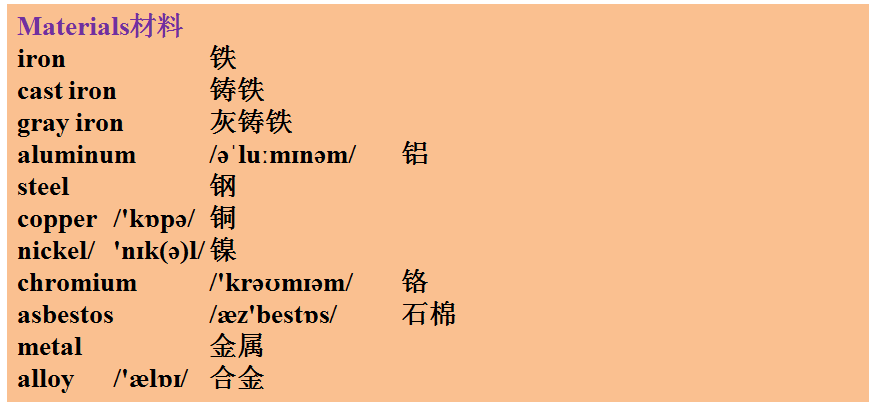
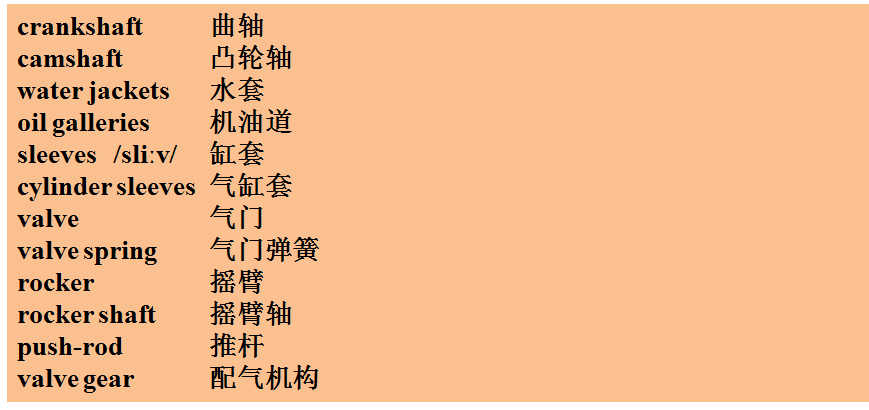
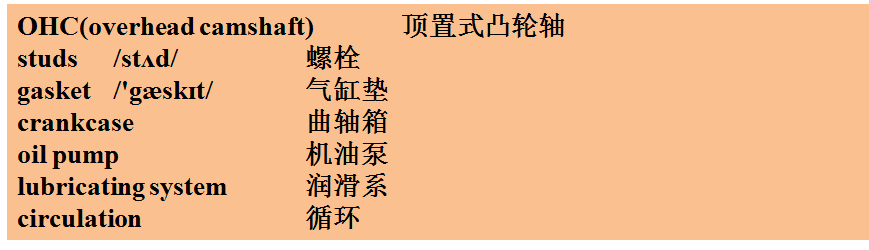
The engine block is the basic frame of the engine. All other engine parts eitherfit inside it fasten to it. It holds the cylinders, water jackets, and oil galleries.The engine block also holds the crankshaft, which fastens to the bottom of theblock. The camshaft also fits inside the block, except on overhead-cam engines(OHC). In most cars, this block is made of gray iron, or an alloy (mixture) ofgray iron and other metals, such as nickel or chromium. Engine blocks arecasting.

Someengine blocks, especially those in smaller cars, are made of cast aluminum.This metal is much lighter than iron. However, iron wears better than aluminum.Therefore, the cylinders in most aluminum engines are lined with iron or steelsleeves. These sleeves are called cylinder sleeves. Some engine blocks are madeentirely of aluminum.

2. Cylinder head

The cylinder head fastens to the top of the block, just as a roof fits over a house.The underside forms the combustion chamber with the top of the piston. The mostcommon cylinder head types are the hemi, wedge, and semi-hemi. All three ofthese terms refer to the shape of the engine's combustion chamber. The cylinderhead carries the valves, valve springs and the rockers on the rocker shaft,this part of the valve gear being worked by the push-rods. Sometimes thecamshaft is fitted directly into the cylinder head and operates on the valveswithout rockers. This is called an overhead camshaft arrangement. Like thecylinder block, the head is made from either cast iron or aluminum alloy.

【Speaking】

Role play the dialogue with your partner!


【随堂测试】