
Anne Bradstreet (1612-1672)
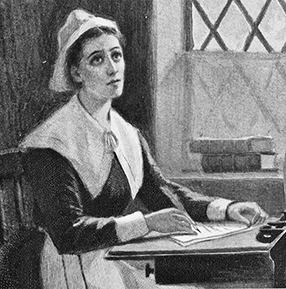
Anne Bradstreet
Poet, Writer, Early American Literary Figure
Born: March 20, 1612, in Northampton, England
Died: September 16, 1672, in Andover, Massachusetts Bay Colony
Nationality: English-American
Education: Largely self-educated; well-read in literature, history, and theology, thanks to her father's extensive library.
Career Highlights:
1630: Emigrated to the Massachusetts Bay Colony with her family and husband, Simon Bradstreet, as part of the Puritan migration.
1650: Her first collection of poems, The Tenth Muse Lately Sprung Up in America, was published in London without her knowledge, making her the first published poet in the American colonies.
1678: A posthumous edition of her works, Several Poems Compiled with Great Variety of Wit and Learning, was published, including revised versions of her earlier poems and new material.
Key Contributions:
Pioneered American literature as the first published poet in the colonies.
Her poetry explored themes of faith, family, nature, and the struggles of colonial life, blending personal reflection with Puritan theology.
Notable works include "To My Dear and Loving Husband," "Upon the Burning of Our House," and "The Prologue," which challenged gender norms of the time.
Legacy:
Recognized as a foundational figure in American literature and one of the earliest female voices in the English-speaking world.
Her work provides insight into the experiences and perspectives of Puritan women in colonial America.
Celebrated for her ability to balance religious devotion with personal expression and intellectual curiosity.
Personal Life:
Married to Simon Bradstreet in 1628; they had eight children.
Faced numerous hardships, including illness, the loss of her home to fire, and the challenges of frontier life.
Despite her domestic responsibilities, she found time to write and reflect, often sharing her work with family and close friends.
Quotable:
"If ever two were one, then surely we. If ever man were loved by wife, then thee."
(From "To My Dear and Loving Husband")
Anne Bradstreet's poetry remains a testament to her resilience, intellect, and artistry, offering a unique window into the early colonial experience and the inner life of a remarkable woman.
To My Dear and Loving Husband
If ever two were one, then surely we.
If ever man were loved by wife, then thee;
If ever wife was happy in a man,
Compare with me ye women if you can.
I prize thy love more than whole mines of gold,
Or all the riches that the East doth hold.
My love is such that rivers cannot quench,
Nor ought but love from thee give recompense.
Thy love is such I can no way repay;
The heavens reward thee manifold, I pray.
Then while we live, in love let’s so persever,
That when we live no more we may live ever.

