Overview
Native American traditions are rich and varied. There are over five hundred Native American languages, each one as different as English is from Arabic and as Arabic is from Swahili. Each Indian nation has its own myths, its own histories, its own personal stories. As Native American author N. Scott Momaday writes, “The voices are all around us, the three voices. You have the mythic and the historical and the personal and then they become a wheel, they revolve, they alternate. … Myth becomes history becomes memoir becomes myth.” What unites these Native American cultures? What does it mean to study American Indian literature? To answer these questions is to begin to consider what it means to be American and Native American simultaneously.
The definition of Native American literature is closely tied to what people think constitutes the essence of Native American identity. Three views stand out in this highly contested debate: those of legal bloodlines, cultural traditions, and bicultural production. As literary critic Kenneth Lincoln notes, one “working definition of ‘Indian,’ though criteria vary from region to region, is minimally a quarter blood and tribal membership”; Native American literature, then, would be those works written by someone who legally is Native American, regardless of their content or style. A second perspective links Native American identity and literature with the preservation of cultural traditions. Literary critics who rely on this view focus on aspects of “traditional” Indian culture in contemporary American Indian literature, such as the continuance of oral traditions. A third trend in Native American studies defines American Indian identity and literature not in terms of what it preserves (whether it be blood or culture), but rather as a bicultural mixture of Native and European American people and traditions. Some Native Americans have argued that since their indigenous cultures have always assimilated aspects of other cultures (including those of other American Indians), to be Indian is to be bicultural, or multicultural.
Many American Indians define themselves not primarily as “Native Americans” but as members of a specific tribe. It is important as you read the authors in this unit to remember that what you know about the Navajo and their religious traditions probably will not apply to the Chippewa, a people geographically, linguistically, and culturally separate from them. Some scholars have suggested, however, that Native American communities within a particular geographic region tend to be culturally more homologous because they are often from the same language family and because cultures are often shaped by the landscapes out of which they emerge. There are several key regions in Native American studies: the Southwest, Plains, California, Midwest, Northeast, Northwest, South, and Southwest. The video focuses on the Southwest; however, in the unit you will find information about the other regions. You will also find a balance between information that is specific to the tribe of each author and information about qualities that are shared among American Indian peoples.
Oral traditions vary by region and tribe, and scholars have tended to examine the influence of the American Indian oral tradition upon contemporary American Indian written literature in two ways: (1) the content and (2) the style. When people explore how the content of the American Indian oral tradition has influenced contemporary literature, they usually turn to the stories and songs of American Indian peoples. These stories tend to focus on particular characters and to include standard events and elements. Some of the most common tale-types include gambler, trickster, creation, abduction, and migration legends. Contemporary authors can use these tale-types in their works: for example, Leslie Marmon Silko’s Ceremony retells Yellow Woman stories—a Pueblo Abduction Cycle. In addition to looking at the content of the stories, scholars have looked at the style of contemporary American Indian literature to examine the influence of the oral tradition. Oral style has been characterized as empathetic, participatory, situational, and reliant on repetition. In the oral tradition, repetition is crucial both for ceremonial reasons and because it aids in the process of memorization and provides narrative cohesion. To repeat words is also to wield a certain power. Perhaps most importantly, the oral tradition is tied to the land: as author and critic Greg Sarris explains, “The landscape becomes the bible and each stone, each mountain, each set of trees or a river, or a section of the river becomes a text, because they become a way of remembering stories, and stories associated with that place.”
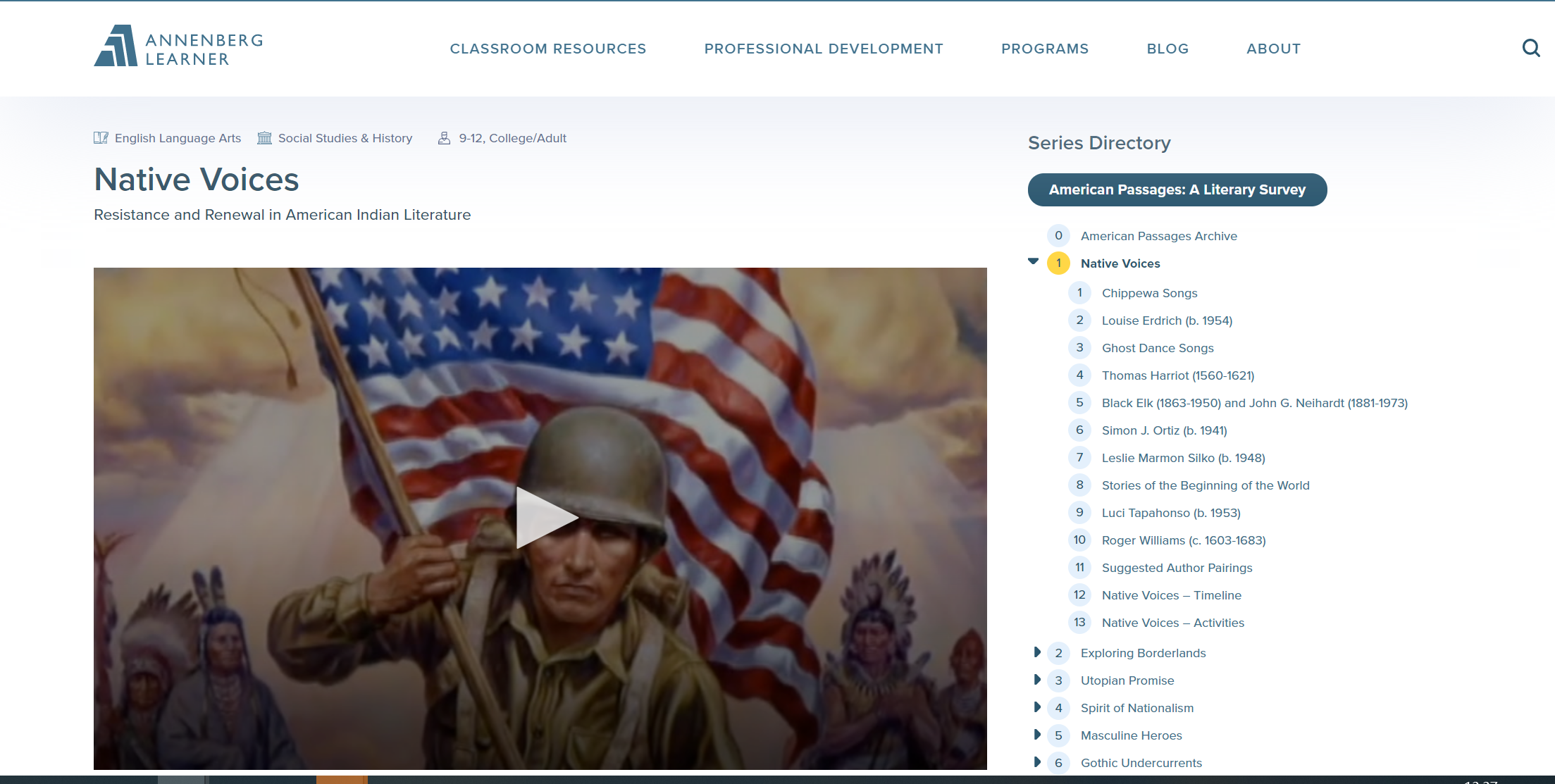
from Native Voices - Annenberg Learner
for a video course on native voices in American literature, please watch the 28-minute video course at American Passage followed by transcritions, glossary and selected bibliography.
Question: According to the passage, which of the following is NOT a key factor in defining Native American identity and literature?
A. Legal bloodlines and tribal membership
B. Preservation of cultural traditions
C. Bicultural mixture of Native and European American traditions
D. Geographic location of the tribe