
Text C The Lost Generation
Directions: Go through Text C quickly, and find answers to the following questions.
1. Which city is the center for the lost generation?
A. Paris B. New York
C. London D. Hollywood
2. Which of the following is NOT the best-known literary artist concerning the Lost Generation?
A. F. Scott Fitzgerald B. Ernest Hemingway
C. John Dos Passos D. Sherwood Anderson
3. Which of the following statements is NOT proper?
A. Hemingway was the Lost Generation’s leader in the adaptation of the naturalistic technique.
B. Hemingway volunteered to fight with the Italians in World War II.
C. During the war, Hemingway was injured, but he saved one person's life.
D. Hemingway got some inspirations from his experience in the war.
4. Which of the following is NOT written by F. Scott Fitzgerald?
A. This Side of Paradise B. The Great Gatsby
C. Tender is the Night D. Manhattan Transfer
1. Seeking the bohemian lifestyle and rejecting the values of American materialism, a number of intellectuals, poets, artists and writers fled to France in the post World War I years. Paris was the center of it all.
2. American poet Gertrude Stein actually coined the expression “lost generation.” Speaking to Ernest Hemingway, she said, “You are all a lost generation.” The term stuck and the mystique surrounding these individuals continues to fascinate us.
3. Full of youthful idealism, these individuals sought the meaning of life, drank excessively, had love affairs and created some of the finest American literature to date.
4. There were many literary artists 1 involved in the groups known as the Lost Generation. The three best known are F. Scott Fitzgerald, Ernest Hemingway and John Dos Passos. Others usually included Sherwood Anderson, Kay Boyle, Hart Crane, Ford Maddox Ford and Zelda Fitzgerald.
5. Ernest Hemingway was the Lost Generation’s leader in the adaptation of the naturalistic technique in the novel. Hemingway volunteered to fight with the Italians in World War 1 and his Midwestern American ignorance was shattered during the resounding defeat of the Italians by the Central Powers at Caporetto. Newspapers of the time reported Hemingway, with dozens of pieces of shrapnel in his legs, had heroically carried another man out. That episode even made the newsreels in America. These wartime experiences laid the groundwork of his novel, A Farewell to Arms (1929). Another of his books, The Sun Also Rises (1926) was a naturalistic and shocking expression of post-war disillusionment .
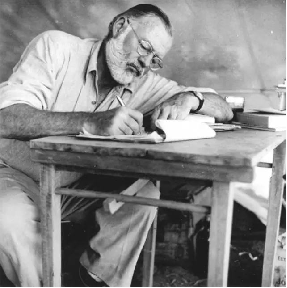
The world breaks everyone, and afterward, many are stronger at the broken places.
——Ernest Hemingway (l899~1961),《A Farewell to Arms》 生活总是让我们遍体鳞伤,但到后来,那些受伤的地方会变得更坚强。
——《永别了武器》
A man can be destroyed but not defeated.
——《The old man and the sea》
一个人可以被毁灭,但不能被打败。——《老人与海》
6. John Dos Passos had also seen the brutality of the war and questioned the meaning of contemporary life. ,His novel Manhattan Transfer reveals the extent of his pessimism as he indicated the hopeless futility of life in an American city.
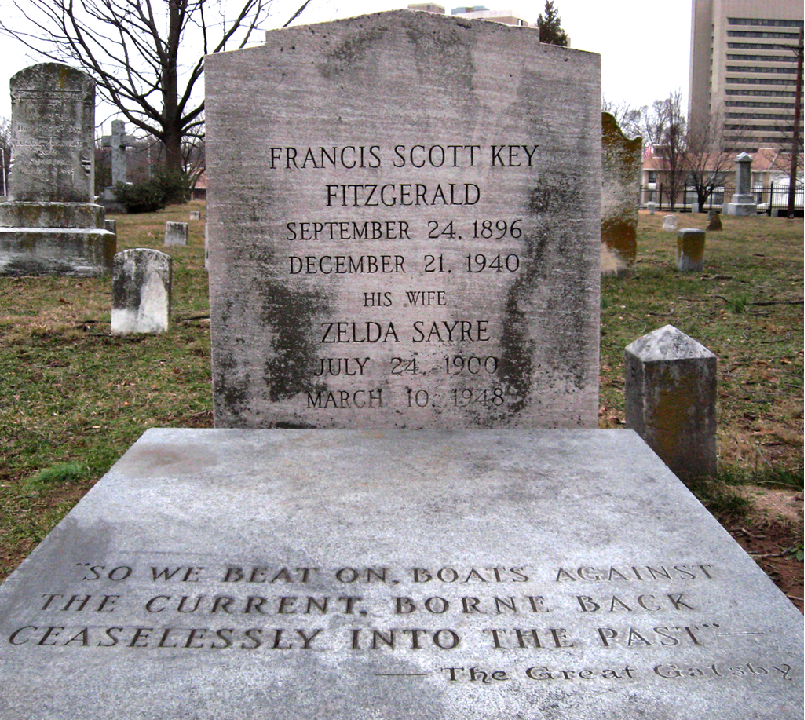
7. F. Scott Fitzgerald is remembered as the portrayer of the spirit of the Jazz age. Though not strictly speaking an expatriate, he roamed Europe and visited North Africa, but returned to the U. s. occasionally. Fitzgerald had at least two addresses in Paris between 1928 and 1930. He fulfilled the role of chronicler of the prohibition era.
8. His first novel, This Side of Paradise became a best-seller. But when first published, The Great Gatsby, on the other hand, sold only 25, 000 copies. The free spirited Fitzgerald blew the publisher's advance money leasing a villa in Cannes. In the end, he owed his publishers, Scribers, money. Fitzgerald's Gatsby is the story of a somewhat refined and wealthy bootlegger whose morality is contrasted with the hypocritical attitude of most of his acquaintances. Many literary critics consider Gatsby his best work.
9. The impact of the war on the group of writers in the Lost Generation is aptly demonstrated by a passage from Fitzgerald's Tender is the Night (1933):
“This land here cost twenty lives a foot that summer… See that little stream we could walk to it in two minutes. It took the British a month to walk it -- a whole empire walking very slowly, dying in front and pushing forward behind. And another empire walked very slowly backward a few inches a day, leaving the dead like a million bloody rugs. No Europeans will ever do that again in this generation."
10. The Lost Generation writers all gained prominence in 20th century literature. Their innovations challenged assumptions about writing and expression, and paved the way for subsequent generations of writers.
Questions for Discussion or Reflection
1. Who coined the expression “the Lost Generation”? What is your understanding of “the Lost Generation”?
2. Scott Fitzgerald is remembered as the portrayer of the spirit of the Jazz age. Have you ever read Fitzgerald's novel The Great Gatsby? What's your comment on Gatsby and his life?
3. What else do you know about the Lost Generation writers?
Proper Names
F. Scott Fitzgerald 弗朗西斯·斯科特·菲茨杰拉德
Hedonism 享乐主义
Henry Ford 亨利·福特
Prohibition 禁酒令
Puritanical Conservatism 清教徒的保守主义
the Great Depression 经济大萧条
the Lost Generation 迷失的一代(
the Panama Canal 巴拿马运河
the Roaring Twenties 喧嚣的20年代
the Treaty of Versailles 《凡尔赛条约〉
Notes
1. F. Scott Fitzgerald (1896-1940): He was American writer who epitomized the Jazz Age.
His best- known novels are The Great Gatsby (1925) and Tender Is the Night (1934).
2. Hedonism: It is a philosophy that pleasure is of ultimate importance. This is often used
as a justification for evaluating actions in terms of how much pleasure and how little pain they produce. In very simple terms, a hedonist strives to maximize this net pleasure.
3. The Jazz Age: It was the period from 1918 -1929, the years between the end of World
War I and the start of the Roaring Twenties, ending with the rise of the Great Depression. The traditional values of this age saw great decline while the American stock market soared. The focus of the elements of this age, in some contrast with the Roaring Twenties, in historical and cultural studies, is somewhat different, with a greater emphasis on all Modernism. The age took its name from jazz music, which saw a tremendous surge in popularity among many segments of society. Among the prominent concerns and trends of the period was the public embraces of technological developments cars, air travel and the telephone as well as new modernist trends in social behavior, the arts, and culture. Central developments included Art Deco design and architecture.
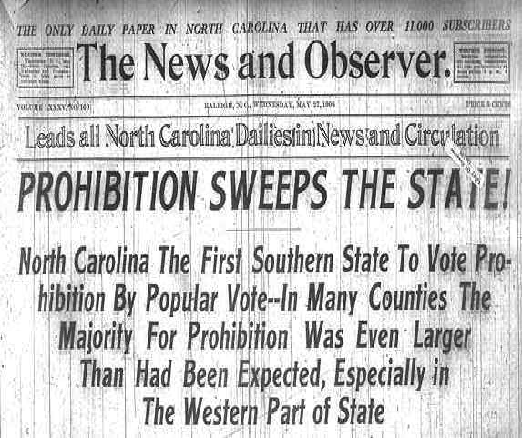
4. Prohibition: It was a sumptuary law which prohibits alcohol. Typically, the
manufacture, transportation, import, export, and sale of alcoholic beverages were restricted or illegal. In the history of the United States, Prohibition is the period from1920 to 1933,during which the sale, manufacture, and transportation of alcohol for consumption were banned nationally as mandated in the Eighteenth Amendment to the United States Constitution.
5. The Treaty of Versailles: The Treaty of Versailles was signed on June 28, 1919, in the
Hall of Mirrors at the Palace of Versailles, outside of Paris. The main points of the treaty were reparations and disarmament of Germany, Some historians point out that the treaty was more about punishing Germany than preventing another war.
6. Henry Ford: Ford was the founder of the Ford Motor Company and father of modern
assembly lines used in mass production. His introduction of the Model T automobile revolutionized transportation and American industry. He was a prolific inventor and was awarded 161 U. S. patents. As owner of the Ford Company, he became one of the richest and best-known people in the world.
7. The Sinking of Titanic: On the night of 14 April 1912, during her maiden voyage, Titanic hit an iceberg. It sank two hours and forty minutes later, early on 15 April1912. The sinking resulted in the deaths of 1,517 people, making it one of the most deadly peacetime maritime disasters in history. The Titanic used some of the most, advanced technology available at the. time and was, after the sinking, popularly believed to have been described as“unsinkable" .
For Fun
Works to Read
1. F. Scott Fitzgerald, The Great Gatsby
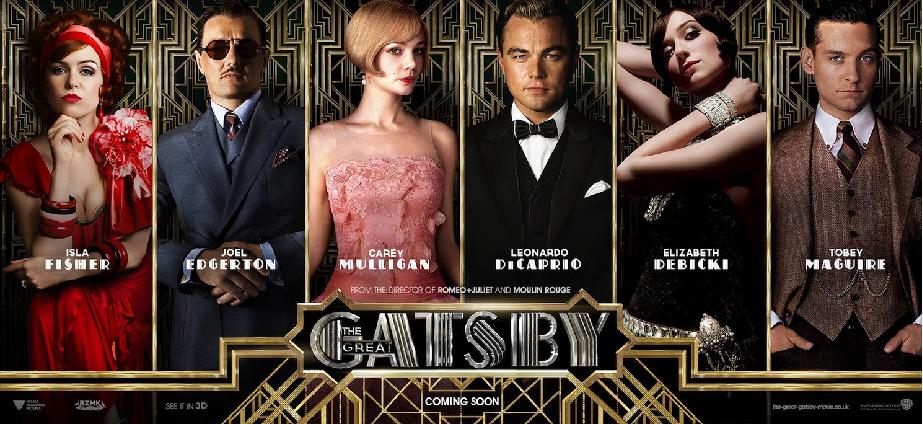
The Great Gatsby symbolizes an era. It is both an indictment and a glorification of the “Jazz Age”,and proves the most enduring novel to come out of America in the inter-war periods. Jay Gatsby, the hero of the story, represents all that is glorious and tarnished about the“Roaring Twenties". It was an age before the Great Depression when the economy was booming and conspicuous consumption was the order of the day.
2. Ernest Hemingway, A Farewell to Arms
A Farewell to Arms is a semi-autobiographical novel. Much of the novel was written at the home of Hemingway's in-laws in Piggott, Arkansas. The novel is told through the point of view of Lieutenant Frederic Henry, an American serving as an ambulance driver in the Italian army during World War I. The title is taken from a poem by a 16th century English dramatist George Peele.

