Read More
Text B Industrialization
Transcontinental Railroads
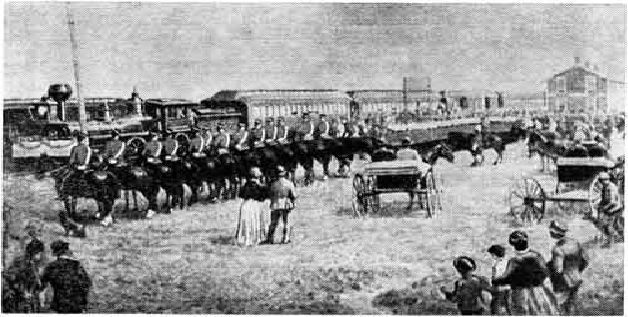
Gilded Age industrialization had its roots in the Civil War, which spurred Congress and the northern states to build more railroads and increased demand for a variety of manufactured goods. The forward-looking Congress of 1862 authorized construction of the first transcontinental railroad, connecting the Pacific and Atlantic lines. Originally because railroading was such an expensive enterprise at the time, the federal government provided subsidies by the mile to railroad companies in exchange for discounted rates. Congress also provided federal land grants(土地补助) to railroad companies so that they could lay down more track.
With this free land and tens of thousands of dollars per mile in subsidies, railroading became a highly profitable business venture. The Union Pacific Railroad company began construction on the transcontinental line in Nebraska during the Civil War and pushed westward, while Leland Stanford’s Central Pacific Railroad pushed eastward from Sacramento. Tens of thousands of Irish and Chinese laborers laid the track, and the two track lines finally met near Promontory, Utah, in 1869.

Route of the first Transcontinental Railroad.
(red) The Central Pacific laid track from Sacramento to Promontory Summit,
and the Union Pacific (blue) laid track from Omaha.
Captains of Industry
Big businessmen, not politicians, controlled the new industrialized America of the Gilded Age. Whereas past generations sent their best men into public service, in the last decades of the 1800s, young men were attracted by the private sector, where with a little persistence, hard work, and ruthlessness, one could get enormous profits. These so-called “captains of industry” were not regulated by the government and did whatever they could to make as much money as possible. These industrialists’ business practices were sometimes so immoral that they were given the name “robber barons.”
Rockefeller and Standard Oil
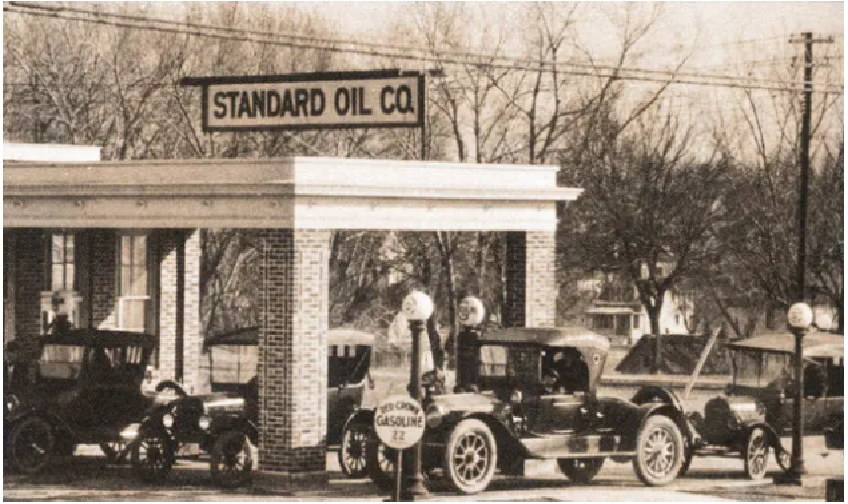
Oil was another lucrative business during the Gilded Age. Although there was very little need for oil prior to the Civil War, demand surged(激增) during the machine age of the1880s, 1890s,and early 1900s. Seemingly everything required oil during this era: factory machines, ships, and, later, automobiles.
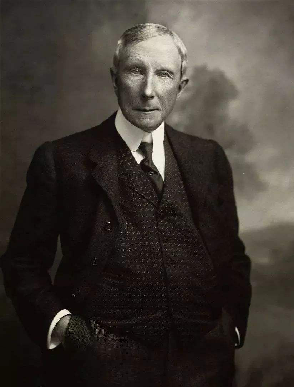
The biggest names in the oil industry were John D. Rockefeller and his Standard Oil Company --- in fact, they were the only names inthe industry. Whereas a Carnegie employed vertical integration to create his steel empire, Rockefeller used horizontal integration, essentially buying out all the other oil companies so that he had no competition left. In doing so, Rockefeller created one of America's first monopolies, or trusts, that cornered the market of a single product.
Regulating Big Business
Without any form of government regulation, big business owners were able to create monopolies -- companies that control all aspects of production for certain products. Economists agree that monopolies are rarely good for the market, as they often stifle(扼杀) competition, inflate prices, and hurt consumers.
In the late 1880s and early 1890s, the U. S. government stepped in and tried to start regulating the growing number of monopolies. In 1887,Congress passed the Interstate Commerce Act, which outlawed railroad discounts and kickbacks (回扣)and also established the Interstate Commerce Commission to ensure that the railroad companies obeyed the new laws.
Questions for Discussion or Reflection
1. What did the government do to encourage the building of railroads?
2. What can we infer from the name “robber barons" about the so-called “captains of industry"?
3. What did Rockefeller do in order to avoid competition?
4. Why did the U. S. government start to regulate the monopolies?

