目录

  • 1 Unit 1 The Age of Exploration
    • 1.1 Text A    Early Exploration  and Settlements
    • 1.2 Text B Columbus's Discovery of America
    • 1.3 Text C Spanish Discovery of the New World
    • 1.4 Text D The Legacy of the Puritans
    • 1.5 Text E The Thanksgiving Story
  • 2 Unit 2 The Colonial America
    • 2.1 Text A The Original 13 Colonies
    • 2.2 Text B Colonial Life of the Early Settlers
    • 2.3 Text C Slavery in Colonial America
  • 3 Unit 3 The Road to Independence
    • 3.1 Text A The War of Indepence
    • 3.2 Text B The American Revolution
    • 3.3 Text C Causes of the American Revolution
  • 4 Unit 4 The Young Republic
    • 4.1 Text A The Creation of a National Government
    • 4.2 Text B Benjamin Franklin
    • 4.3 Text C The Essence of the Constitution
  • 5 Unit 5 The Westward Movement
    • 5.1 Text A The Frontier of the American West
    • 5.2 Text B The Donner Party
    • 5.3 Text C Louisiana Purchase
  • 6 Unit 6 The Civil War
    • 6.1 Text A Causes of the Civil War
    • 6.2 Text B The Gettysburg Address
    • 6.3 Text C Eye Witness Accounts of the Assassination
    • 6.4 Text D Cost of the War
  • 7 Unit 7 Reconstruction (1865-1877)
    • 7.1 Text A Reconstruction after the Civil War
    • 7.2 Text B Education after the Civil War
    • 7.3 Text C The Ku Klux Klan
    • 7.4 Text D A shattered Fairy Tale
  • 8 Unit 8 The Gilded Age (1877-1917)
    • 8.1 Text A The Gilded Age
    • 8.2 Text B Industrialization
    • 8.3 Text C The Gilded Age Society
  • 9 Unit 9 America in World War I (1914-1918)
    • 9.1 Text A The U.S.A and World War I
    • 9.2 Text B Wilson's Declaration of Neutrality
    • 9.3 Text C U.S. Entry into World War I
  • 10 Unit 10 The Roaring Twenties
    • 10.1 Text A The Roaring Twenties
    • 10.2 Text B Formation of Modern American Mass Culture
    • 10.3 Text C The Lost Generation
  • 11 Unit 11 The Great Depression
    • 11.1 Text A The Great Depression in America
    • 11.2 Text B The Great Depression
    • 11.3 Text C Iowa in the 1920s and the 1930s
    • 11.4 Text D Franklin D. Roosevelt
  • 12 Unit 12 America in World War II
    • 12.1 Text A World War II
    • 12.2 Text B The Origins of World War II
    • 12.3 Text C War in Europe
    • 12.4 Text D War in the Pacific
    • 12.5 Text E American Domestic Situation During World War II
  • 13 Unit 13 Postwar American Society
    • 13.1 Text A Americna Society in the 1950s
    • 13.2 Text B The Postwar Economy: 1945-1960
    • 13.3 Text C Desegregation
  • 14 Unit 14 America in transition
    • 14.1 Text A America in the 1950s
    • 14.2 Text B America in the 1970s
    • 14.3 Text C The Cuban Missile Crisis
    • 14.4 Text D The Space Race
  • 15 Unit 15 Toward a New Century
    • 15.1 Text A America Entering a New Century
    • 15.2 Text B U.S. - Soviet Relations
    • 15.3 Text C The Gulf War
    • 15.4 Text D No Ordinary Day
Text B The Gettysburg Address

Read More

Text B      The Gettysburg Address
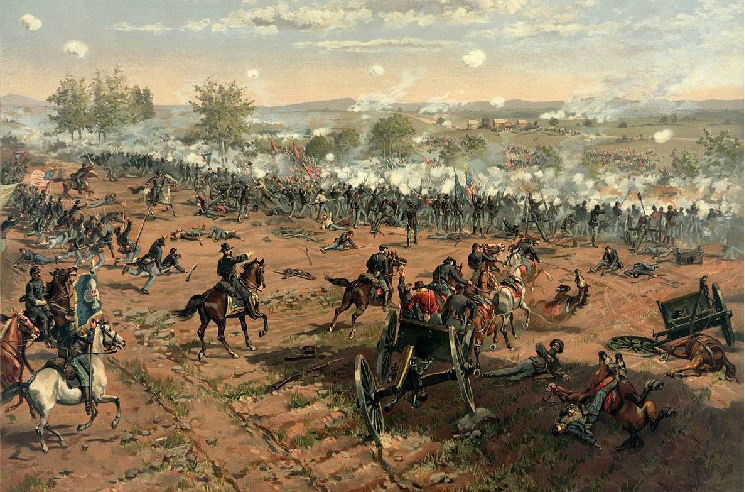


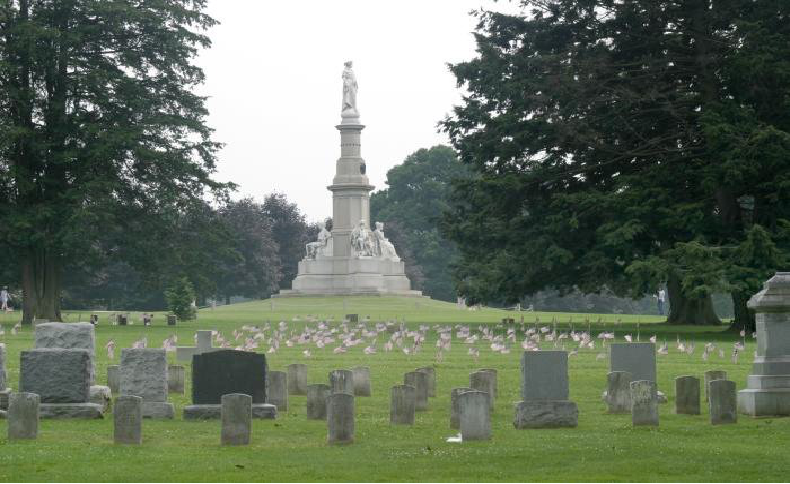
The Battle of Gettysburg


Gettysburg Address (movie clip).mp4


    Four score and seven years ago our fathers brought forth on this continent, a new nation, conceived in liberty, and dedicated to the proposition that all men are created equal. 

    Now we are engaged in a great civil war, testing whether that nation or any nation so conceived and so dedicated, can long endure. We are met on a great battlefield of that war. We have come to dedicate a portion of that field, as a final resting place for those who here gave their lives that that nation might live. It is altogether fitting and proper that we should do this. 

    But in a larger sense, we cannot dedicate, we cannot consecrate, we cannot hallow this ground. The brave men, living and dead, who struggled here, have consecrated it, far above our poor power to add or detract.

    The world will little note, nor long remember, what we say here, but it can never forget what they did here. It is for us the living,rather, to be dedicated here to the unfinished work which they who fought here have thus far so nobly advanced.

     It is rather for us to be here dedicated to the great task remaining before us: that from these honored dead we take increased devotion to that cause for which they gave the last full measure of devotion; that we here highly resolve that these dead shall not have died in vain; that this nation, under God, shall have a new birth of freedom; and that government of the people, by the people, for the people, shall not perish from the earth.


Questions for Discussion or Reflection

1. Answer the following questions

(1) Who did Lincoln refer to by “our fathers"?

(2) From which document did the idea come that the United States was a nation

dedicated to the proposition that all men are created equal?"

(3) What is the purpose of the Civil War in Lincoln's opinion?

(4) Why did Lincoln give this speech?

 (5) How did Lincoln comment on the men who died in the battle here?

(6) What did Lincoln say about the responsibility of those who are still living?

(7) What do you think Lincoln meant by the phrase “government of the people, by the people, for the people"?


2. Match the key words to their corresponding definitions.

(1) score         A. to take away  

 (2) conceived      B. to die; disappear

(3) liberty          C. to make sacred

(4) proposition      D. idea

 (5) dedicate         E. to set apart; make special

(6) consecrate       F. 20 years

(7) hallow          G. created

 (8) detract          H. freedom

(9) devotion      I. to make holy

 (10) perish         J. feeling of love