Text C Louisiana Purchase
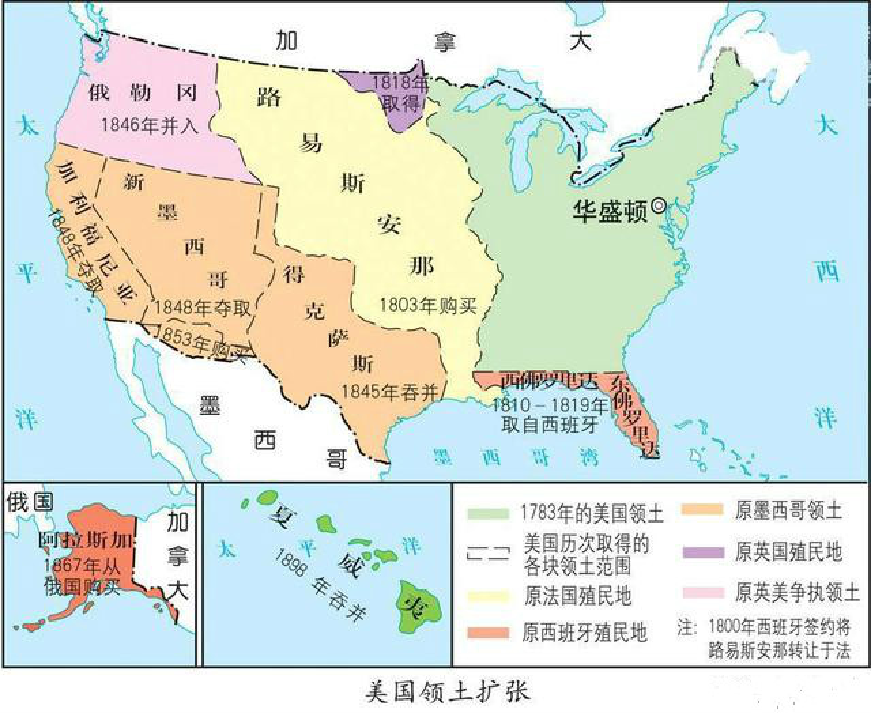
1. One of the most significant acquisitions of land came during James Madison's tenure as Secretary of State. The Louisiana Purchase nearly doubled the size of the young nation, changing its borders from Canada to the Gulf of Mexico and from the Mississippi River to the Rocky Mountains. Today, there are thirteen states that were part of the lands added from the Louisiana Purchase. These states are: Louisiana, Arkansas, Missouri, Iowa, North Dakota, South Dakota, Nebraska, Kansas, Wyoming, Minnesota, Oklahoma, Colorado and Montana.
2. In 1803,France sold over 900000 square miles west of the Mississippi River to the United States for $15 million, which is an average of 4 cents an acre. This new addition made the U.S. one of the largest geographic nations in the world and showed the growing power of the nation.
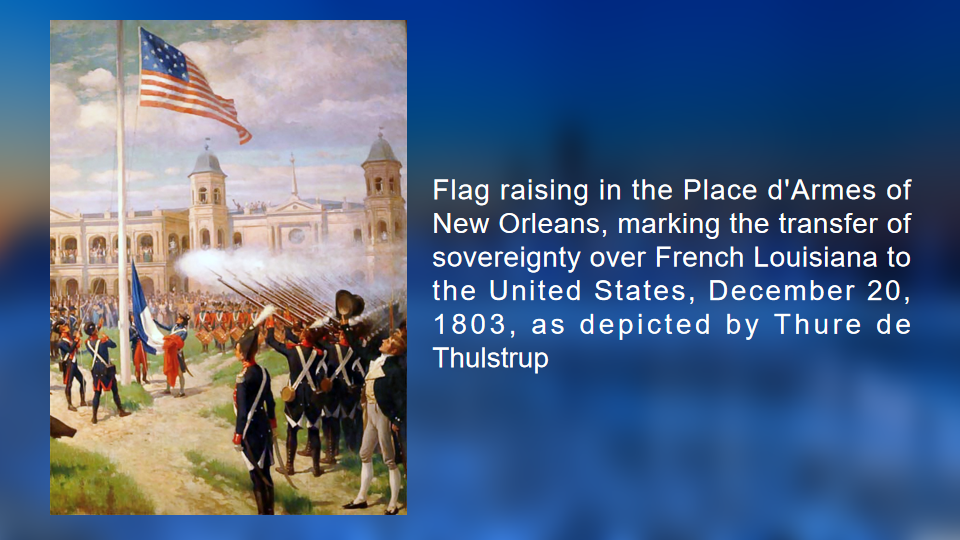
3. The Louisiana Territory had been given to Spain by France in 1762 after forty years of Spanish rule; the Spanish were willing to give the territory back to pay off some of its debts. Thomas Jefferson and James Madison soon heard of the pending(待决的) deal and sent Robert Livingston to negotiate for a small piece of land along the Mississippi so America could build its own seaport. Becoming impatient with the lack of news, Jefferson and Madison sent James Monroe to attempt to acquire New Orleans and West Florida. France realized that war with Great Britain was coming and knew that it could not defend Louisiana against the naval might of Great Britain. It offered to sell the entire territory to the U. S.
4. The deal was completed through a series of three documents between the United States and France. A treaty of cession had to be agreed upon first, then two agreements on the exchange of monies were made. Both parties gained what they had sought from the deal. The United States acquired the land they desired, while France needed the money from the deal to help pay the cost of the Napoleonic Wars and pay off the debt it already owed to the U.S. This was a remarkable feat(了不起的成就) for the time, most large empires had been obtained with the use of force, but the transfer of land from France to the United States occurred without any bloodshed.
5. By purchasing the Louisiana Territory, President Jefferson and Secretary of State Madison insured that the French could no longer dominate trade and restrict American ships from using the Mississippi River. This had a major impact on American trade, as now the Mississippi was open from New Orleans and St. Louis. Traders from around the world now dealt directly with the United States for goods that could easily be shipped down the river. Along with protecting American trade interests, the purchase provided a sense of protection from French aggression and territorial disputes. The threat of Napoleon's new world empire was real to the United States and Jefferson knew it was important to defend the nation’s borders. The deal also helped the transformation of the United States from a country that was centered around the Eastern Seacoast to a nation that would stretch from Atlantic to Pacific.
6. To commemorate the historic purchase, the Louisiana Purchase State Park has been created by the state of Louisiana. The park is an area that has been kept like the wilderness found by Lewis and Clark during their exploration. In 1904,the World's Fair was held in St. Louis. An exposition at the fair celebrated the Louisiana Purchase and President Teddy Roosevelt expressed his feelings about the triumphs of the Jefferson and his decision to make the deal with France. In conjunction with the World's Fair, the U.S. Postal Service released a stamp to mark the anniversary of the purchase.
Questions for Discussion or Reflection
(1) What impacts did the purchase of Louisiana exert on the United States and on American trade in particular?
(2) If you are a leading figure at the time, do you think you have that kind of vision to buy a land?
Proper Names
George Donner 乔治·当纳
James W. Marshall 詹姆斯·W·马歇尔
the Appalachian Mountains 阿巴拉契亚山脉
the Donner Party 当纳聚会——美国史上人吃人传说
the Gold Rush 淘金热
the Mississippi River 密西西比河
the Westward Movement 西进运动
Notes
1. James Wilson Marshall (1810-1885): He was an American carpenter and sawmill operator, whose discovery of gold in the American River in California on January 24, 1848 set the stage for the California Gold Rush. Marshall was forced from his own land by the resulting wave of gold seekers, and never profited from his discovery.
2. The Donner Party: It was a group of California-bound American emigrants who were caught up in the “western fever" of the 1840s. After becoming snowbound in the Sierra Nevada in the winter of 1846 -- 1847, some of the emigrants resorted to cannibalism.
Song to Enjoy "Oh! Susanna”
lyrics by Stephen Foster.
It was first published on February 25, 1848. Popularly associated with the California Gold Rush, the song is occasionally but incorrectly called “Banjo on My Knee” .
Oh! Susanna
I come from Alabama with my banjo on my knee;
I'm goin' to Lousiana my true love for to see.
It rained all night the day I left,
the weather it was dry;
The sun so hot I froze to death,
Susanna don't you cry.
Oh! Susanna, don't you cry for me;
I come from Alabama,
with my banjo on my knee.
1 had a dream the other night,
When everything was still;
1 thought I saw Susanna dear,
A-coming down the hill.
The buckwheat cake was in her mouth,
The tear was in her eye,
Said I, I' m coming from the south,
Susanna don't you cry.
Oh! Susanna, don't you cry for me;
I come from Alabama,
with my banjo on my knee.
I soon will be in New Orleans,
And then I'll look all round,
And when I find Susanna,
I'll fall upon the ground.
But if l do not find her,
This darkey’ll surely die,
And when I'm dead and buried,
Susanna don't you cry.
Oh! Susanna, don't you cry for me;
I come from Alabama,
with my banjo on my knee.

