
Text B Columbus’s Discovery of America
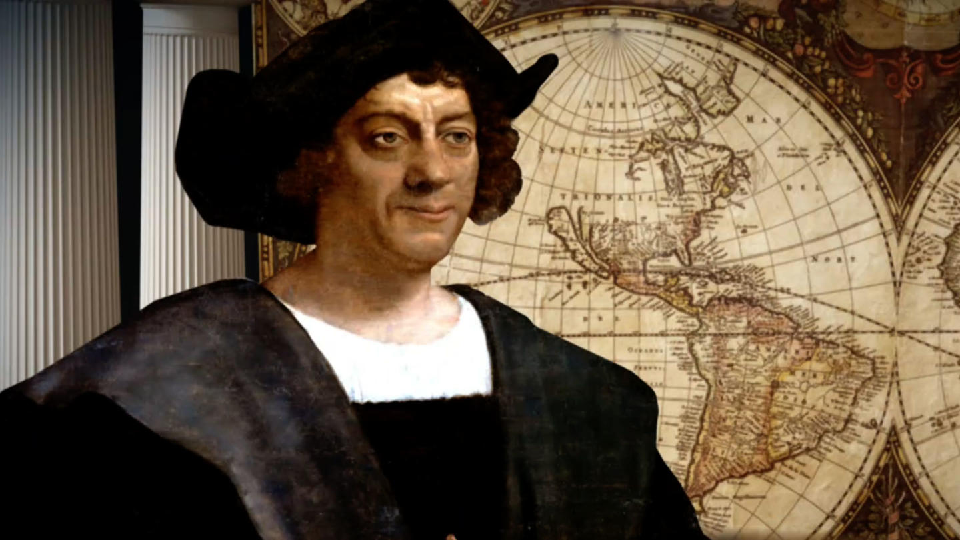
1. Five hundred years ago, Europeans did not have accurate maps. Many people thought they knew what the earth looked like, but they could only guess. Many ancient maps do not look anything like the true surface of the earth because they were based on incorrect information.
2. One man who thought he knew what the earth’s surface looked like was Christopher Columbus. Columbus was an Italian from Genoa, Italy, who had spent much of his life as a sailor.
3. Marco Polo was a merchant who had traveled east to China. After seeing the great wealth of China, Marco Polo returned to Europe and wrote about the wonders he had seen. Some Europeans did not believe Polo’s amazing stories. Others, however, were eager to visit Asia and get some wealth for themselves.
4. Christopher Columbus read and believed Marco Polo’s story and devised a plan to sail to Asia. He wanted to visit the lands of China. Columbus thought that if he sailed west from Europe he would eventually come to Asia. Columbus landed on the island of San Salvador on October 12, 1492. Because Columbus thought he had reached India, a part of Asia, he referred to the people on the island as Indians. Even though Columbus was thousands of miles away from India, the name he gave to the native Americans remains to this day, and the islands he reached are now called the West Indies.
5. Columbus visited several islands in the West Indies as he continued his search for gold. On this first journey, Columbus never actually landed on the coast of North or South America. Columbus made three more journeys to America. On each one he showed his superior talents as a navigator.
6. Columbus was a great man because he showed others the way to do something that was supposedly impossible – sail across the unknown ocean. Soon after Columbus’s early voyages, other men sailed west. Columbus led the way for the settlement of the New World, part of which was to become the United States of the America.
7. After news of Columbus’s discovery spread, other sea captains lost their fear of sailing across the Atlantic Ocean. They were eager to make their own discoveries. One such explorer, an Italian named Amerigo Vespucci, claimed that he had crossed the Atlantic Ocean four times between 1497 and 1500. He wrote a letter saying, ‘ I have found a new world.’
8. Although Columbus really found the New World before Vespucci, Vespucci was the first person to call it the ‘New World’. In 1507, a German mapmaker did not know what name to give the New World. After reading Vespucci’s letters, the mapmaker decided to name the New World ‘America’ in honor of the man he thought had discovered it – Amerigo Vespucci.
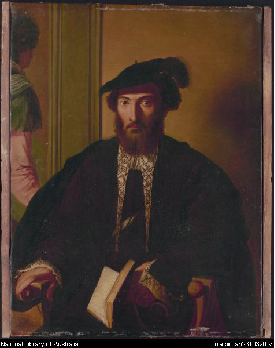
The newly-found land America was named in honor of this Italian navigator Amerigo Vespucci.
After You Read
Knowledge Focus
1. Pair work : discuss the following questions with your partner.
(1) what were the motivations of the early explorers? why did an explorer want to go on a long and dangerous voyage to an unknown place? Do you want to live in an unknown place?
(2) what is the significance of the early exploration?
(3) what kind of relationship did the early explorers and the indigenous Indians maintain?
(4) how do you account for the emigration of Europeans to the New World?
2. Solo work : Tell whether the following are true or false according to the knowledge you have learned. Consider why.
(1) In the late 1400s, Europeans sought new land routes to Asia in pursuit of economic gain, glory, and opportunities to spread Christianity. ( )
(2) The discovery of the New World resulted in significant changes and achievements that created possibilities. ( )
(3) The first English immigrants to what is now the United States crossed the Atlantic long after thriving Spanish colonies had been established in Mexico, the West Indies and North America.( )
(4) Most European emigrants left their homelands to escape political oppression, to seek the freedom to practice their religion or for adventure and opportunities denied to them at home. ( )
(5)The Industrial Revolution had created a burgeoning textile industry, which demanded an ever-increasing supply of wool to keep the looms running. Colonial expansion became an outlet for the displaced peasant population. ( )
(6) Christopher Columbus was a Spanish sailor, who had spent much of his life as a sailor. ( )
(7) Marco Polo was a merchant who has traveled east to China. ( )
(8) Columbus landed on the island of San Salvador on October 12, 1495. ( )
(9) Columbus was a great man because he showed others the way to do something that was supposedly impossible--sail across the unknown ocean. Soon after Columbus's early voyages, other men sailed west. Columbus led the way for the settlement of the New World, part of which was to become the United States of America. ( )
(10) Although Columbus really found the New World before Vespucci, Vespucci was the first person to call it the “New World”. In 1507, a German mapmaker named the New World “America” in honor of the man he thought had discovered it-- Amerigo Vespucci. ( )
Language Focus
1. Fill in the blanks with the following words from the texts.
motivation benefactor undertake fatal thrive
yield burgeoning abundant batter considerable
(1) The experiments we conducted with the aid of our teaching assistant ______________ new insights.
(2) The huge wave ______________ the wrecked ship to pieces.
(3) This crash course serves to prevent stumbling blocks in the learning and boost the study ______________ of the students.
(4) A business cannot _____________ without investment.
(5) They did _______________ work to acquaint the masses of the United States with the problems of Latin America.
(6) The $37 billion business that mainstream journalists and Hollywood can no longer afford to ignore the _____________________ video game industry.
(7) A _____________ is someone who gives help, usually through financial means, to another; the person who receives the benefits or help is called a beneficiary.
(8) Father who lost three children in a(n) _____________ accident calls for tough penalty against drunk drivers.
(9) Hydrogen is the most _____________ element in the known Universe.
(10) She _____________ the organization of the whole scheme.
2. find the appreciate prepositions or adverbs that collocate with the neighboring words.
(1) Europeans sought new sea routes _______ Asia in pursuit of economic gain, glory, and opportunities to spread Christianity.
(2) Early adventures were motivated by religious beliefs, the desire _______ conquest, the need to establish trade routes, and hunger ________ gold.
(3) Although they were searching ___ a specific land or route, they oftentimes were surprised ______ what they discovered.
(4) _______his command were the pilot or first mate, and the crew.
(5) New York city consists _______ five boroughs.
(6) During their 6 to 12 week voyages, the voyagers lived _____ meager rations.
(7) ___addition, the Industrial Revolution had created a burgeoning textile industry. Landlords enclosed farmlands and evicted the peasants _____ favor _____ sheep cultivation.
(8) Colonial expansion became an outlet _____ this displaced peasant population.
(9) Many ancient maps do not look anything like the true surface of the earth because they were based _____ incorrect information.
(10) Columbus thought he had reached India, so he referred _____ the people on the island as Indians.
(11) Columbus continued his search ___ gold. ____ this first journey, he never actually landed _____ the coast of north or south America.
(12) Columbus made three more journeys ___ America, but a mapmaker named the New World “America” ____ honor ___the man he thought had discovered it instead of Columbus.
Text B Columbus’s Discovery of America
1. Five hundred years ago, Europeans did not have accurate maps. Many people thought they knew what the earth looked like, but they could only guess. Many ancient maps do not look anything like the true surface of the earth because they were based on incorrect information.
2. One man who thought he knew what the earth’s surface looked like was Christopher Columbus. Columbus was an Italian from Genoa, Italy, who had spent much of his life as a sailor.
3. Marco Polo was a merchant who had traveled east to China. After seeing the great wealth of China, Marco Polo returned to Europe and wrote about the wonders he had seen. Some Europeans did not believe Polo’s amazing stories. Others, however, were eager to visit Asia and get some wealth for themselves.
4. Christopher Columbus read and believed Marco Polo’s story and devised a plan to sail to Asia. He wanted to visit the lands of China. Columbus thought that if he sailed west from Europe he would eventually come to Asia. Columbus landed on the island of San Salvador on October 12, 1492. Because Columbus thought he had reached India, a part of Asia, he referred to the people on the island as Indians. Even though Columbus was thousands of miles away from India, the name he gave to the native Americans remains to this day, and the islands he reached are now called the West Indies.
5. Columbus visited several islands in the West Indies as he continued his search for gold. On this first journey, Columbus never actually landed on the coast of North or South America. Columbus made three more journeys to America. On each one he showed his superior talents as a navigator.
6. Columbus was a great man because he showed others the way to do something that was supposedly impossible – sail across the unknown ocean. Soon after Columbus’s early voyages, other men sailed west. Columbus led the way for the settlement of the New World, part of which was to become the United States of the America.
7. After news of Columbus’s discovery spread, other sea captains lost their fear of sailing across the Atlantic Ocean. They were eager to make their own discoveries. One such explorer, an Italian named Amerigo Vespucci, claimed that he had crossed the Atlantic Ocean four times between 1497 and 1500. He wrote a letter saying, ‘ I have found a new world.’
8. Although Columbus really found the New World before Vespucci, Vespucci was the first person to call it the ‘New World’. In 1507, a German mapmaker did not know what name to give the New World. After reading Vespucci’s letters, the mapmaker decided to name the New World ‘America’ in honor of the man he thought had discovered it – Amerigo Vespucci.
The newly-found land America was named in honor of this Italian navigator Amerigo Vespucci.
After You Read
Knowledge Focus
1. Pair work : discuss the following questions with your partner.
(1) what were the motivations of the early explorers? why did an explorer want to go on a long and dangerous voyage to an unknown place? Do you want to live in an unknown place?
(2) what is the significance of the early exploration?
(3) what kind of relationship did the early explorers and the indigenous Indians maintain?
(4) how do you account for the emigration of Europeans to the New World?
2. Solo work : Tell whether the following are true or false according to the knowledge you have learned. Consider why.
(1) In the late 1400s, Europeans sought new land routes to Asia in pursuit of economic gain, glory, and opportunities to spread Christianity. ( )
(2) The discovery of the New World resulted in significant changes and achievements that created possibilities. ( )
(3) The first English immigrants to what is now the United States crossed the Atlantic long after thriving Spanish colonies had been established in Mexico, the West Indies and North America.( )
(4) Most European emigrants left their homelands to escape political oppression, to seek the freedom to practice their religion or for adventure and opportunities denied to them at home. ( )
(5)The Industrial Revolution had created a burgeoning textile industry, which demanded an ever-increasing supply of wool to keep the looms running. Colonial expansion became an outlet for the displaced peasant population. ( )
(6) Christopher Columbus was a Spanish sailor, who had spent much of his life as a sailor. ( )
(7) Marco Polo was a merchant who has traveled east to China. ( )
(8) Columbus landed on the island of San Salvador on October 12, 1495. ( )
(9) Columbus was a great man because he showed others the way to do something that was supposedly impossible--sail across the unknown ocean. Soon after Columbus's early voyages, other men sailed west. Columbus led the way for the settlement of the New World, part of which was to become the United States of America. ( )
(10) Although Columbus really found the New World before Vespucci, Vespucci was the first person to call it the “New World”. In 1507, a German mapmaker named the New World “America” in honor of the man he thought had discovered it-- Amerigo Vespucci. ( )
Language Focus
1. Fill in the blanks with the following words from the texts.
motivation benefactor undertake fatal thrive
yield burgeoning abundant batter considerable
(1) The experiments we conducted with the aid of our teaching assistant ______________ new insights.
(2) The huge wave ______________ the wrecked ship to pieces.
(3) This crash course serves to prevent stumbling blocks in the learning and boost the study ______________ of the students.
(4) A business cannot _____________ without investment.
(5) They did _______________ work to acquaint the masses of the United States with the problems of Latin America.
(6) The $37 billion business that mainstream journalists and Hollywood can no longer afford to ignore the _____________________ video game industry.
(7) A _____________ is someone who gives help, usually through financial means, to another; the person who receives the benefits or help is called a beneficiary.
(8) Father who lost three children in a(n) _____________ accident calls for tough penalty against drunk drivers.
(9) Hydrogen is the most _____________ element in the known Universe.
(10) She _____________ the organization of the whole scheme.
2. find the appreciate prepositions or adverbs that collocate with the neighboring words.
(1) Europeans sought new sea routes _______ Asia in pursuit of economic gain, glory, and opportunities to spread Christianity.
(2) Early adventures were motivated by religious beliefs, the desire _______ conquest, the need to establish trade routes, and hunger ________ gold.
(3) Although they were searching ___ a specific land or route, they oftentimes were surprised ______ what they discovered.
(4) _______his command were the pilot or first mate, and the crew.
(5) New York city consists _______ five boroughs.
(6) During their 6 to 12 week voyages, the voyagers lived _____ meager rations.
(7) ___addition, the Industrial Revolution had created a burgeoning textile industry. Landlords enclosed farmlands and evicted the peasants _____ favor _____ sheep cultivation.
(8) Colonial expansion became an outlet _____ this displaced peasant population.
(9) Many ancient maps do not look anything like the true surface of the earth because they were based _____ incorrect information.
(10) Columbus thought he had reached India, so he referred _____ the people on the island as Indians.
(11) Columbus continued his search ___ gold. ____ this first journey, he never actually landed _____ the coast of north or south America.
(12) Columbus made three more journeys ___ America, but a mapmaker named the New World “America” ____ honor ___the man he thought had discovered it instead of Columbus.

