目录

  • 1 Chapter 1 Culture
    • 1.1 Course Lead-in
    • 1.2 Chapter Lead-in
    • 1.3 Text A The Nature of Culture
    • 1.4 Text B Definitions of Culture
    • 1.5 Text C Characteristics of Culture
    • 1.6 Text D Cultural Identity
    • 1.7 Text E Cultures Within Culture
    • 1.8 Extended Reading and Translation​
    • 1.9 Summary
  • 2 Chapter 2 Communication & IC
    • 2.1 Chapter Lead-in
    • 2.2 Text D Intercultural Communication
    • 2.3 Texts A&C Communication
    • 2.4 Text B Charateristics of Communication
    • 2.5 Summary
    • 2.6 Extended Reading and Translation​
    • 2.7 Extended Reading on Confucianism
  • 3 Chapter 3 Culture's Influence on Perception
    • 3.1 WORD STUDY CH3
    • 3.2 Chapter Lead-in
    • 3.3 Text A Overview: Human Perception
    • 3.4 Text B Cross-cultural Differences in Sensation and Perception
    • 3.5 Text C Barriers to Accurate Perception in IC
    • 3.6 Summary
    • 3.7 Extended Reading and Translation​
  • 4 Chapter 4 IC Barriers
    • 4.1 Chapter Lead-in
    • 4.2 Text A Emotional Problems as Barriers to IC
    • 4.3 Text B Attitudinal Problems as Barriers to IC
    • 4.4 Text C Translation Problems as Language Barriers
    • 4.5 Summary
    • 4.6 Extended Reading and Translation​
  • 5 Chapter 5 Verbal IC
    • 5.1 Chapter Lead-in
    • 5.2 Text A & Text B Language and Culture
    • 5.3 Text C Verbal Communication Styles
      • 5.3.1 Text C Edward T. Hall's Context—Culture Theory
    • 5.4 Text D Language Diversity
    • 5.5 Summary
    • 5.6 Extended Reading and Translation​
  • 6 Chapter 6 Nonverbal IC
    • 6.1 Chapter Lead-in
    • 6.2 Text A & Text B Significance and Functions of Nonverbal Communication
    • 6.3 Text C Paralanguage and Silence
    • 6.4 Text D Time and Space
    • 6.5 Text E Other Categories of Nonverbal Communication
    • 6.6 Summary
    • 6.7 Extended Reading and Translation
  • 7 Chapter 7 Cultural Patterns
    • 7.1 Chapter Lead-in
    • 7.2 Texts A&B Cultural Patterns
    • 7.3 Text D Kluckhohn and Strodtbeck's Value Orientation
    • 7.4 Text E Hofstede's Dimensions of Cultural Variability
    • 7.5 Summary
    • 7.6 Extended Reading and Translation
  • 8 Chapter 8 Cultural Influences on Context
    • 8.1 Chapter Lead-in
    • 8.2 Text A Communication and Context
    • 8.3 Text B The Business Context
    • 8.4 Summary
    • 8.5 Extended Reading and Translation
  • 9 Chapter 9 Intercultural Adaptation
    • 9.1 Chapter Lead-in
    • 9.2 Text A Acculturation
    • 9.3 Text B Culture Shock
    • 9.4 Text C Intercultural Adaptation
    • 9.5 Summary
  • 10 Chapter 10 IC Competence
    • 10.1 Course Introduction
      • 10.1.1 Western and Eastern Sharp Contrast
      • 10.1.2 Course Assignment
    • 10.2 Chapter 10 IC Competence
Chapter Lead-in

Chapter Lead-in:

    当我们离开母语文化,进入目的语文化时,由于文化差异,会经历不同的跨文化适应阶段,为了更好地适应新文化,我们有必要准确了解我们可能会经历的跨文化适应过程以及可能产生的不同交际结果。

    本章主要介绍了文化适应的定义、文化适应的模式和影响文化适应的因素,以及文化冲击的定义、症状、形式和影响,以帮助学习者理解文化适应和文化冲击的基本知识;在此基础上,引出跨文化适应的定义以及跨文化适应阶段的两种模式,以帮助学习者理解跨文化适应的基本知识,进而区别文化冲击与跨文化适应,以便更为确切地了解人们适应新文化的过程;最后,本章介绍了某些克服文化冲击和促进跨文化适应的策略,可以帮助学习者更好地处理现实生活中的跨文化交际障碍,更为容易地适应新文化。

Learning Objectives:

In this chapter, students will learn how to:

  • Understand the definition and modes of acculturation, as well as the factors affecting acculturation.

  • Master the definition, symptoms, causes, forms and effects of culture shock.

  • Comprehend the definition and stages of intercultural adaptation, which includes the U-curve and W-curve patterns.

  • Distinguish culture shock and intercultural adaptation.

  • Develop some strategies for avoiding culture shock and engaging in intercultural adaptation. 

Chapter Outline
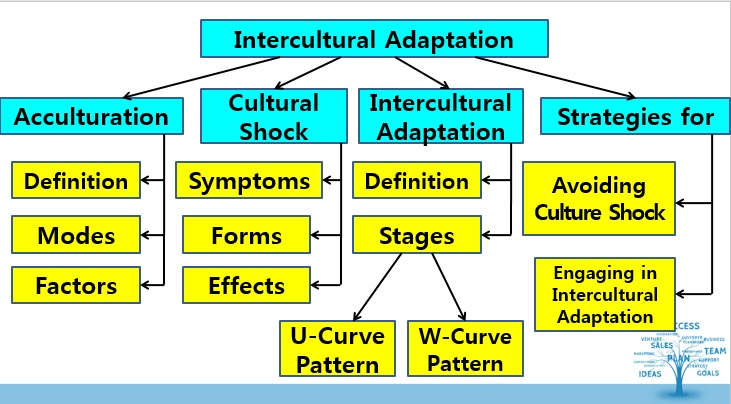
Key points for Chapter 9:


Discussion:

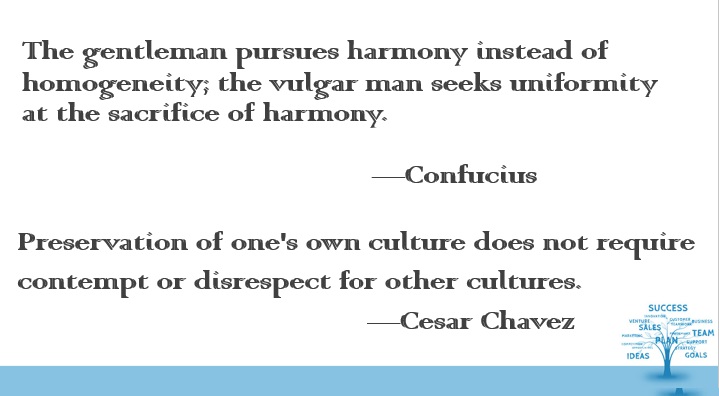
Read the following quotations from different masters. What can you conclude from them? 


Pre-class Activities: Lead-in Case (PP279-280)

Read the Lead-in Case Doubts on Pages 279 and 280. Following is the video of the case. 


After reading and watching the case, finish the following tasks with your group members.

1. Discuss the following questions with your group members, and get ready to report your findings to the class. 

  1. How was Wu Lian feeling during the first few days when she arrived in the U.S.A? What problems did she come across later? Why does Wu Lian at first feel proud but later depressed?

  2. What prevents Wu Lian from understanding her native speaking classmates despite her good language skills?

  3. What causes her so many troubles?

  4. How much do you know about the way of Americans' "partying"? If you've got no idea about it, check via the Internet.

  5. In the third paragraph, it is said that "In the meantime she gets letters from her family and friends at home, expressing their pride and confidence in her. Her parents tell her to work hard and take care of her health." Why do her family and friends express such feelings and hopes instead of comforting her?

  6. If you were Wu Lian, would you also feel the same way and how would you deal with the problems?

2. Now report your group's views below:


3. Now, work with your group members and try to analyze the case, and compose a case analysis.