
目录

  • 1 Chapter 1 Culture
    • 1.1 Course Lead-in
    • 1.2 Chapter Lead-in
    • 1.3 Text A The Nature of Culture
    • 1.4 Text B Definitions of Culture
    • 1.5 Text C Characteristics of Culture
    • 1.6 Text D Cultural Identity
    • 1.7 Text E Cultures Within Culture
    • 1.8 Extended Reading and Translation​
    • 1.9 Summary
  • 2 Chapter 2 Communication & IC
    • 2.1 Chapter Lead-in
    • 2.2 Text D Intercultural Communication
    • 2.3 Texts A&C Communication
    • 2.4 Text B Charateristics of Communication
    • 2.5 Summary
    • 2.6 Extended Reading and Translation​
    • 2.7 Extended Reading on Confucianism
  • 3 Chapter 3 Culture's Influence on Perception
    • 3.1 WORD STUDY CH3
    • 3.2 Chapter Lead-in
    • 3.3 Text A Overview: Human Perception
    • 3.4 Text B Cross-cultural Differences in Sensation and Perception
    • 3.5 Text C Barriers to Accurate Perception in IC
    • 3.6 Summary
    • 3.7 Extended Reading and Translation​
  • 4 Chapter 4 IC Barriers
    • 4.1 Chapter Lead-in
    • 4.2 Text A Emotional Problems as Barriers to IC
    • 4.3 Text B Attitudinal Problems as Barriers to IC
    • 4.4 Text C Translation Problems as Language Barriers
    • 4.5 Summary
    • 4.6 Extended Reading and Translation​
  • 5 Chapter 5 Verbal IC
    • 5.1 Chapter Lead-in
    • 5.2 Text A & Text B Language and Culture
    • 5.3 Text C Verbal Communication Styles
      • 5.3.1 Text C Edward T. Hall's Context—Culture Theory
    • 5.4 Text D Language Diversity
    • 5.5 Summary
    • 5.6 Extended Reading and Translation​
  • 6 Chapter 6 Nonverbal IC
    • 6.1 Chapter Lead-in
    • 6.2 Text A & Text B Significance and Functions of Nonverbal Communication
    • 6.3 Text C Paralanguage and Silence
    • 6.4 Text D Time and Space
    • 6.5 Text E Other Categories of Nonverbal Communication
    • 6.6 Summary
    • 6.7 Extended Reading and Translation
  • 7 Chapter 7 Cultural Patterns
    • 7.1 Chapter Lead-in
    • 7.2 Texts A&B Cultural Patterns
    • 7.3 Text D Kluckhohn and Strodtbeck's Value Orientation
    • 7.4 Text E Hofstede's Dimensions of Cultural Variability
    • 7.5 Summary
    • 7.6 Extended Reading and Translation
  • 8 Chapter 8 Cultural Influences on Context
    • 8.1 Chapter Lead-in
    • 8.2 Text A Communication and Context
    • 8.3 Text B The Business Context
    • 8.4 Summary
    • 8.5 Extended Reading and Translation
  • 9 Chapter 9 Intercultural Adaptation
    • 9.1 Chapter Lead-in
    • 9.2 Text A Acculturation
    • 9.3 Text B Culture Shock
    • 9.4 Text C Intercultural Adaptation
    • 9.5 Summary
  • 10 Chapter 10 IC Competence
    • 10.1 Course Introduction
      • 10.1.1 Western and Eastern Sharp Contrast
      • 10.1.2 Course Assignment
    • 10.2 Chapter 10 IC Competence
Text D Time and Space

Pre-reading Activity

Read Case 36 on Page 184 "Don't Put Your Hand on My Arm" and answer the following questions. 

1. What aspects of nonverbal codes can be reflected from this case? Submit your answer below.


2. Now work with your group members to discuss the following questions:

  1. Why was it hard for Sam to concentrate on what Martin was saying ?

  2. When Martin's hand rested on Sam's arm, what spatial zones of interpersonal communication did Martin's behavior show?

  3. What can be learned from the case above?


3. Report your group's views below:


Text D Study

Read Text D through Page 180 to Page 185 to get the key points of the text. Below is the text audio for you to follow. 


After reading the texts, try to find out the answers to the following questions:

1. What is the title of Text D? How do you understand it?

2. Please write down the subtitles of Text D and make clear the structure in the text.

3. Read Text D, and underline the content that you think are important.

4. Figure out the detailed points of chronemics and proxemics that can lead to different communication results.


After-reading Check:


Culture in Movie

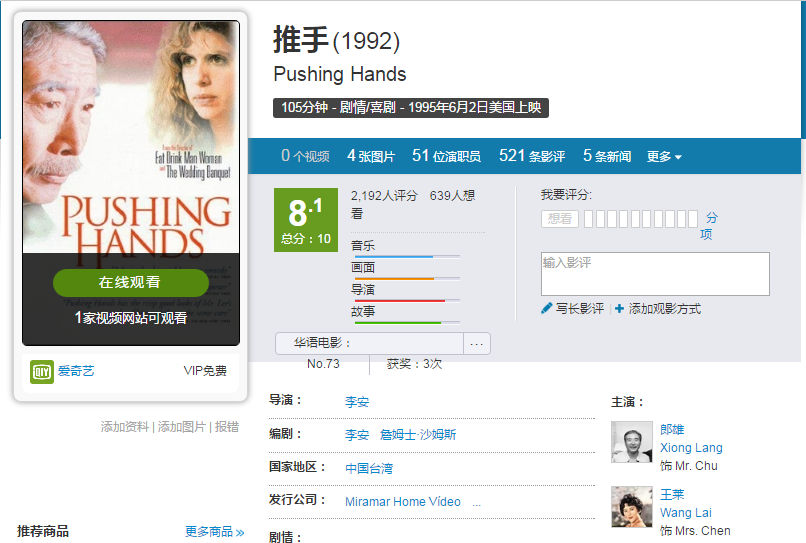
Watch the movie Pusing Hands. Here is the movie plot:

Master Chu, a retired Chinese Tai-Chi master, moves to Westchester, New York to live with his son Alex, his American daughter-in-law Martha, and their son Jeremy. However, Martha's second novel is suffering from severe writers' block brought on by Chu's presence in the house. Alex must struggle to keep his family together as he battles an inner conflict between cultural tradition and his modern American lifestlye. Written by Kathy Li

When you're watching the movie, try to figure out the cultural conficts between Master Chu and his daughter-in-law. Get ready to report your findings to the class. 

Now you've finished studying Text D, have you mastered the key points in the texts? If the answer is YES, then you are ready to study the next text. Congratulations!