
Chapter Lead-in:
非言语交际有助于人类交流思想和感情,而且在现实的交际中有多达70%的交际信息是依赖非言语的方式获得的。因此,我们不仅有必要明确非言语交际的意义,而且还需要了解其五大基本功能:重复、补充、替代言语行为、调节和否认交际事件的真实性。
非言语交际包括人们对时间和空间的认识;对待副语言和沉默的态度;对身势语(动作、姿态和面部表情)的把握;以及人们对服饰、目光语、触觉行为、色彩学和气味的看法等。了解这些非言语交际的相关知识有利于学习者比较全面地把握非言语交际的各个方面,对非言语交际的意义和影响有更为深入的理解,可以使学习者在跨文化交际过程中有意识地注重非言语因素,从而进行更加得体有效的跨文化交际。
Learning Objectives:
In this chapter, students will learn how to:
Understand the significance of nonverbal intercultural communication.
Perceive the definition of nonverbal intercultural communication.
Describe the functions of nonverbal intercultural communication.
Summarize the categories of nonverbal intercultural communication.
Chapter Outline
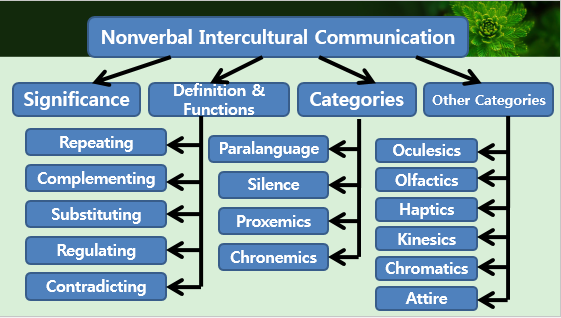
Key points for Chapter 6:
Pre-class Activities: Lead-in Case (P168)
Read the Lead-in Case What is Wrong with the Interaction? on Page 168. Following is the video of the case.
After reading and watching the case, finish the following tasks with your group members.
1. Try to summarize this case.
2. Discuss the following questions with your group members, and get ready to report your findings to the class.
1) Why do you think Akira is startled?
2) How do you understand their ways of eye contact?
3) What do you think silence means to Jim?
4) What are Akira’s and Mitsuko’s impressions on Jim?
5) What is Jim’s impression on Akira and Mitsuko?
6) If you are talking with Jim as an exchange student from China, will his behaviors shock you? How would you respond to the situation?
3. Now report your group's views below:
4. Try to find out the nonverbal clues the speakers made in this case and explain the meanings conveyed.

