Text C Characteristics of Culture
Pre-reading Activities:
Based on what you have learned in Text A and Text B, would you please have a try to summarize the common features of culture? After summarizing, compare your findings to the text. Then try to figure out each.
Text Study:
Read Text C through Page 15 to Page 19 to get the key idea of this text. The following is the text audio for your reference.
Find out the answers to the following questions:
1. What is the title of Text C?
2. Please write down the subtitle in Text C and make clear the structure in the text.
3. Read Text C, and underline the content you think important.
4. How do we learn our culture? Do you know all of these words?
5. Read the following proverbs, could you find out the Chinese proverbs that can match with them?
Many heads are better than one.
All time is no time when it is past.
When an opportunity is neglected it never comes back to you.
East or west, home is best.
Agues come on horseback, but go away on foot.
He cries wine and sells vinegar.
Speak of angels, and you will hear their wings.
6. What are the functions of stories?
7. What are the functions of art?
8. What are the differences of art between Asian cultures and American & European cultures?
9. What are mass media? What are the functions of mass media?
10. In the subtitle “2. Culture is Dynamic”, how do you understand “dynamic”? Could you use one word to explain it?
11. What things can change our culture? Could you give one example to explain one by one?
12. Could you give examples to explain how technological invention changes our culture?
13. What things are included in disasters? Could you use one example to explain?
14. Could you give an example to explain why cultural contact can change our culture?
15. What do environmental factors refer to?
16. In the sentence “Culture is pervasive.”, how do you understand “pervasive”?
17. What the meaning of “integrated”? How do you understand “You touch a culture in one place and everything else is affected”?
18. Why should we adapt to culture? And how?
Have you taken in the key characteristics of culture? Now, the following mini-lectures may help you better understand the characteristics of culture. Watch them and discuss the questions in each.
拓展阅读:
Following are some funny pictures from Internet about the popularity of Xi'an cuisine in the US.


Watch the last mini-lecture, and you should think about the following questions first:

Exploring Ideas
Now, after watching the above mini-lectures, you must be ready to share your understanding on Text C. Choose one topic from below to prepare a presentation with your group members.
*** Prepare a presentation and get ready to report to the class. ***
I. How one part/aspect of China/Chinese culture is connected to the specific characteristic? How do you think Chinese culture has adapted to the fast development of the modern society and the world?
II. Do you know any other events that have great influence on culture? Tell your partner how the following events changed culture.
China's policy of reform and opening-up.
The United States' entering WWII.
The atomic bombing in Japan in WWII.
Wenchuan earthquake in Sichuan, China.
The break of COVID-19 in 2020.
Brexit, Britain.
...
After-reading Check:
Case 4 Study
Read Case 4 on Pages 21-22. Then answer the questions:
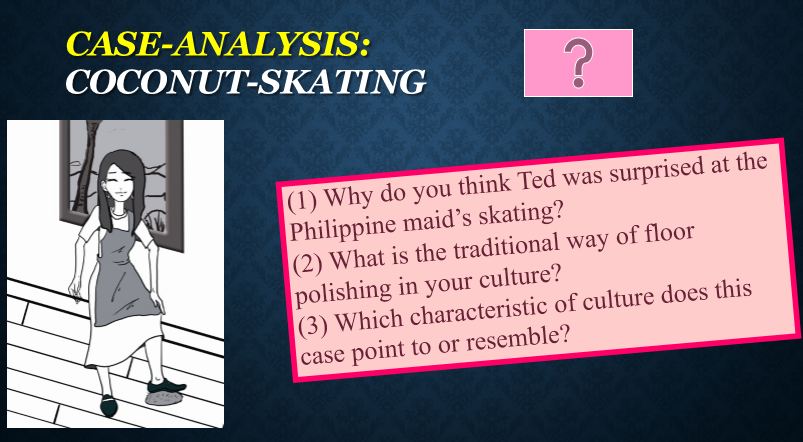
Now watch the mini-lecture of this case to check your understanding.
Now you've finished studying Text C, have you mastered the key points in this text? If the answer is yes, then you are ready to study the next text. Congratulations!

