
Text 2 Modern Buildings and Structural Materials
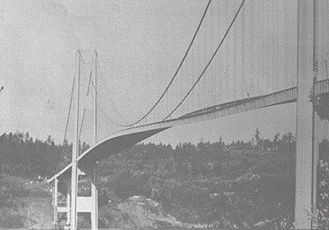
Many great buildings (that are) built in the earlier ages are still in existence and in use. Among them are the Pantheon and the Colosseum in Rome, Hagia Sophia in Istanbul; the Gothic churches of France and England, and the Renaissance cathedrals, with their great domes, like the Duomo in Florence and St. Peter's in Rome. They are massive structures with thick stone walls that counteract the thrust of their great weight. Thrust is the pressure exerted by each part of a structure on its other parts. These great buildings were not the product of knowledge of mathematics and physics. They were constructed instead on the basis of experience and observation, often as the result of trial and error. One of the reasons they have survived is because of the great strength that was built into them-strength greater than necessary in most cases. But the engineers of earlier times also had their failure. In Rome, for example, most of the people lived in insulae, great tenement blocks that were often ten stories high. Many of them were poorly constructed and sometimes collapsed with considerable loss or life. Today, however, the engineer has the advantage not only of empirical information, but also of scientific data that permit him to make careful calculations in advance. When a modem engineer plans a structure, he takes into account the total weight of all its component materials. This is known as the dead load, which is the weight of the structure itself, He must also consider the live load, the weight of all the people, cars, furniture, machines, and so on that the structure will support when it is in use. In structures such as bridges that will handle fast automobile traffic, he must consider the impact, the force at which the live load will be exerted on the structure, He must also determine the safety factor, that is, an additional capability to make the structure stronger than the combination of the three other factors. The modern engineer must also understand the different stresses to which the materials in a structure are subject. These include the forces of compression and tension. In compression the material is pressed or pushed together; in tension the material is pulled apart or stretched, like a rubber band. In addition to tension and compression, another force is at work, namely shear, which we defined as the tendency of a material to fracture along the lines of stress. The shear might occur in a vertical plane, but it also might run along the horizontal axis of the beam, the neutral plane, where there is neither tension nor compression. Altogether, three forces can act on a structure: vertical-those that act up or down; horizontal-those that act sideways; and those that act upon it with a rotating or turning motion. Forces that act at an angle are a combination of horizontal and vertical forces. Since the structures designed by civil engineers are intended to be stationary or stable, these forces must be kept in balance. The vertical forces, for example, must be equal to each other. If a beam supports a load above, the beam itself must have sufficient strength to counterbalance that weight. The horizontal forces must also equal each other so that there is not too much thrust either to the right or to the left. And forces that might pull the structure around must be countered with forces that pull in the opposite direction. One of the most spectacular engineering failures of modern times, the collapse of the Tacoma Narrows Bridge in 1940, was the result of not considering the last of these factors carefully enough. When strong gusts of wind, up to sixty-five kilometers an hour, struck the bridge during a storm, they set up waves along the roadway of the bridge and also a lateral motion that caused the roadway to fall. Fortunately, engineers learn from mistakes, so it is now common practice to test scale models of bridges in wind tunnels for aerodynamic resistance.
Tacoma Narrows Bridge
The principal construction materials of earlier times were wood and masonry brick, stone, or tile, and similar materials. The courses or layers were bound together with mortar or bitumen, a tar-like substance or some other binding agent. The Greeks and Romans sometimes used iron rods or clamps to strengthen their buildings. The columns of the Parthenon in Athens, for example, have holes drilled in them for iron bars that have now rusted away. The Romans also used a natural cement called pozzolana, made from volcanic ash, that became as hard as stone under water. Both steel and cement, the two most important construction materials of modern times, were introduced in the nineteenth century. Steel, basically an alloy of iron and a small amount of carbon, had been made up to that time by a laborious process that restricted it to such special uses as sword blades. After the invention of the Bessemer process in 1856, steel was available in large quantities at low prices. The enormous advantage of steel is its tensile strength; that is, it does not lose its strength when it is under a calculated degree of tension, a force which, as we have seen, tends to pull apart many materials. New alloys have further increased the strength of steel and eliminated some of its problems, such as fatigue, which is a tendency for it to weaken as a result of continual changes in stress. Modern cement, called Portland cement, was invented in 1824. It is a mixture of limestone and clay, which is heated and then ground into a powder. It is mixed at or near the construction site with sand, aggregate (small stones, crushed rock, or gravel), and water to make concrete. Different proportions of the ingredients produce concrete with different strength and weight. Concrete is very versatile; it can be poured, pumped, or even sprayed into all kinds of shapes. And whereas steel has great tensile strength, concrete has great strength under compression. Thus, the two substances complement each other. They also complement each other in another way: they have almost the same rate of contraction and expansion. They therefore can work together in situations where both compression and tension are factors. Steel rods are embedded in concrete to make reinforced concrete in concrete beams or structures where tension will develop. Concrete and steel also form such a strong bond-the force that unites them-that the steel cannot slip within the concrete. Still another advantage is that steel does not rust in concrete. Acid corrodes steel, whereas concrete has an alkaline chemical reaction, the opposite of acid. Prestressed concrete is an improved form of reinforcement. Steel rods are bent into the shapes to give them the necessary degree of tensile strength. They are then used to prestress concrete, usually by pretensioning or posttensioning method. Prestressed concrete has made it possible to develop buildings with unusual shapes, like some of the modern sports arenas, with large spaces unbroken by any obstructing supports. The uses for this relatively new structural method are constantly being developed. The current tendency is to develop lighter materials. Aluminum, for example, weight much less than steel but has many of the same properties. Aluminum beams have already been used for bridge construction and for the framework of a few buildings. Attempts are also being made to produce concrete with more strength and durability, and with a lighter weight. One system that helps cut concrete weight to some extent uses polymers, which are long chainlike compounds used in plastics, as part of the mixture.
|
Pantheon 帕提侬神庙 Colosseum n.罗马圆形大剧场,角斗场 Hagia Sophia 圣索非亚教堂 Istanbul 伊斯坦布儿(土耳其首都) renaissance文艺复兴时期 cathedral n.大教堂 gothic church n.哥特式教堂 dome n.圆屋顶,穹顶 duomo n.大教堂, 中央寺院 Florence 佛罗伦萨 St. Peter‘s 圣彼得大教堂 massive adj.厚重的, 大块的, 魁伟的, 结实的 counteract vt.抵消,对抗 trial and error n.反复试验,不断摸索 insulae 公寓,群屋 tenement block n. 经济公寓 poorly adv. 拙劣地,贫乏地 dead load 恒载 live load 活载 safety factor 安全系数 subject 使受到, 使遭到 compression 压力,压缩 tension拉力 stretch v.伸展, 伸长 shear 剪力 fracture v.(使)破碎,断裂 vertical plane n.垂直面 horizontal axis水平轴 neutral plane中性面 sideways adv.向一旁 rotating转动的, 旋转的 turning n.旋转, 转向 stationary固定的 counterbalance vt使平衡 spectacular 轰动一时的 Tacoma 塔科马[美国华盛顿州西部港市] Narrows 纽约湾海峡(位于美国),海峡 gust of wind阵风 strike撞击, 冲击 lateral motion横向运动, 侧摆 scale model缩尺模型,几何相似模型 wind tunnel n.风洞 aerodynamic resistance空气动力阻力 masonry 砌石 brick 砖 tile 瓦 course 行列, 层 mortar 砂浆,灰浆 bitumen n.沥青 tar焦油, 柏油,焦油沥青 binding agent虫胶粘合剂,接合剂 rod n.杆, 棒 clamp n.夹子, 夹具, 夹钳 drill 钻孔 rust 生锈 natural cement天然水泥 pozzolana n.火山灰(可用作水泥原料) volcanic ash 火山灰 alloy合金 laborious费力的,艰苦的 sword n.剑 blade n.刀刃, 刀片 tensile strength抗拉强度 calculated adj.计算出的, 有计划的, 适当的, 适合的 eliminate vt.排除, 消除,除去 fatigue 疲劳 Portland cement硅酸盐水泥 limestone n.石灰石 clay 粘土 grind v.磨(碎), 碾(碎) powder 粉末 aggregate 骨料 crush vt.压碎, 碾碎 gravel 砾石 proportions 比例 ingredient n.成分,组成部分 versatile通用的,多用途的,多方面的 pour v.灌注, 倾泻, 涌入 pump 泵送 spray 喷射, 喷溅 whereas conj鉴于,然而, 反之,尽管, 但是 complement vt.补助, 补足 contraction 压缩 expansion 膨胀 bond 结合 unite v.联合 slip 滑动 corrode 腐蚀 alkaline reaction n.[化] 碱性反应 reinforcement 钢筋, 增强材料 prestress vt.给…预加应力 pretensioning 先张拉 posttensioning 后张拉 arena n.竞技场, 舞台 obstruct 阻隔 aluminum n.[化]铝 framework 框架 durability耐久性 polymers高分子材料 chainlike 链状 compound 化合物
|
1、
2、
3、

