-
1 Article
-
2 Words and&nb...
-
3 Notes on&nbs...

Keeping Close to Nature’s Heart
Carollyne Hutter
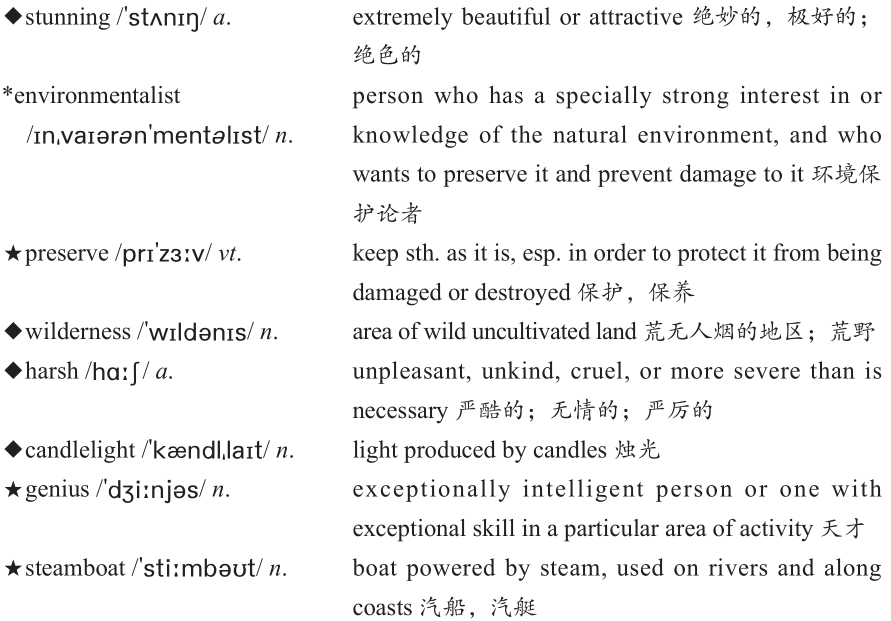
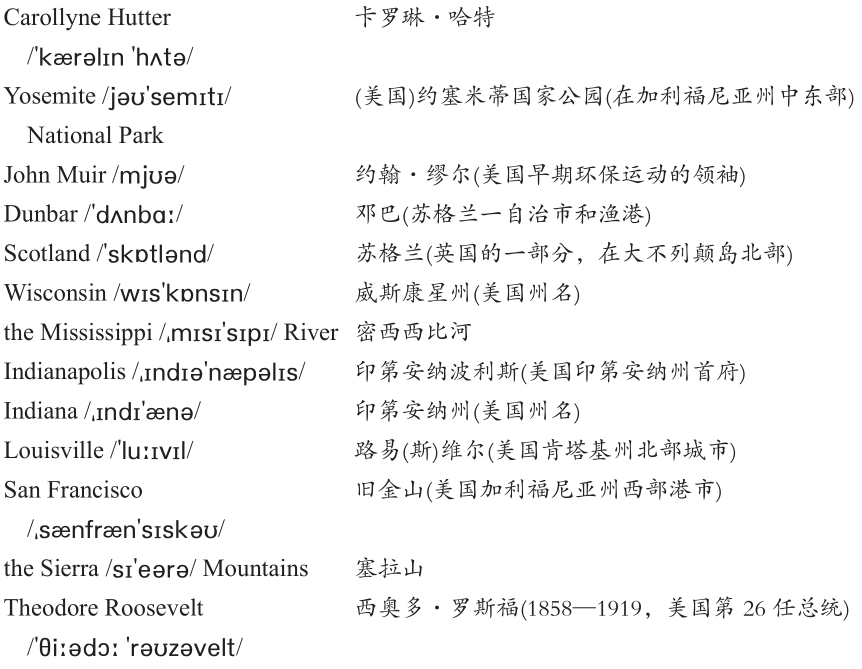
1 Every year, more than 3 million people travel from around the world to see the stunning beauty of Yosemite National Park in California. Every visitor should say “thank you” to one man — in particular, John Muir.
2 John Muir is one of America’s most famous environmentalists. Many call him the “Father of Our National Parks.” Muir spent decades fighting to preserve wilderness areas. His love of nature and his writings have inspired people everywhere, including presidents, to protect the environment.
3 John Muir was born on April 21, 1838, in Dunbar, Scotland. When he was 11, his family moved from Scotland to a small farm in Wisconsin. That was the end of his schooling. In Wisconsin, his father made him work on the farm for 16 hours a day, often under harsh conditions.
4 Even though John worked all the time, he had a tremendous hunger for knowledge. “I loved to read, and I wanted to learn about everything,” he explained. Often, he got up at one o’clock in the morning to read books by candlelight before he began his chores.
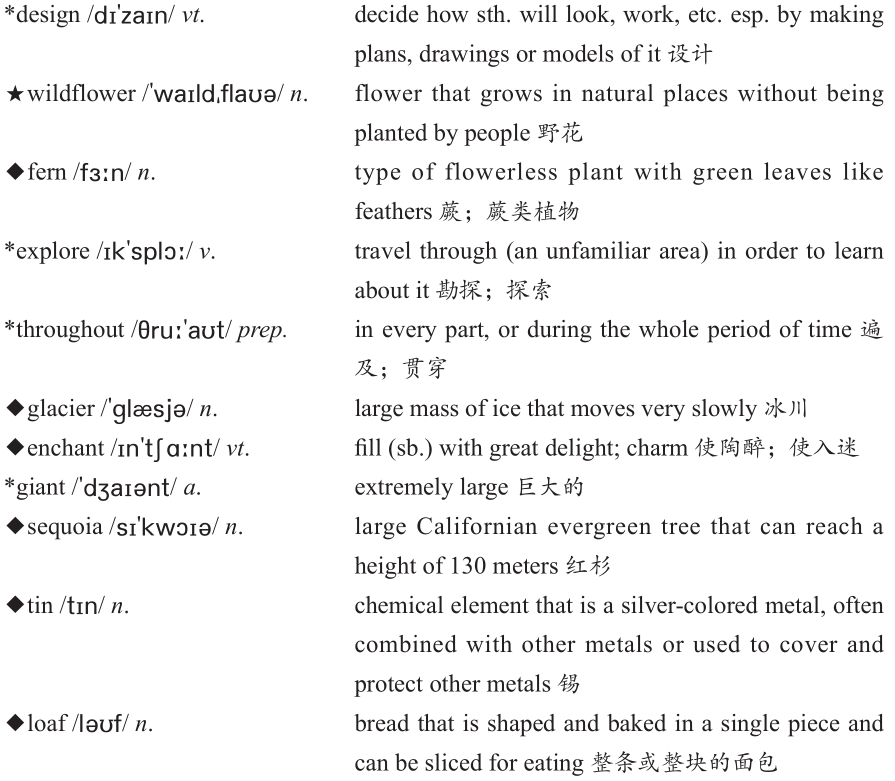
5 John Muir was a genius at making things. When he was 22, a neighbor suggested that he take his inventions to the state agricultural fair at Madison. People were amazed by what he had come up with. Soon, he had a job working on an amazing steamboat designed to cross ice on the Mississippi River. From there, he went to study at the University of Wisconsin, even though he had never been to high school! In his spare time, he collected wildflowers and ferns.
6 After attending the university for a few years, Muir wanted to move on and explore, even though he hadn’t taken all the courses he needed for graduating. In 1864, he went to Canada and later to Indianapolis, Indiana. While he was working at a factory there, a terrible accident injured Muir’s right eye, and he was blind for weeks. He was heartbroken that he would never again see the natural world that he loved.
7 Luckily, Muir’s sight came back. When it did, he decided to devote himself to the study of nature. In 1867, he left the factory and set off on foot on a 1,000-mile walk from Louisville, Kentucky, to Florida to study plants. As he walked, he wrote down what he saw in nature.
8 The next year, Muir sailed to San Francisco. From there, he set off to see the wilderness of the Sierra Mountains of California. He went to Yosemite Valley, a place few people visited in those days.
9 Muir was in awe of the mountains, which he called the Range of Light. Throughout the rest of his life, he would be happiest when he was in the mountains.
10 Muir spent many years in the Sierras, studying plants and glaciers. He was particularly enchanted with the giant sequoia trees. Often, he carried “only a tin cup, a handful of tea, a loaf of bread,” and a journal.
11 He also continued writing about what he saw and learned. Eventually, he gained a large audience interested in learning about the natural beauty of the Sierra wilderness. In time, he became famous.
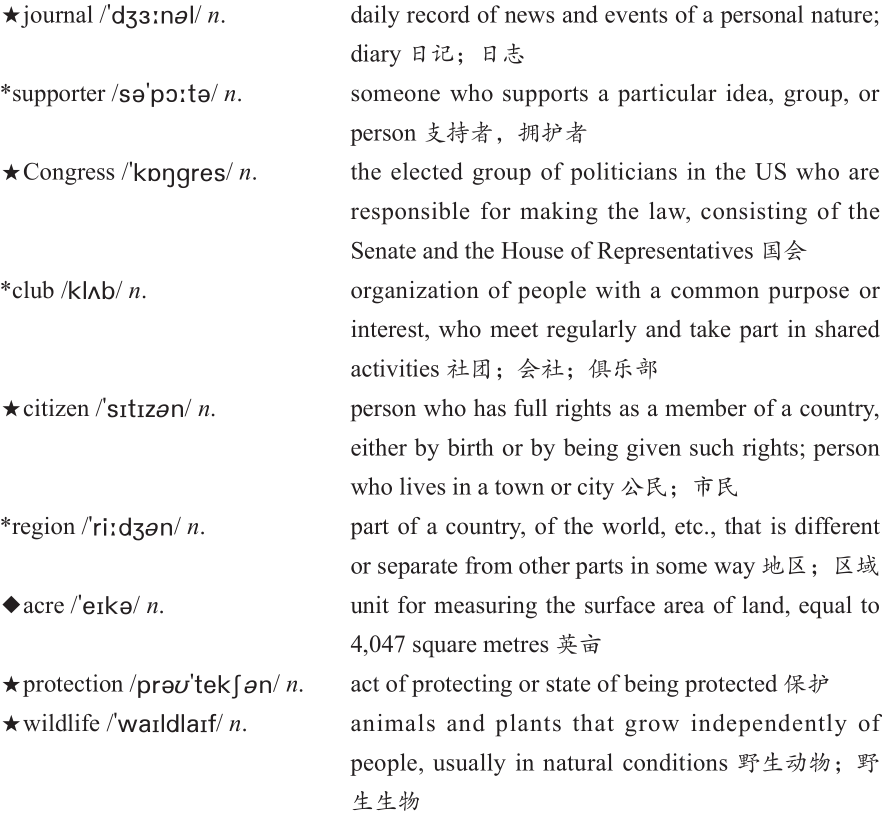
12 As Muir became more and more concerned about the destruction of the wilderness, he became more political. In addition to giving lectures about saving America’s wilderness lands, he worked with politicians to make Yosemite and other places into national parks and protected areas. On October 1, 1890, John Muir and his supporters won a big battle. The US Congress established Yosemite National Park. It was the second national park in the United States.
13 In May 1892, John Muir and others set up the Sierra Club. It began as an organization made up of regular citizens who wanted to protect the entire Sierra region. Muir was its first president.
14 Theodore Roosevelt became president of the United States in 1901. He asked Muir to guide him alone through Yosemite NationalPark and Yosemite Valley. President Roosevelt cared deeply about the environment. Muir inspired Roosevelt. As president, Roosevelt set aside 148 million acres of forest preserves, 50 regions for the protection of wildlife, and 5 new national parks.
15 Muir spent the rest of his life exploring nature, writing about it, and fighting to save wilderness areas. Today, John Muir’s spirit lives on through the work of the Sierra Club and his writings.
(723 words)