-
1 Article
-
2 Words and&nb...
-
3 Notes on&nbs...

Students in Shock (2)
Author Unknown
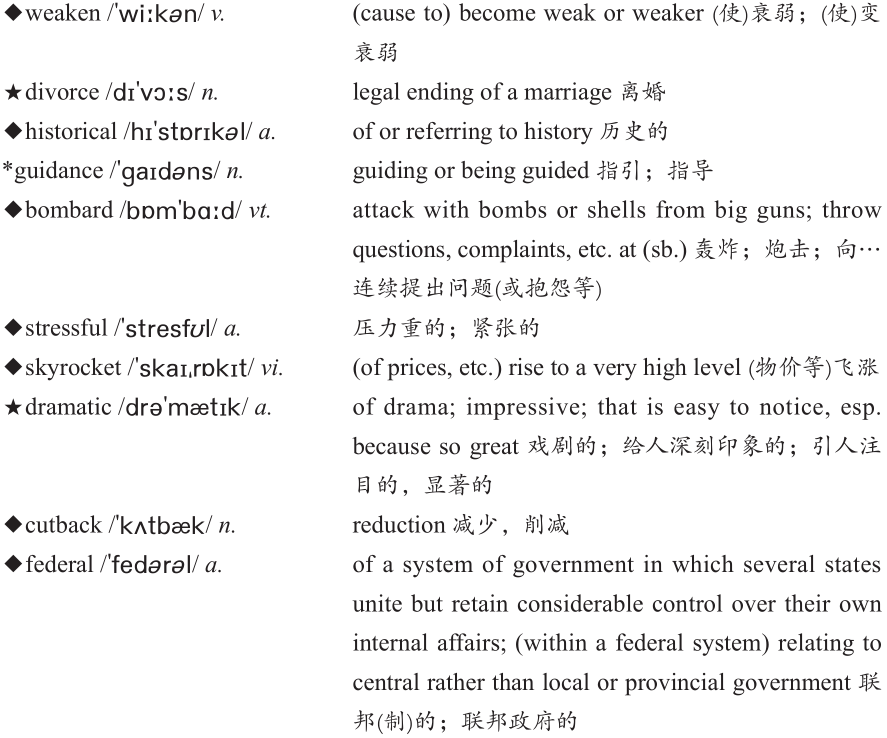
1 There are three reasons why today’s college students are suffering more than earlier generations. First is a weakening family support structure. The transition from high school to college has always been difficult, but in the past there was more family support to help students get through it. Today, with divorce rates at a historical high and many parents experiencing their own psychological difficulties, the traditional family is not always available for guidance and support. And when students who do not find stability at home are bombarded with numerous new and stressful experiences, the results can be devastating.
2 Another problem college students face is financial pressure. In the last decade tuition costs have skyrocketed — up about 65 percent at public colleges and 90 percent at private schools. For students living away from home, costs range from $8,000 to as much as $20,000 a year and more. And at the same time that tuition costs have been rising dramatically, there has been a cutback in federal aid to students. College loans are now much harder to obtain and are available only at near-market interest rates. Consequently, most college students must work at least part time. And for some students, the pressure to do well in school while holding down a job is too much to handle.
3 A final cause of student shock is the large selection of majors available. Because of the magnitude and difficulty of choosing a major, college can prove to be a time of great indecision. Many students switch majors, and some do so a number of times. As a result, it is becoming commonplace to take five or six years to get a degree. It can be depressing to students not only to have taken courses that don’t count toward a degree but also to be faced with the added tuition costs. In some cases these costs become so high that they force students to drop out of college.
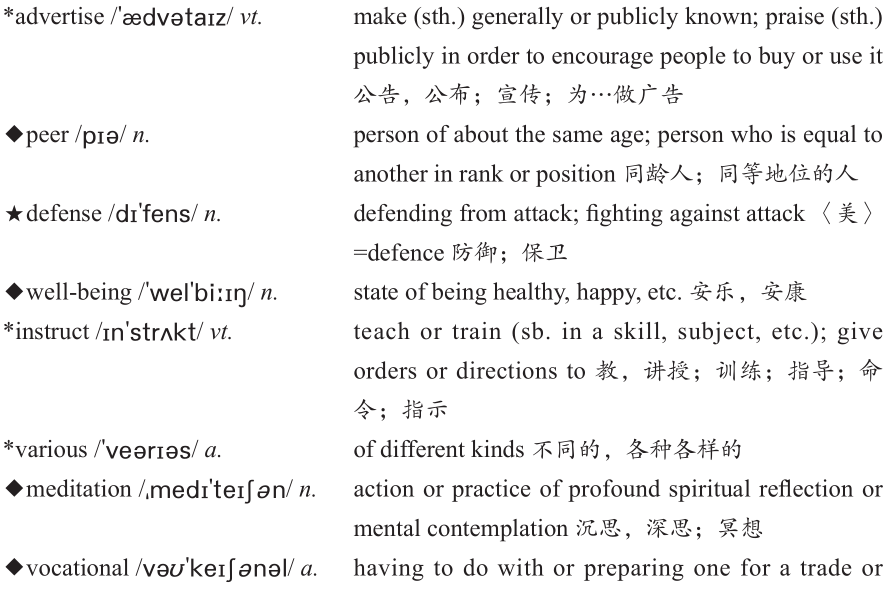
4 While there is no magic cure-all for student shock, colleges have begun to recognize the problem and are trying in a number of ways to help students cope with the pressures they face. For one thing, many colleges are upgrading their psychological counseling centers to handle the greater demand for services. Additional staff is being hired, and experts are doing research to learn more about the psychological problems of college students. Some schools even advertise these services in student newspapers and on campus radio stations. Also, juniors and seniors are being trained as peer counselors. These peer counselors may be able to act as a first line of defense in the battle for students’ well-being by spotting and helping to solve problems before they become too big for students to handle.
5 In addition, stress-management workshops have become common on college campuses. At these workshops, instructors teach students various techniques for dealing with stress, including meditation and exercise.
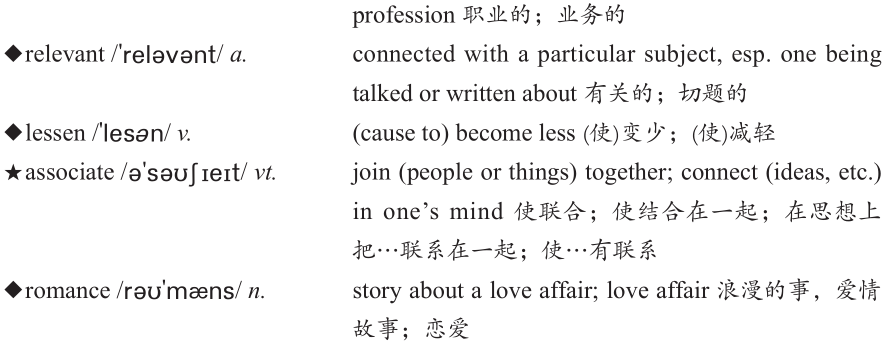
6 Finally, many schools are improving their vocational counseling services. By giving students more relevant information about possible majors and career choices, colleges can lessen the anxiety and indecision often associated with choosing a major.
7 If you ever feel that you’re “in shock,” remember that your experience is not uncommon. Learn to see things in their proper perspective. Certainly, the end of a romance or failing an exam is not an event to look forward to. But realize that rejection and failure happen to everyone sooner or later. And don’t be reluctant to talk to somebody about your problem. The useful services available on campus won’t help you if you don’t take advantage of them.
(591 words)