目录

  • 1 Introduction
    • 1.1 Course guide
  • 2 Topic 1: People
    • 2.1 Section 1: Sentence patterns mini-lecture 1
    • 2.2 Section 2: Sentence patterns mini-lecture 2
    • 2.3 Section 3: Sentence patterns
    • 2.4 Section 4: Exercise
    • 2.5 Section 5: Introducing yourself mini-lecture 1
    • 2.6 Section 6: Introducing yourself mini-lecture 2
    • 2.7 Section 7: Script
    • 2.8 Section 8: Introducing yourself
    • 2.9 Section 9: Exercise
    • 2.10 Section 10: Teaching material
  • 3 Topic 2: Place
    • 3.1 Section 1: Comparative and Superlative Forms of Adjectives mini-lecture 1
    • 3.2 Section 2: Comparative and Superlative Forms of Adjectives
    • 3.3 Section 3: Exercise
    • 3.4 Section 4: Writing an English letter mini-lecture 1
    • 3.5 Section 5: Writing an English letter
    • 3.6 Section 6: Writing an English email mini-lecture 2
    • 3.7 Section 7: Writing an English email
    • 3.8 Section 8: Exercise
    • 3.9 Section 9: Further listening - You can't miss it mini-lecture 1
    • 3.10 Section 10: Teaching material
  • 4 Topic 3: Shopping
    • 4.1 Section 1: Model verb mini-lecture 1
    • 4.2 Section 2: Model verb mini-lecture 2
    • 4.3 Section 3: Model verb
    • 4.4 Section 4: Exercise
    • 4.5 Section 5: English Resume Writing mini-lecture 1
    • 4.6 Section 6: English Resume Writing mini-lecture 2
    • 4.7 Section 7: English Resume Writing 1
    • 4.8 Section 8: English Resume Writing 2
    • 4.9 Section 9: Exercise
    • 4.10 Section 10: Further listening - Another souvenir mini-lecture 1
    • 4.11 Section 11: Teaching material
  • 5 Topic 4: Relationships
    • 5.1 Section 1: Participle mini-lecture 1
    • 5.2 Section 2: Participle mini-lecture 2
    • 5.3 Section 3: Participle mini-lecture 3
    • 5.4 Section 4: Participle
    • 5.5 Section 5: Exercise
    • 5.6 Section 6: Describing people mini-lecture 1
    • 5.7 Section 7: Describing people
    • 5.8 Section 8: Exercise
    • 5.9 Section 9: Further listening - My job mini-lecture 1
    • 5.10 Section 10: Script
    • 5.11 Section 11: Teaching material
  • 6 Topic 5: Entertainment
    • 6.1 Section 1: Subject-verb Agreement mini-lecture 1
    • 6.2 Section 2: Subject-verb Agreement mini-lecture 2
    • 6.3 Section 3: Subject-verb Agreement mini-lecture 3
    • 6.4 Section 4: Exercise
    • 6.5 Section 5: Writing an English business card mini-lecture 1
    • 6.6 Section 6: Writing an English business card
    • 6.7 Section 7: Exercise
    • 6.8 Section 8: Further listening - Laughter is the best medicine mini-lecture 1
    • 6.9 Section 9:  Script
    • 6.10 Section 10: Teaching material
Section 7: English Resume Writing 1


英文简历(resume 

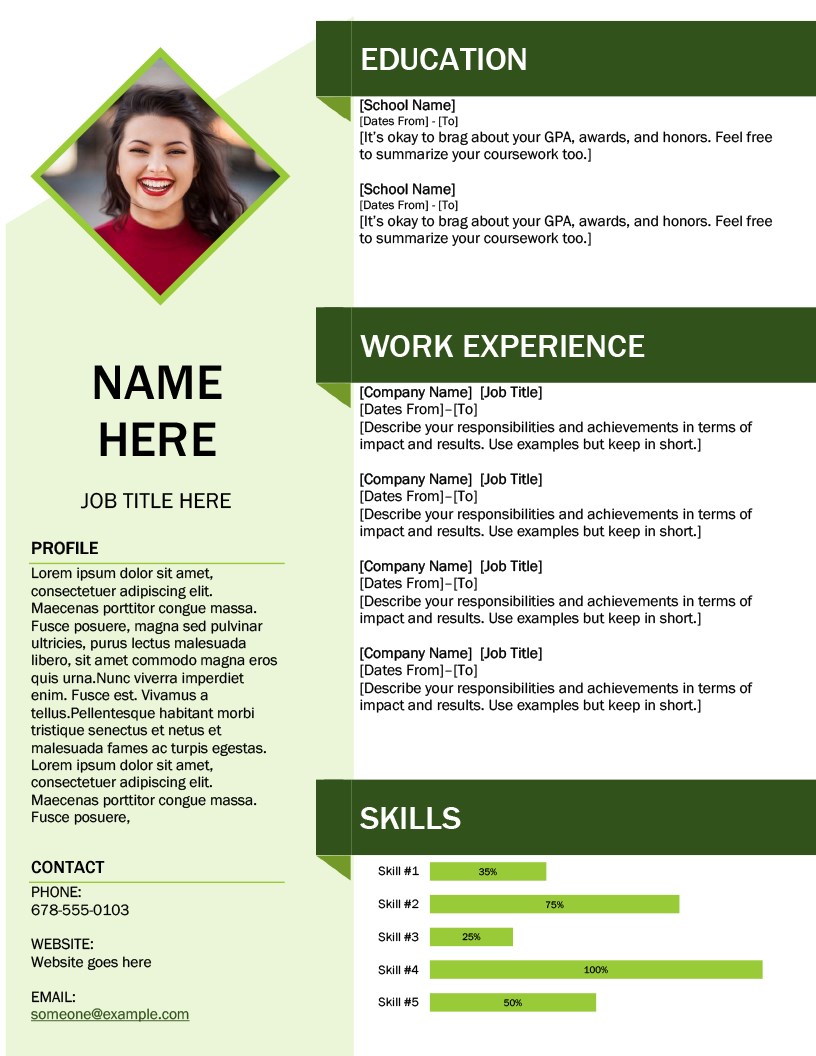
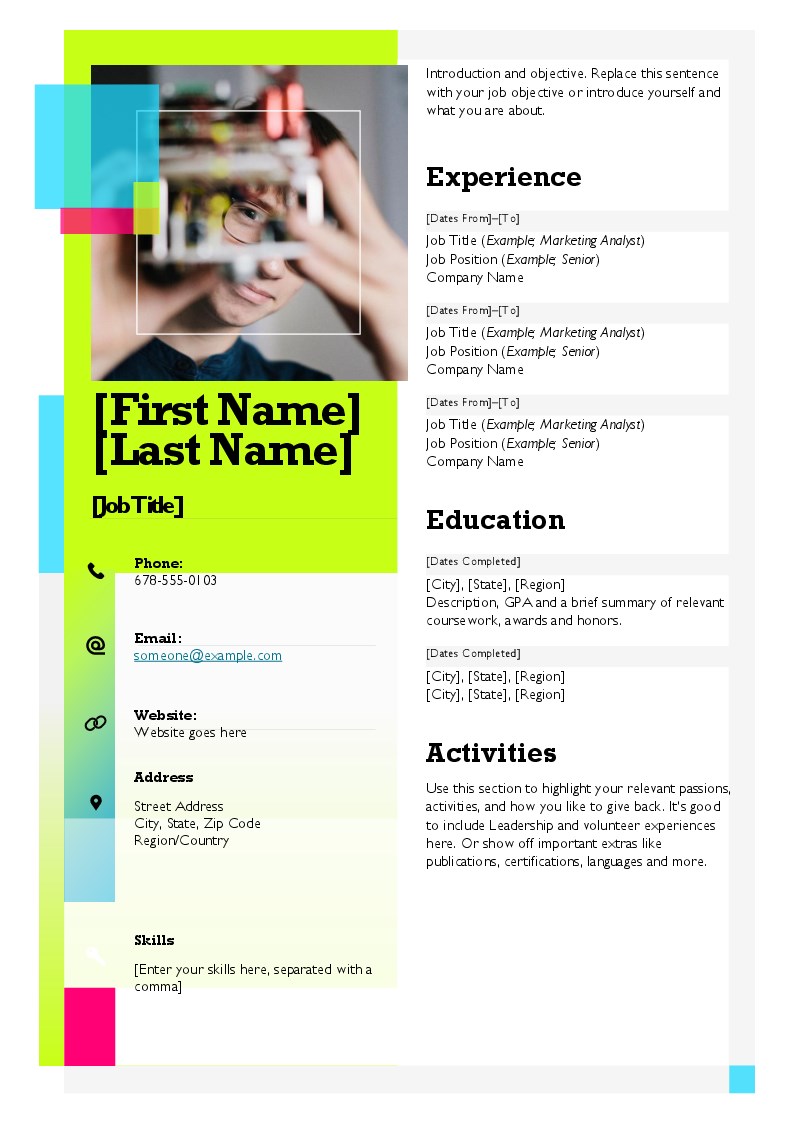
英文简历(resume)并无固定不变的单一形式,应聘者完全可以根据个人的具体情况来确定采用何种形式,灵活设计。一般来说,根据个人经历的不同侧重点,可以选用以下三种形式:

1)以学历为主的简历 basic resume

这种形式适应于应届毕业生或中学毕业后仍在待业的求职人员,因为没有工作经历,所以把重点放在学业上,从最高学历往下写。

basicresume中,一般包括下列元素:

a. personal date(个人资料):name(姓名)、address(通讯地址)、postalcode(邮政编码)、phone number(电话号码)、birthdate(出生日期)、birthplace(出生地点)、sex(性别)、height(身高)、weight(体重)、health(健康状况)、date of availability(可到职日期)、number of identification card(身份证号码)。因为是应届毕业生或中学毕业不久,一般没有结婚,因而可省略marital status(婚姻状况)和children(儿女情况)两项。当然,如果是研究生毕业已婚,则应写明。

b. job/career objective(应聘职位)。

c. education(学历):就读学校及系科的名称、学位、始止时间和应聘职位相关的课程与成绩、社会实践、课外活动、奖励等都应一一列出。

d. special skill(特别技能)。

e. hobbies/interests(业余爱好)。如果在学历项目的课外活动中已经注明,此项则不必重复。

2)以经历为主的简历 chronological resume

以这种形式出现的英语简历,往往侧重于工作经历,把同应聘职位有关的经历和业绩按时间顺序书写出来,把工作经历放在学历之前。经历和学历的时间顺序均是由近至远。

毫无疑问,这种形式的英语简历适合于有工作经验的求职人员。

chronologicalresume中,通常包括以下元素:

a. personal date(个人资料)。具体内容同以学历为主的简历相同,不过,因为你参加工作多年,已进入结婚年龄,所以不管你是否结婚,都应注明婚姻状况和儿女情况。

b. job/career objective(应聘职位)。

c. work experience(工作经历)。务必写明自己在每个工作单位的职位、职责和业绩以及工作起止时间。

d. education(学历):因为你已工作多年,雇主重点考虑你的工作经验是否能胜任你所应聘的职位,所以学历只是一个参考的因素,因而不必象以学历为主的简历那样写得详细,只需注明你就读的校系名称、始止时间和学位即可。

e. technical qualifications and special skills(技术资格和特别技能)。

f. scientific research achievements(科研成果)。

3)以职能为主的简历 functional resume

这种形式的英语简历,也是突出工作经历,因而所含元素和以经历为主的简历相同。以经历为主的简历和以职能为主的简历的根本差别在于:以经历为主的简历是按时间顺序来排列工作经历,而以职能为主的简历则按工作职能或性质来概括工作经历,并无时间上的连贯性,旨在强调某些特定的工作能力和适应程度。比方说,你曾经在两个不同的工作单位担任相同的职务或负责相同的业务,便可归纳在一个项目之中。