
Writing a Memo
Office memos (memorandums or memoranda) are widely used in businesses and other organizations all over the world. The term “memorandum” was first used to describe something written down as a reminder to oneself, but now the term refers to shorter letters sent within a company. Memos can be sent to people within a department, or between different departments. Sometimes a memo is sent to just one person, but more often memos are used to communicate with groups, so the same memo will be sent to a number of people.
Memos must be clear and brief so the message is communicated quickly and effectively. If they're too long, people don't read them. Generally, the form for memos is well defined. They are four basic parts: the heading, the opening, the body, and the closing.
Heading
A heading at the top of a memo contains the word “memo”or “memorandum”, the date, the recipient, the sender, and the subject.
Subject
The subject line is part of the heading. It indicates what the memo is about. This is an essential part of a memo because it allows busy people to determine the memo's gist at a glance. Subject lines are not long. They aren't complete sentences, but must be as specific as possible.
Opening
An opening sentence highlights the main idea. The mainidea, which appears in the subject line, is restated in more detail in the opening line of the memo's body.
Body
The body elaborates on the main idea or topic of the memo. If a lot of text is required, use bulleted lists, columns, or charts to make the information easier to read.
Closing
The closing line explains the action required, describes the next steps, or may provide a closing thought.
No signature is included at the bottom of a memo because the reader's name has been provided in the heading.
Sample
Review this sample memo. Circle and label the subject line, the opening, the body, and the closing.
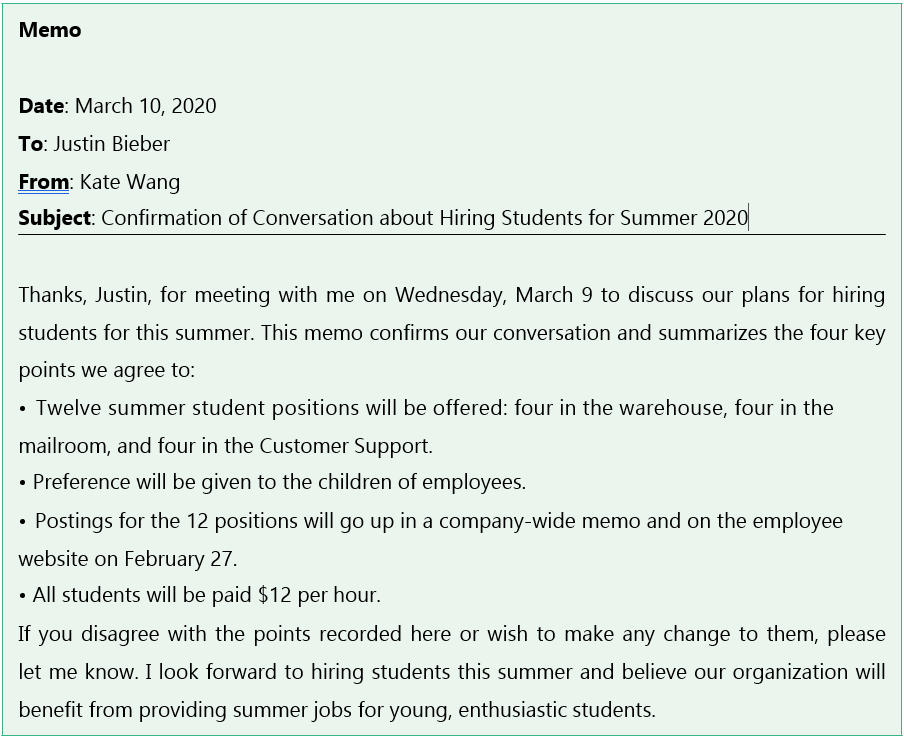
Now your turn:
Suppose you are supervisor in Human Resources Department, and have interviewed three candidates for Commercial Manager. Write a memo about your recommendation for the appointment to CEO, Judy Grey.

