
3.1 Introduction
Low-carbon steelis the most commonly used sheet metal because of its low cost and generallygood strength and formability characteristics. Aluminum is the most commonmaterial for such sheet-metal applications as beverage cans, packaging, kitchenutensils, and applications for corrosion resistance. The common metallic materialsfor aircraft and aerospace applications are aluminum and titanium, althoughthey are being replaced increasingly with composite materials.
Stamping processes vary with the shape, the size and the accuracydemands, the output of the part and the material. It can be classified into twocategories: cutting process and forming process. The objective of cuttingprocess is to separate the part from blank along a given contour line instamping. The surface quality of the cross-section of the separated part mustmeet a certain demand. In forming processes, such as bending, deep drawing,local forming, bulging, flanging, necking, sizing, and spinning, plasticdeformation occurs in the blank without fracture and wrinkle, and the part withthe required shape and dimensional accuracy is produced.
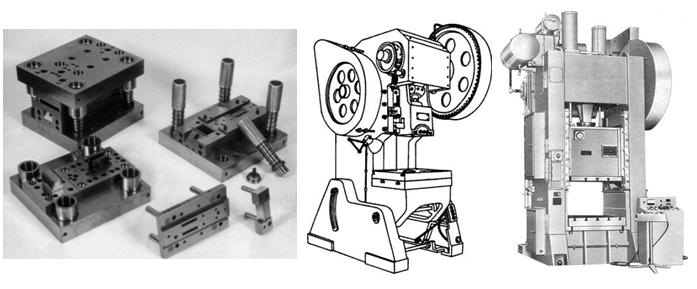
FIGURE 3-2 Stamping is carried out by dies and press.

