
目录

  • 1 课前导学
    • 1.1 自测
    • 1.2 慕课学习建议
  • 2 第2,3周 Chapter 1.  Introduction
    • 2.1 第一课时 1.1 What Is Manufacturing?
    • 2.2 第二课时 1.2 Selection of Materials
    • 2.3 第三课时 1.3 Selection of Manufacturing  Processes (1)
    • 2.4 第四课时 1.3 Selection of Manufacturing  Processes (2)
  • 3 第4,5周 Chapter 2. Metal-Forging Processes and Equipment
    • 3.1 第一课时 2.1 Introduction (1)
    • 3.2 第二课时 2.1 Introduction (2)
    • 3.3 第三课时 2.2 Open-die Forging (1)
    • 3.4 第四课时 2.2 Open-die Forging (2)
    • 3.5 线上直播 习题课+锻造1
  • 4 第6,7周 Chapter 2. Metal-Forging Processes and Equipment
    • 4.1 第一课时 2.2 Open-die Forging (3)
    • 4.2 第二课时 2.3 Impression-die and Closed-die Forging (1)
    • 4.3 第三课时 2.3 Impression-die and Closed-die Forging (2)
    • 4.4 第四课时 2.3 Impression-die and Closed-die Forging (3)
    • 4.5 线上直播 2022-4-22 Forging-2
  • 5 第8,9周 Chapter 2. Metal-Forging Processes and Equipment
    • 5.1 第一课时 2.3 Impression-die and Closed-die Forging (4)
    • 5.2 第二课时 2.4 Various Forging Operations
    • 5.3 第三课时 2.5 Die design, Die materials and Lubrication (1)
    • 5.4 第四课时 2.5 Die design, Die materials and Lubrication (2)
    • 5.5 线上直播 2022-4-29 Forging-3
  • 6 第10,11周 Chapter 3. Sheet-Metal Forming Processes and Equipment
    • 6.1 第一课时 3.1 Introduction (1)
    • 6.2 第二课时 3.1 Introduction (2)
    • 6.3 第三课时 3.1 Introduction (3)
    • 6.4 第四课时 3.2 Shearing (1)
  • 7 第12,13周 Chapter 3. Sheet-Metal Forming Processes and Equipment
    • 7.1 第一课时 3.2 Shearing (2)
    • 7.2 第二课时 3.2 Shearing (3)
    • 7.3 第三课时 3.2 Shearing (4)
    • 7.4 第四课时 3.2 Shearing (5)
    • 7.5 思维导图-优秀作业展示
  • 8 第14,15周 Chapter 3. Sheet-Metal Forming Processes and Equipment
    • 8.1 第一课时 3.3 Bending Sheets, Plates, and Tubes (1)
    • 8.2 第二课时 3.3 Bending Sheets, Plates, and Tubes (2)
    • 8.3 第三课时 3.4 Deep Drawing
    • 8.4 第四课时 3.5 Design Considerations in Sheet-Metal Forming (1)
  • 9 第16,17周
    • 9.1 第一课时 3.5 Design Considerations in Sheet-Metal Forming (2)
    • 9.2 第二课时 科技英语语法 (1)
    • 9.3 第三课时 科技英语语法 (2)
    • 9.4 第四课时 Plastics Injection Molding
第一课时 3.1 Introduction (1)

3.1 Introduction

Products made of sheetmetals are all around us. They include a very wide range of consumer andindustrial products, such as beverage cans, cookware, file cabinets, metaldesks, appliances, car bodies, and aircraft fuselages(Fig.3-1. Sheet forming dates backto about 5000 B.C., when household utensils and jewelry were made by hammingand stamping gold, silver, and copper. Compared to those made by casting and byforging, sheet-metal parts offer the advantages of light weight and versatileshape.
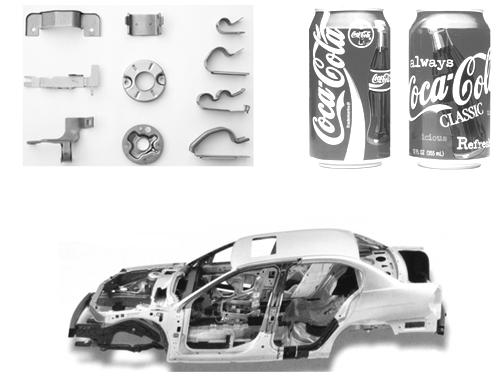
FIGURE 3-1  Examples of stamped sheet-metalparts and products.

The term pressworking or pressforming is used commonly in industry todescribe general sheet-forming operations, because they typically are performedon presses using a set of dies (Fig.3-2). A sheet-metal part produced in presses is called a stamping. Stampingis carried out by dies and press, and has a high productivity. Mechanizationand automatization for stamping can be realized conveniently owing to its easyoperation. Because the stamping part is produced by dies, it can be used toproduce the complex part that may be manufactured with difficulty by otherprocesses. The stamping part can be used generally without further machining.Usually, stamping process can be done without heating. Therefore, not only doesit save material but also energy. Moreover, the stamping part has thecharacteristics of light weight and high rigidity.