
Reading Aloud
Read the following sentences aloud, making a pause between sense groups.
1. Do you remember a time | when people were a little nicer, | a little softer, | a little gentler with others?
2. I recently got a thank-you note from a guest | who attended a 40th birthday party | that Frank and I hosted | for Frank’s daughter-in-law.
3. Now, | I know we all have busy lives, | but the note my guest sent me | didn’t take long to write.
4. Being on time for lunch dates, | for example, | shows the person we’re meeting | that we value his or her precious time | as much as we do our own.
5. If you’ re a husband, | how long has it been | since you walked in the door | with a rose for your wife?
Cultural Information
1. Quote
A man's manners are a mirror in which he shows his portrait.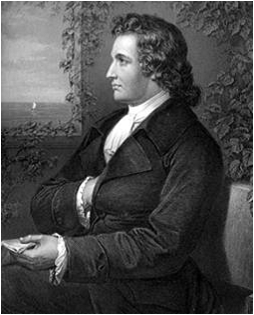
--- Johann Wolfgang von Goethe
2. Manners
Good manners are very important in the communication of daily life. Everyone likes a person with good manners. But what are good manners? How does one know what should do and what should not do when trying to be a good-mannered person?
Here are some common examples. A person with good manners never laughs at a people in trouble. Instead, he (she) always tries to consult or offer help to the person. When he (she) takes a bus and sees an old man or a sick man, he (she) always gives his (her) seat to him. He doesn't interrupt other people when they are talking.
Ideas of what are good manners vary in different regions. For example, peoplein Western countries usually kiss each other to show their greetings, whereas in China, kissing in public is something unusual and sometimes be regarded as impolite to somebody else. So it is important to know the polite and impolite behaviour before you go to a region. But it is always right to be kind and helpful to others.
Audiovisual Supplement
Watch a video clip and answer the following questions.

Main Idea
What is this essay concerned with?
This essay is concerned with the necessity and significance of good manners.
Structural Analysis
1. How is the essay organized?
The essay is organized chiefly by means of the following methods:
(1) the main ideais used as the main framework of the text;
(2) the deductive method is employed in most of the paragraphs;
(3) the writer’s personal experiences and some typical examples are made good use of as convincing evidence;
(4) some key phrases, each of which stands in a single line, are used as subtitles.
2. Work out the structure of the text by completing the table.
Paragraph(s) | Main idea |
1 | The writer puts forward her viewpoint: nowadays, many people show a lack of_____1_____; they are less friendly or less polite than people in the past. |
2-4 | The writer raises and proves her opinion: good manners are a sort of _____2____,which can make one feel better with a nice image. |
5-10 | The writer points out and illustrates the favorable __3____ of some specific good manners on the receivers. |
11 | The writer concludes that good manners are___4____; meanwhile, she expresses her sincere wish for ____5_____. |

