
目录

  • 1 Course Introduction
    • 1.1 Course Introduction
    • 1.2 Timeline of Western history
    • 1.3 纪录片汇总
    • 1.4 the Ancient Near East
  • 2 The Ancient Near East :Peoples and Empires ---
    • 2.1 Objectives
    • 2.2 the Hebrews
    • 2.3 Bible Stories: Genesis
    • 2.4 Exodus
  • 3 Greek Civilization--Homer's Epics
    • 3.1 the legacy of Ancient Greece
    • 3.2 Iliad
    • 3.3 Odessey
    • 3.4 Exercises in language learning
    • 3.5 新建课程目录
    • 3.6 Greek Mythology
  • 4 Greek Civilization-Drama&Philosophy
    • 4.1 Greek Tragedy--Oedipus  the King
    • 4.2 Philosophy --Socrates ,Plato and Aristotle
  • 5 Greek Civilization  2
    • 5.1 Greek Arts
    • 5.2 Hellenistic World --- Legacy of Alexander
  • 6 Roman Republic
    • 6.1 A Brief Introduction of Roman History
    • 6.2 Three Strengths of Ancient Rome
  • 7 Roman Empire
    • 7.1 Roman cultural and Society 2
    • 7.2 Imperial Rome
    • 7.3 The Transformation of the RomanWorld
  • 8 Medieval Civilization
    • 8.1 342 of Medieval Civilization
    • 8.2 General Introduction
      • 8.2.1 新建课程目录
    • 8.3 Germanic Kingdoms
    • 8.4 The Byzantin Empire
    • 8.5 The Empire of Islam
    • 8.6 Christian Church and Medieval Civilization
      • 8.6.1 The Development of Christian Church
      • 8.6.2 Monasticsism
    • 8.7 The Intellectual and Aritistic World of the High Middle Ages
      • 8.7.1 The Rise of Universities
      • 8.7.2 A Revival of Classical Antiquity
      • 8.7.3 The Development of Scholasticism
      • 8.7.4 Romannistic Architecture and the  Gothic Cathedral
  • 9 Renaissance
    • 9.1 第一课时
    • 9.2 第二课时
  • 10 期末复习
    • 10.1 课程重点
  • 11 Religious Reformation
    • 11.1 第一课时
    • 11.2 第二课时
  • 12 Scientific Revolution
    • 12.1 第一课时
    • 12.2 Women's Role
  • 13 Enlightenment
    • 13.1 第一课时
    • 13.2 第二课时
  • 14 Industrial Revolution
    • 14.1 第一课时
    • 14.2 第二课时
  • 15 Review
    • 15.1 第一课时
    • 15.2 第二课时
  • 16 第十五单元
    • 16.1 第一课时
    • 16.2 第二课时
  • 17 第十六单元
    • 17.1 第一课时
    • 17.2 第二课时
Odessey


2.the Odyssey

The Odyssey is the first and  perhaps the greatest adventure story of all time. According to Rouse, this is the best story ever written , and it has been a favorite for three thousand years. Until lately it has been in the mind of every educated man; “and it is a thousand pities the new world should grow  without it.” “Indeed it enchanted every man, lettered or unlettered and every boy who hears it.”

   Odyssey tells a simple and familiar story: the return of a hero Odysseus , a veteran of Trojan War. After Trojan War, he was trying to go back home, but was detained by the God Poseidon. He spent ten trial-filled years wondering in exotic lands. His adventurous stories have fascinated and inspired many readers. 


阅读故事 Heroes and gods and monsters in Greek mythology Chapter VIII, IX  (资料库 )


The Voyages of Odysseus 阅读问题:

  1. What happened when they saw the lotus ?

  2. Who had the control of the wind and why did he refuse to help Odysseus later ?

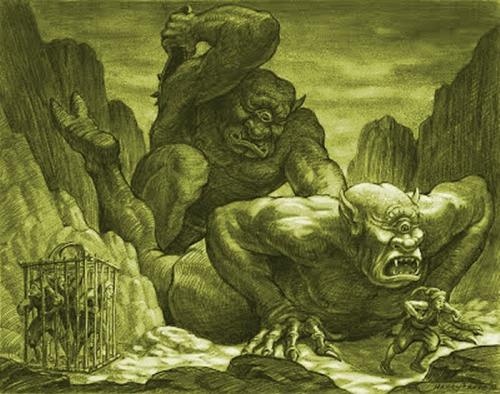
  3. How did they run away from the Cyclops?---- one-dimensional giant

  4. Why didn’t Odysseus become pigs ?

  5. What did Odysseus do protect himself from the enchanting singing of the Sirens

  6. How  did  Penelope protect herself from the suitors ?


Pirimage to the West 

Temptations ( 《道德经》)

Story of going back home 

Exodus  Vs Odyssey 


Lust of eyes , cravings (a very strong and eager desire) , What I have done and what I have  (pride)


Louise Glück (American Poet, 2020 Noble Prize winner for literature)

Meadowlands (1996), Glück’s first new work after The Wild Iris,takes its impetus from Greek and Roman mythology. The book uses the voices of Odysseus and Penelope to create “a kind of high-low rhetorical experiment in marriage studies,” according to Deborah Garrison in the New York Times Book Review. Garrison added that, through the “suburban banter” between the ancient wanderer and his wife, Meadowlands “captures the way that a marriage itself has a tone, a set of shared vocal grooves inseparable from the particular personalities involved and the partial truces they’ve made along the way.”