目录

  • 1 Outline
    • 1.1 Teaching syllabus
    • 1.2 Test syllabus
    • 1.3 Group work
    • 1.4 group works of previous session
    • 1.5 After the First Lecture
  • 2 Chapter 1 Accounting and the Business Environment
    • 2.1 Learning framework
    • 2.2 The organizations and rules that govern accounting
    • 2.3 The accounting equation
    • 2.4 The financial statements
    • 2.5 Critical thinking
  • 3 Chapter 2 Recording Business Transactions
    • 3.1 Learning framework
    • 3.2 Double-entry accouting
    • 3.3 The trial balance
    • 3.4 Business Ethics
    • 3.5 group work
  • 4 Chapter 3 The Adjusting Process
    • 4.1 Learning framework
    • 4.2 The difference between Cash basis and Accrual basis accounting
    • 4.3 What are adjusting entries
    • 4.4 The adjusted trial balance
    • 4.5 group work
  • 5 Chapter 4 Completing the Accounting Cycle
    • 5.1 Learning framework
    • 5.2 The accounting cycle
    • 5.3 The closing process
    • 5.4 group work
  • 6 Chapter 5 Merchandising Operations
    • 6.1 Learning framework
    • 6.2 Two different inventory system
    • 6.3 新建课程目录
  • 7 Chapter 6 Merchandise Inventory
    • 7.1 Learning framework
    • 7.2 key points
    • 7.3 four inventory costing methods
  • 8 Chapter 8 internal control and Cash
    • 8.1 Enron: The Smartest Guys in the Room
    • 8.2 internal control
      • 8.2.1 Catch me if you can
  • 9 Chapter 9 Receivables
    • 9.1 key points
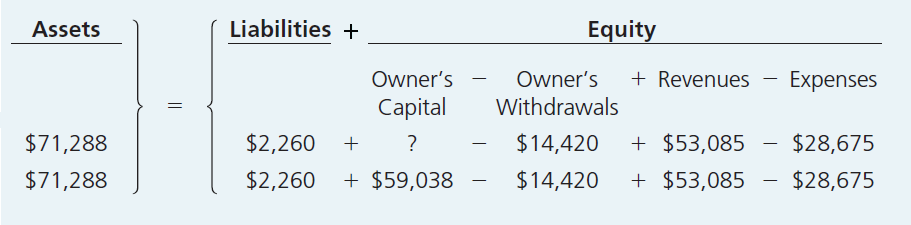
The accounting equation

The accounting equation must always balance. 

Most textbook examples show companies that are profitable from the very beginning and always have positive equity balances. Although not illustrated in many textbooks, stockholders’equity can be negative if liabilities exceed assets, but the equation would still balance. 

For example, a company could have $100 of assets, $150 of liabilities, and $(50) of equity,and the equation would equal $100 on each side. This is not a good position tobe in, but is not unusual in the business world. You could also have a transaction that affects only one side of the equation (left or right), but the equation would still balance. For example, a transaction could increase one asset and decrease another asset and the equation would balance with no effecton liabilities and equity. A company that purchases supplies with cash would experience this.