【21秋】医学生理学(1)

罗丹况海斌李桂林高云

目录

  • 1 Introduction to Physiology
    • 1.1 Chapter 1 Control of the internal environment
  • 2 Cellular functions
    • 2.1 Chapter 4 Transport of substances through cell membranes
    • 2.2 Chapter 5 Membrane potentials and action potential
    • 2.3 Chapter 6-7 Excitation and contraction of skeletal muscle
  • 3 Cardiovascular system
    • 3.1 Chapter 9-11 Bioelectrical activity of the heart
      • 3.1.1 instruction video
    • 3.2 Chapter 9,20 Heart as a pump
      • 3.2.1 instruction video
    • 3.3 Chapter 14-16 Vascular physiology
    • 3.4 Chapter 17-19 Regulation of circulaton
      • 3.4.1 instruction video
  • 4 Respiratory system
    • 4.1 Chapter 37 Pulmonary ventilation
    • 4.2 Chapter 39, 40 Gas exchange and transport
    • 4.3 Chapter 41 Regulation of Respiratory movement
  • 5 UNIT V Urine formation
    • 5.1 Renal function and filtration Part I (Major functions of the kidney)
    • 5.2 Renal function and filtration Part II (The juxtaglomerular apparatus)
    • 5.3 Renal function and filtration Part III (Filtration membrane)
    • 5.4 Renal function and filtration Part IV (Effective glomerular filtration pressure)
    • 5.5 Renal function and filtration Part V (Glomerular filtration and its affecting factors)
    • 5.6 Reabsorbtion and secretion of renal tubule Part  I (The reabsorption of Na+ in renal tubule)
    • 5.7 Reabsorbtion and secretion of renal tubule Part  II (The reabsorption of H2O in renal tubule)
    • 5.8 Reabsorbtion and secretion of renal tubule Part  III (Hydrogen secretion in renal tubule)
    • 5.9 Reabsorbtion and secretion of renal tubule Part  IV (Reabsorption and secretion of K+ in renal tubule)
    • 5.10 Reabsorbtion and secretion of renal tubule Part  V (Reabsorption of glucose in renal tubule)
    • 5.11 Reabsorbtion and secretion of renal tubule Part  VI (Reabsorption and excretion of urea in renal tubule)
    • 5.12 Urine formation (Chen Jiaxiang)
    • 5.13 Urine formation Part II-1 (Chen Jiaxiang)
    • 5.14 Urine formation Part II-2 (Chen Jiaxiang)
    • 5.15 Urine formation Part III (Chen Jiaxiang)
    • 5.16 Urine Formation by the Kidneys Part 1 (PPT)
    • 5.17 Urine Formation by the Kidneys Part 2 (PPT)
    • 5.18 Urine Formation by the Kidneys Part 3(PPT)
  • 6 UNIT IX: The Nervous System: A. General Principles and Sensory Physiology
    • 6.1 Basic Functions of Synapses
    • 6.2 Transmitter and Receptor
    • 6.3 Neuronal Circuits for Processing Information,Sensory Receptors, pain
  • 7 UNIT X: The Nervous System: B. The Special Senses
    • 7.1 Vision
    • 7.2 Sense of hearing
  • 8 UNIT XI: The Nervous System C
    • 8.1 Function of the spinal cord
      • 8.1.1 Introduction of the Motor Control by CNS
      • 8.1.2 Function of the Spinal Cord
    • 8.2 Function of the higer center
      • 8.2.1 Function of the Brain Stem
      • 8.2.2 Function of the Cerebral Cortex
      • 8.2.3 Function of the Basal Ganglion
      • 8.2.4 Function of the Cerebellum
    • 8.3 Autonomic Nervous System
      • 8.3.1 Autonomic Nervous System
      • 8.3.2 CNS regulation of the visceral organs
  • 9 Digestion and Absorption
    • 9.1 Digestion and absorption PPT
    • 9.2 Physiological Characteristical of Digestive tract Smooth
    • 9.3 Electrophysiology characteristics of digestive tract
    • 9.4 Slow wave
    • 9.5 Innervation of GI tract
    • 9.6 Digestion in the stomach
    • 9.7 The phases of Gastric Secretion
    • 9.8 Regulation of Gastric Secretion
    • 9.9 Pancreatic secretion and role of bile
    • 9.10 Secretion and motility of the small intestine
    • 9.11 Absorption in the small intestine 1
    • 9.12 Absorption in the small intestine 2
    • 9.13 Segmentation Contraction and Role of Bile
  • 10 Energy metabolism and thermoregulation
    • 10.1 Energy metabolism
    • 10.2 Thermoregulation
    • 10.3 PPT
  • 11 Endocrinology
    • 11.1 Chapter 74. Introduction to Endocrinology
    • 11.2 Chapter 75. Pituitary Hormones and Their Control by the Hypothalamus
    • 11.3 PPT11-1
    • 11.4 Chapter 76. Thyroid Metabolic Hormones
    • 11.5 Chapter 77. Adrenocortical Hormones
    • 11.6 Chapter 78. Insulin, Glucagon, and Diabetes Mellitus
    • 11.7 PPT 11-2
  • 12 生理学实验
    • 12.1 影响小肠平滑肌运动的因素
    • 12.2 Basic Methods of Mouse Experiments
    • 12.3 Auscultation and measurement of blood pressure
    • 12.4 Analysis of reflex arc
    • 12.5 Regulation of respiratory movement in rabbit
    • 12.6 Insulin lowers blood sugar
    • 12.7 physiological properties of isolated gastrointestinal smooth muscle
    • 12.8 Depressor nerve discharge
    • 12.9 Regulaiton of blood pressure
Insulin lowers blood sugar

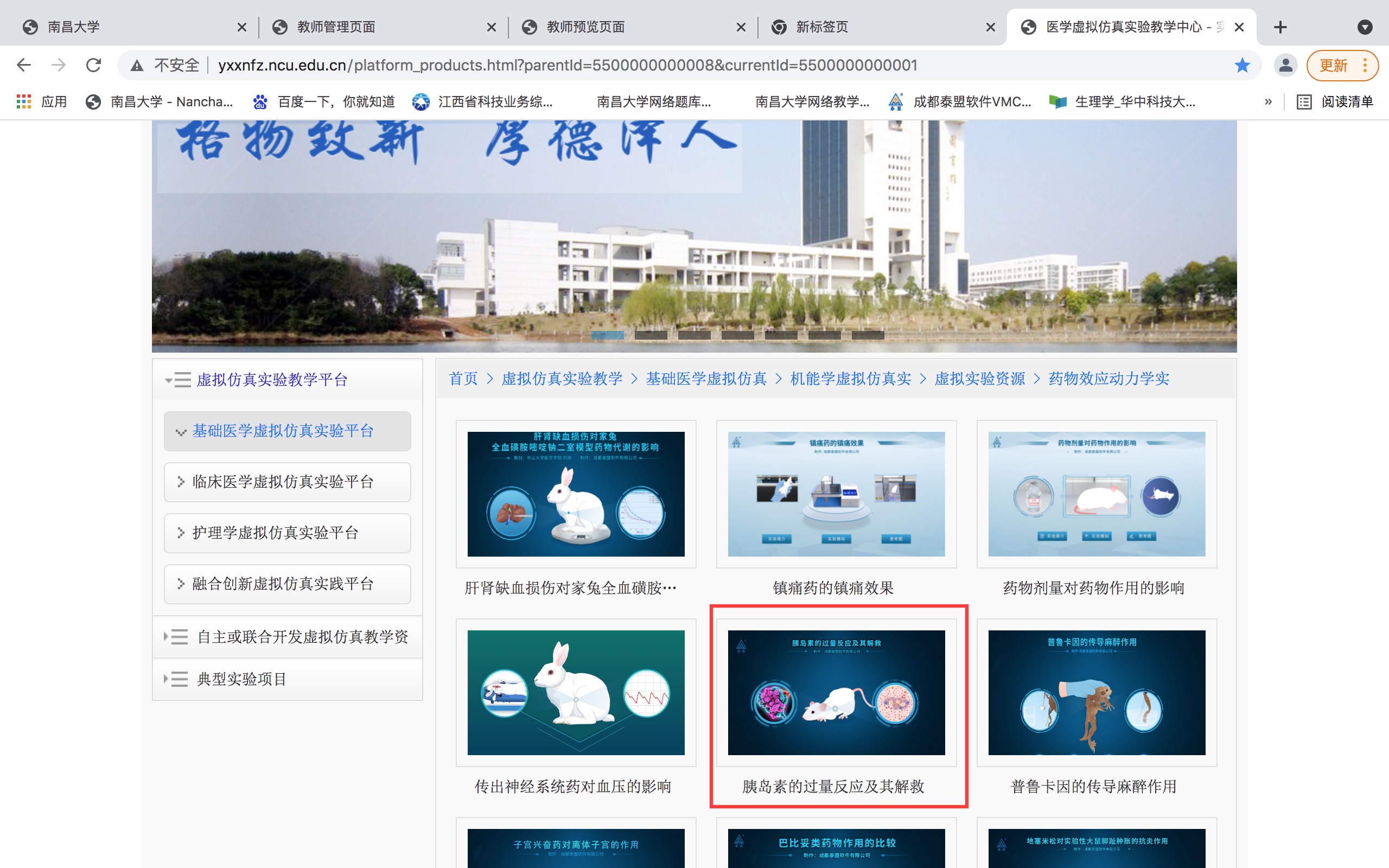
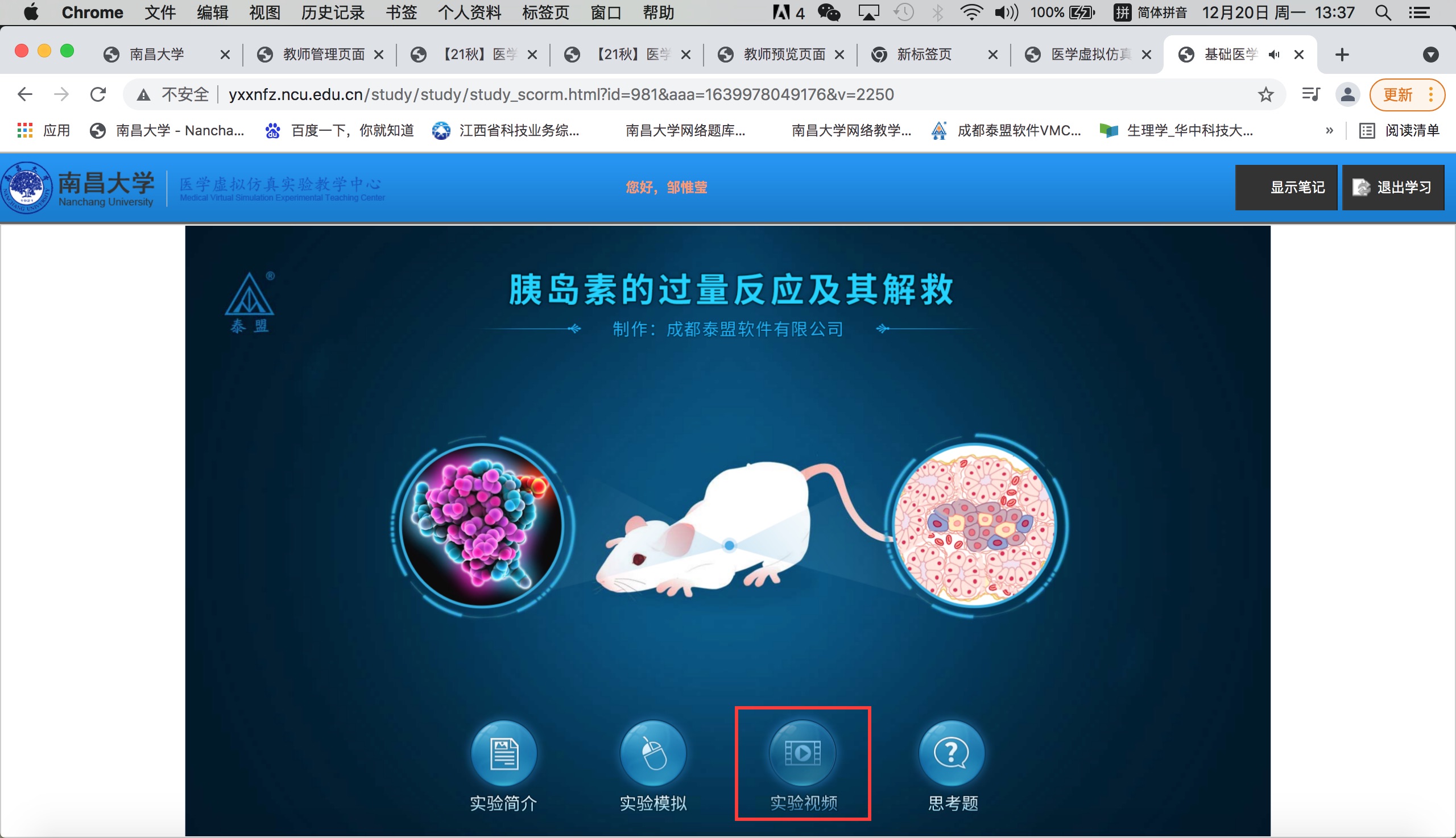
Watch the videos on the website http://yxxnfz.ncu.edu.cn (but there is no english version)or the following videos.

  1. Effect of insulin and hypoglycemia

  2. Rescue of insulin-induced hypoglycemia


    Two mice were fasted for 12-20h 


    Mouse1(weight  20g)--inject insulin(0.5-1ml,intraperitoneal injection) ---16mins later, observe symptoms of hypoglycemic shock: progressive nervous irritability that leads to anxiety, seiures, and even coma---rescue with 50%glucose(0.5-1ml,intraperitoneal injection)--- behavior: normal(active)


    Mouse2(weight 20g)--inject normal saline(the same volume,intraperitoneal injection)---30mins later, behavior: active


    Purpose:

    1. Observe the response of hypoglycemia caused by excessive insulin

    2. To understand the rescue methods of hypoglycemia 

    Principle:

        Insulin is a protein hormone secreted by islet beta cells. Its main physiological function is to regulate metabolism. Insulin is the only hormone in the body that reduces blood sugar and promotes the synthesis of glycogen, fat and protein. After injecting a large amount of insulin into mice, it can reduce blood glucose and cause hypoglycemia. In the early stage, it can show symptoms such as hunger, rapid heartbeat, anxiety, tremor and convulsion. In severe cases, it can cause coma, shock, brain injury and even death. In order to prevent the serious consequences of hypoglycemia, people can drink sugar water or eat. In severe cases, 50% glucose should be injected intravenously immediately to supplement blood glucose to the normal level.