Paleoanthropology
Paleoanthropology is the scientific study of humanevolution. Paleoanthropology is a subfield of anthropology, the study of humanculture, society, and biology. The field involves an understanding of thesimilarities and differences between humans and other species in their genes,body form, physiology, and behavior.
Paleoanthropologists search for the rootsof human physical traits and behavior. They seek to discover how evolution hasshaped the potentials, tendencies, and limitations of all people. For manypeople, paleoanthropology is an exciting scientific field because itinvestigates the origin, over millions of years, of the universal and definingtraits of our species. However, some people find the concept of human evolutiontroubling because it can seem not to fit with religious and other traditionalbeliefs about how people, other living things, and the world came to be.Nevertheless, many people have come to reconcile their beliefs with thescientific evidence.
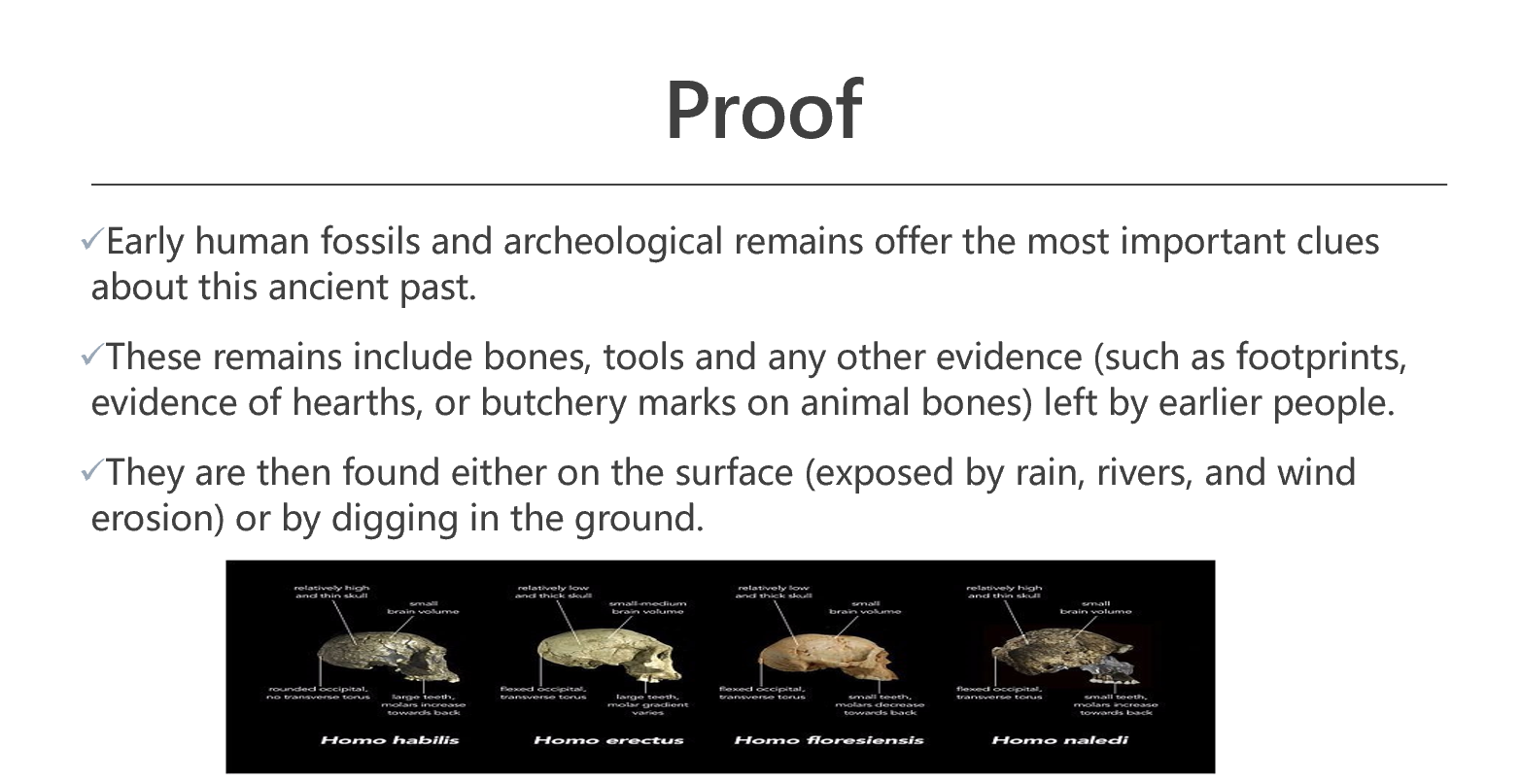
Early human fossils andarcheological remains offer the most important clues about this ancient past.These remains include bones, tools and any other evidence (such as footprints,evidence of hearths, or butchery marks on animal bones) left by earlier people.Usually,the remains were buried and preserved naturally. They are then found either onthe surface (exposed by rain, rivers, and wind erosion) or by digging in theground.
By studying fossilized bones, scientists learnabout the physical appearance of earlier humans and how it changed. Bone size,shape, and markings left by muscles tell us how those predecessors movedaround, held tools, and how the size of their brains changed over a long time.Archeological evidence refers to the things earlier people made and the placeswhere scientists find them. By studying this type of evidence, archeologistscan understand how early humans made and used tools and lived in theirenvironments.