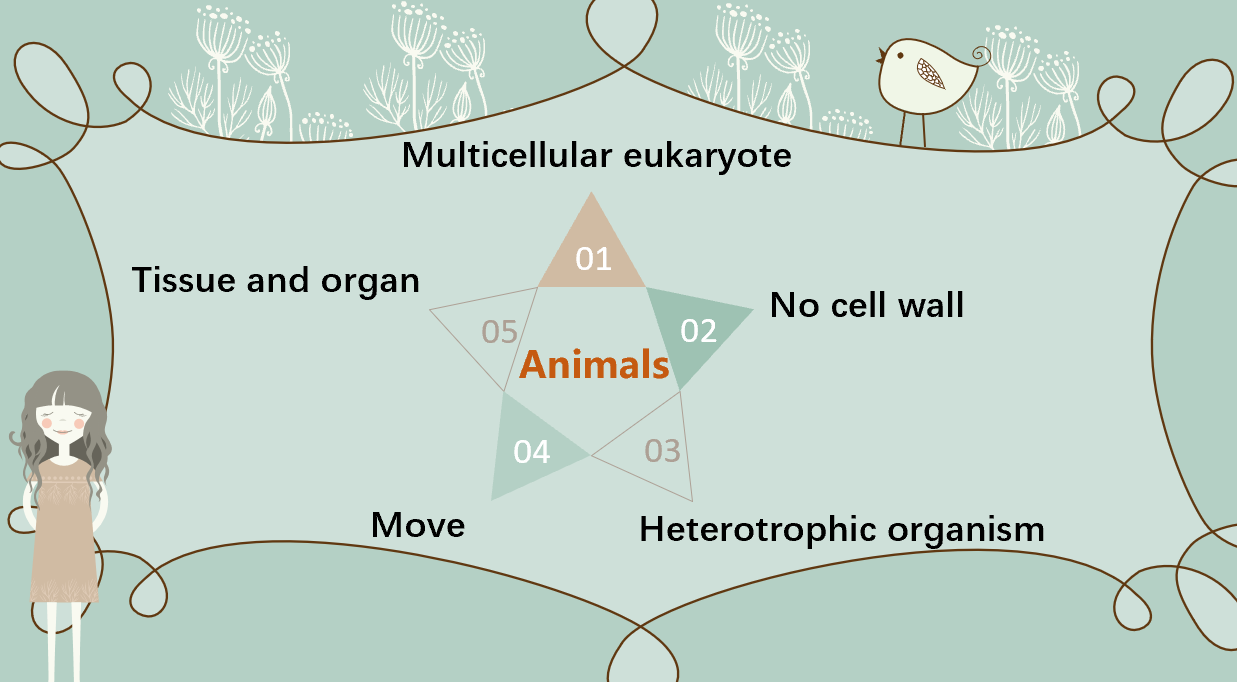
Animal, any of a group of multicellular eukaryoticorganisms. Animals differ from members of the two other kingdoms ofmulticellular eukaryotes, the plants (Plantae) and the fungi (Mycota), in fundamental variations in morphologyand physiology. This is largely because animals have developed muscles andhence mobility, a characteristic that has stimulated the further development oftissues and organ systems.
We are same asother animals. Sponges, which lack muscle tissues, were long considered to be plants.Only after their small movements were noticed in 1765 did the animal nature ofsponges slowly come to be recognized.
In size, animals are outdone on land by plants, among whosefoliage they may often hide. In contrast, the photosynthetic algae, which feedthe open oceans, are usually too small to be seen, but marine animals range tothe size of whales. Animals represent three-quarters or more of the species onEarth, a diversity that reflects the flexibility in feeding, defense, andreproduction which mobility gives them. Animals follow virtually every knownmode of living that has been described for the creatures of Earth. Animals move in pursuit of food, mates, or refuge frompredators, and this movement attracts attention and interest, particularly asit becomes apparent that the behaviour of some creatures is not so verydifferent from human behaviour. Other than out of simple curiosity, humans study animals tolearn about themselves, who are a very recent product of the evolution of animals.