cell are composed of many big and small molecules. for example, the main type of molecules of escherichia coli (Fig. 1-3). in escherichia coli, there are protein, nucleic acid, polysaccharides, lipid...
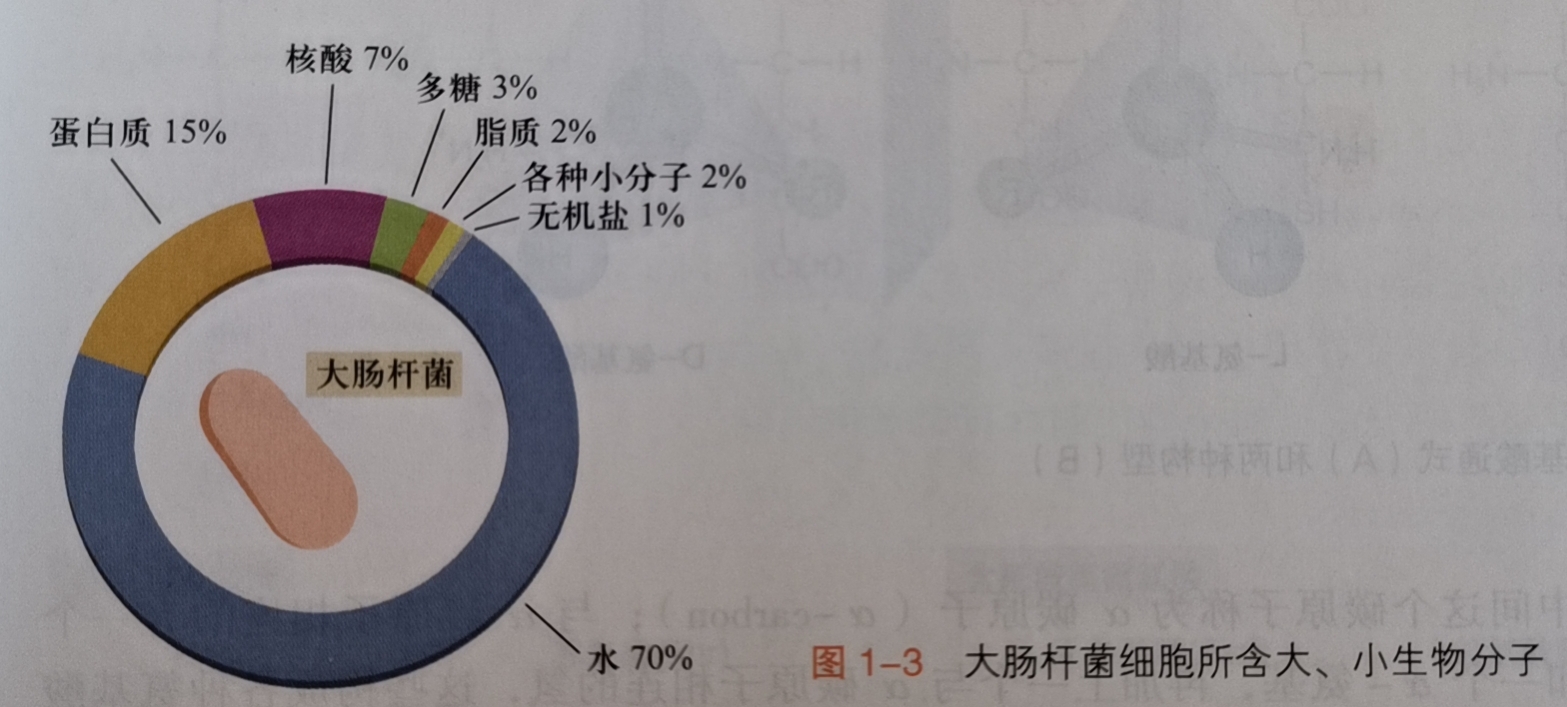
small biological molecules include carbonhydrate, lipid, amino acid, nucleic acid and so on.
一 water
you all know that life stem from water, and there are many species still live in ocean or freshwater now. early cities were built along the rivers. so water is essential to us.
all metabolism in cell are conducting in water. water often account for 60%-70% of our weight. if we are lack of water, we will die.
water is polar molecule. there is hydrogen bond between two water molecules.
we all know water is important, my question is: do you know where water come from?
question: where do water come from?
二 amino acid
there are about 180 type of natural amino acids in the world, but only 20 amino acids are important for organisms. in these 20 amino acids, 8 amino acids are essential to us because we can not synthesize them in our body. we must absorb them from food.
amino acid is the building block of protein
amino acid is composed of carbon, hydrogen, nitrogen and oxygen.
三 monosaccharide(单糖)
in fact, the sugar we all know is only a kind of carbonhydrate. for example, starch, sugar...
monosaccharide—— cannot be hydrolyzed into more smaller molecular carbonhydrates.
1 glucose and fructose
they are composed of six carbon atoms. they are a kind of monosaccharide.
the glucose concentration in blood resprents your blood sugar. so, blood sugar also is called blood glucose.
glucose is the building block of carbonhydrate.
glucose is composed of carbon, hydrogen and oxygen.
2 other monosaccharides
triose(丙糖),tetrose(丁糖),pentose(戊糖)...
四 nucleotide
1 structure of nucleotide
it is the building block of RNA and DNA. it is composed of carbon, hydrogen, nitrogen, oxygen and phosphorus.
五 lipid
the building block of lipid is fatty acid.
essential fatty acid: we cannot make them by ourselves, so we absorb them by food.
六 vitamine
we cannot synthesize vitmin by ourselves, but we need them. they are very important for us. if we are lack of some kind of vitmin, we maybe sick.
glucose——carbohydrate
fatty acid—— lipid
amino acid—— protein
nucleotide or DNA or RNA —— nuleic acid
carbohydrate, lipid and protein provide energy we need.
question: carbohydrate, lipid and protein provide energy for us? which one can we eat more and won't gain more fat?because most of us want to keep slim. please write someting about carbohydrate, lipid and protein.

