
目录

  • 1 Automotive Basics
    • 1.1 课程介绍及学生自我介绍
    • 1.2 课堂测试
      • 1.2.1 课堂测试:阅读理解
      • 1.2.2 课堂测试——听录音,补全段落
    • 1.3 汽车的总体构造
      • 1.3.1 Brief Introduction to Automobile
      • 1.3.2 Body
      • 1.3.3 engine
      • 1.3.4 chassis
      • 1.3.5 electrics and electronics
      • 1.3.6 课堂测试1
  • 2 internal combustion engine
    • 2.1 principle of operation
      • 2.1.1 发动机工作原理
      • 2.1.2 课堂测试——听录音,补全段落
      • 2.1.3 课堂测试1
    • 2.2 engine block and cylinder head
    • 2.3 pison connecting rod and crankshaft
    • 2.4 valve system
    • 2.5 发动机构造课堂测试
      • 2.5.1 课堂测试——听录音补全段落
      • 2.5.2 课堂测试1
    • 2.6 gasoline fuel system
      • 2.6.1 课堂测试2
    • 2.7 diesel engine(学生翻译篇)
    • 2.8 engine cooling
      • 2.8.1 课堂测试1
      • 2.8.2 发动机冷却系统
    • 2.9 engine lubrication
      • 2.9.1 课堂测试
      • 2.9.2 发动机润滑系统
    • 2.10 emission control
  • 3 power train
    • 3.1 overview of power train
      • 3.1.1 Useful Words
    • 3.2 clutches
    • 3.3 transmission
      • 3.3.1 MT
      • 3.3.2 AMT
      • 3.3.3 CVT
    • 3.4 propeller shaft and universal joints
    • 3.5 final drive
    • 3.6 differential and axle shaft
    • 3.7 传动系(1)
    • 3.8 传动系(2)
    • 3.9 传动系(3)
    • 3.10 课堂测试1
    • 3.11 课堂测试
  • 4 braking system
    • 4.1 basic features of Braking system
    • 4.2 Types of Brakes
    • 4.3 翻译作业
    • 4.4 Anti-lock Braking system for passenger car
    • 4.5 Electrohydraulic braking
    • 4.6 制动系
    • 4.7 课堂测试
  • 5 steering and suspension system
    • 5.1 steering system
      • 5.1.1 Steering Geometry and Handling Characteristics
      • 5.1.2 ​Types of Steering System
      • 5.1.3 Hyaraulic Power Steering
      • 5.1.4 翻译作业
    • 5.2 Suspension
      • 5.2.1 Spring and Shock Absorber
      • 5.2.2 Wheels and Tires
  • 6 electrical system and  new energy vehicle
    • 6.1 ELECTRICAL  AND ELECTRONIC SYSTEM
    • 6.2 (小组翻译)new energy vehicle AND architectuer for autonomous driveing
  • 7 customer reception and customer development
    • 7.1 customer reception
    • 7.2 customer development
  • 8 Information Collection and Automobile Intoduction
    • 8.1 Information Collection
    • 8.2 Automobile Intoduction
  • 9 Price Discussion and Bargain Striking
    • 9.1 Price Discussion
    • 9.2 Bargain Striking
  • 10 Terms of Payment and Settling Complaints
    • 10.1 Terms of Payment
    • 10.2 Settling Complaints
  • 11 Customer Feedback and Maintenance Reception
    • 11.1 Customer Feedback
    • 11.2 Maintenance Reception
  • 12 Vehicle Maintenance and Motor Insurance
    • 12.1 Vehicle Maintenance
    • 12.2 Motor Insurance
engine lubrication

 Engine  lubrication


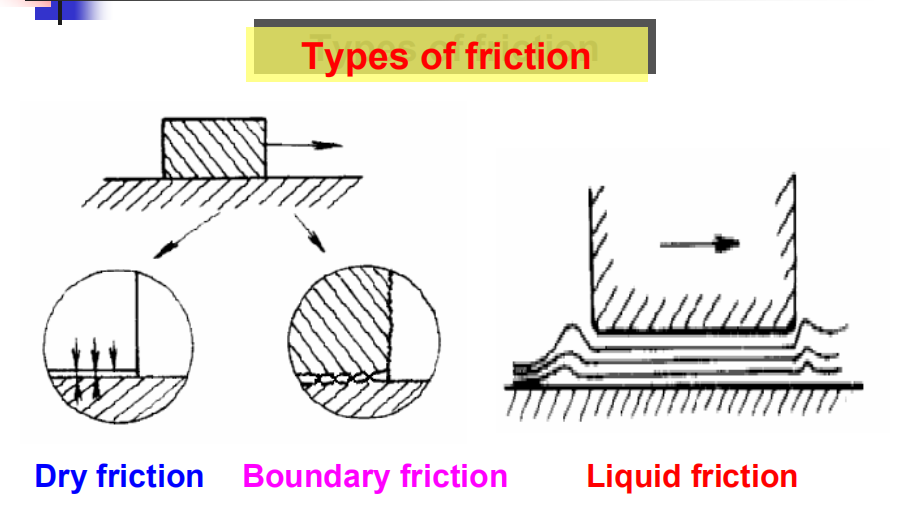
Friction  between  engine  components  is  reduced  by:

1)boundary  lubrication  —  relies  on  oil  being  splashed  up  onto  the  surfaces  ,

 2)full  film  lubrication  —  an  oil  film  is  maintained  by  forcing  the  oil  between  the  surfaces  by  an  oil  pump  .
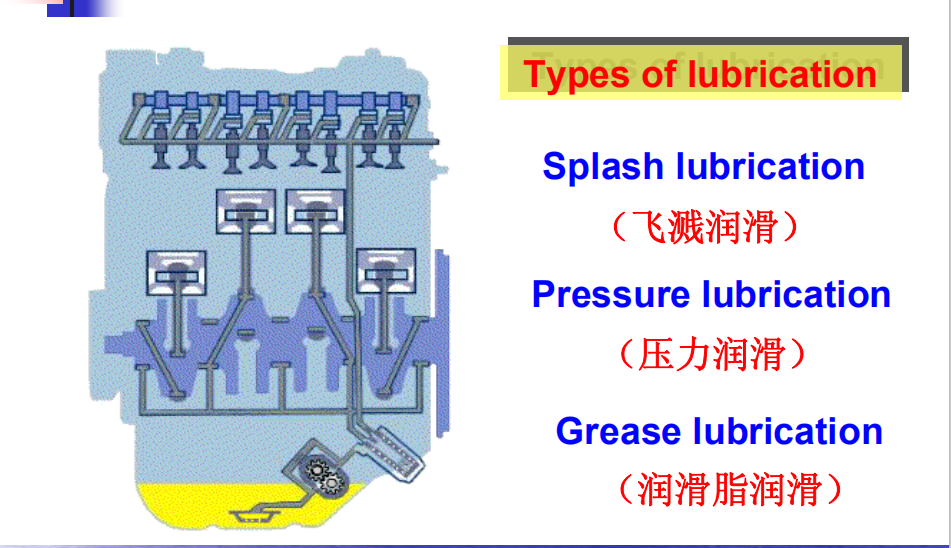

The purpose of the lubrication system is to circulate oil through the engine. An engine must have a good lubrication system. Without it, the friction heat from the contact of the moving parts would wear the parts and cause power loss. Oil, when placed between two moving parts,separates them with a film. This oil film prevents the parts from rubbing against each other. This oil film also cushions the parts, giving quieter and smoother engine operation.

The  system  used  on  a  modern  engine  combines  both  methods  :pistons  are  lubricated  by  splash  and  bearings  are  pressure  fed  .The  main  parts  of  a  lubrication  system  are  pump  ,  main  oil  gallery  ,  relief  valve  and  filters  .

1) pump

In most cars  , the oil pump is in the crankcase above the sump  . It draws oil through a tube that extends downward into the sump. This tube, called the oil-pump pickup tube  , has a filter screen over its bottom end  . The screen keeps large pieces of sludge and dirt from being drawn into the pump  . The tube may be hinged on the pump end so that it can move up and down as the oil level changes in the sump  . Thus  , the pump always draws oil from the top of the sump  , not from the bottom where the dirt and sludge tend to settle  . Modern cars use one of two common types of oil pumps—the gear-type and rotor-type  .

2)  main  oil  gallery  and  relief  valve

The  main  oil  gallery  runs  the  length  of  the  engine  .  Drillings  from  the  gallery  allow  oil  to  be  supplied  to  the  bearing  surfaces  .Generally  the  relief  valve  fitted  in  the  gallery  ,  this  spring  loaded  valve  opens  when  the pressure  reaches  the  maximum  allowed  .

3)  filters 

Besides  the  gauze  screen  that  prevents  pieces  of  the  metal  entering  the  pump  there  is an  external  filter  which  can  be  renewed  periodically  .  A  modern  engine  uses  a  full  –  flow  filtering  system  .  In  this  system  ,  the  output  of  the  oil  pump  flows  through  the  oil  filter  before  each  trip  through  the  engine  .  When  an  engine  runs  at  3000r/min  its  entire five  quarts  of  oil  pass  through  the  filter  at  least  once  every  minutes  .  Thus  the  oil  filter  ensures  that  only  clean  oil  enters  the  engine  .