目录

  • 1 Chapter 1  Introduction(概述)
    • 1.1 Basic conception
    • 1.2 The classification and naming of biology
  • 2 Chapter 2  Ordinary biology (生物)in water and wastewater treatment field
    • 2.1 Procaryote (原核微生物)
    • 2.2 Eucaryote (真核微生物)
    • 2.3 Virus  (病毒)
    • 2.4 Water plants, aquatics(水生动物)
    • 2.5 运动中的微型动物
  • 3 Chapter 3 Growth and metabolism(代谢)of  microorganism
    • 3.1 Enzyme and its action
    • 3.2 Microbial metabolism (微生物代谢)
    • 3.3 Bacterial growth (微生物生长)
    • 3.4 Microbial inheritance and variation (遗传和变异)
    • 3.5 Relationship between microorganisms(微生物间相互关系)
    • 3.6 Factors affecting microbial growth (微生物生长影响因子)
    • 3.7 课程视频链接
  • 4 Chapter4 The function of microorganism in pollutants’ decomposition and transfer(微生物对污染物质的降解与转化)
    • 4.1 Carbon cycle in nature
    • 4.2 Nitrogen cycle
    • 4.3 Mineral cycle in nature(自然界中的无机矿质循环)
    • 4.4 Microbial decomposition and transform of pollutants (微生物对污染物的降解与转化)
    • 4.5 课程视频链接
  • 5 Chapter 5 Microorganism’s hurt to water body and the methods of controlling of harmful microbes
    • 5.1 Pathogenic bacteria(病源菌) in water environment
    • 5.2 Eutrophication of water body(水体富营养化)
    • 5.3 Harmful aquatic plants and control(有害水生植物及其控制)
    • 5.4 课程视频链接
  • 6 Chapter 6 Microorganism’s action in environmental monitoring and analysis( 生物在水环境检测及水质分析中作用 )
    • 6.1 Cause-mutation  and carcinogenic substances measured by microbial methods 致突变与致癌物质的生物检测法
    • 6.2 The biological indicators of polluted waters(水质污染生物监测评价)
    • 6.3 Bacterial detection of water quality(水质细菌学检测)
    • 6.4 Biological inspection and mensure of toxicity
    • 6.5 课程视频链接
  • 7 Chapter 7  Biological methods in water treatment( 典型废水生物处理方法及其微生物特性)
    • 7.1 Generality on biologic treatment of wastewater
    • 7.2 Activated sludge process (活性污泥法) and microbial characters
    • 7.3 Biofilm(生物膜) and its microbial characters
    • 7.4 Anaerobic treatment(厌氧处理)
    • 7.5 The microbes with ability of phosphorous removal
    • 7.6 The ecological methods used in sewage treatment
    • 7.7 The aquatic’s function in water purification
    • 7.8 New methods used in water treatment
    • 7.9 课程视频链接
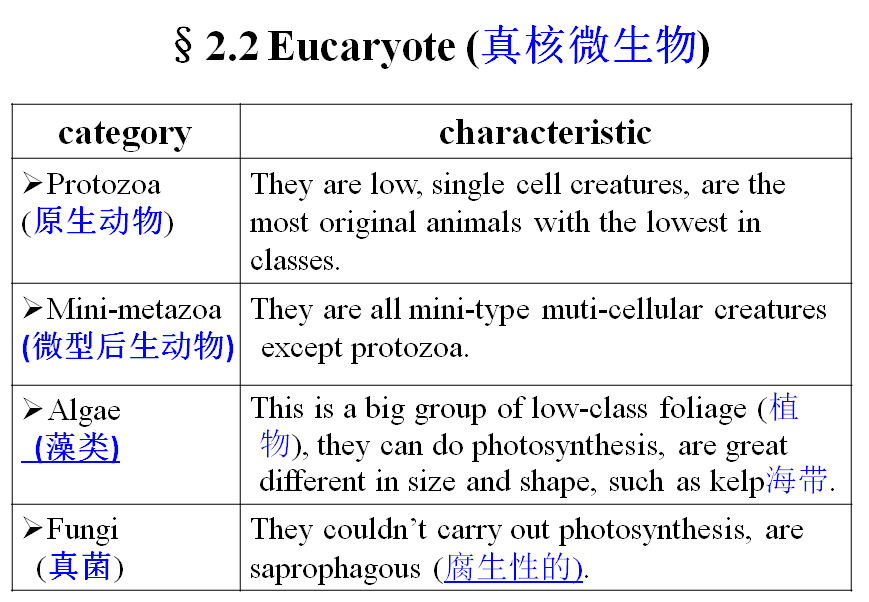
Eucaryote (真核微生物)


3Algae(藻类)

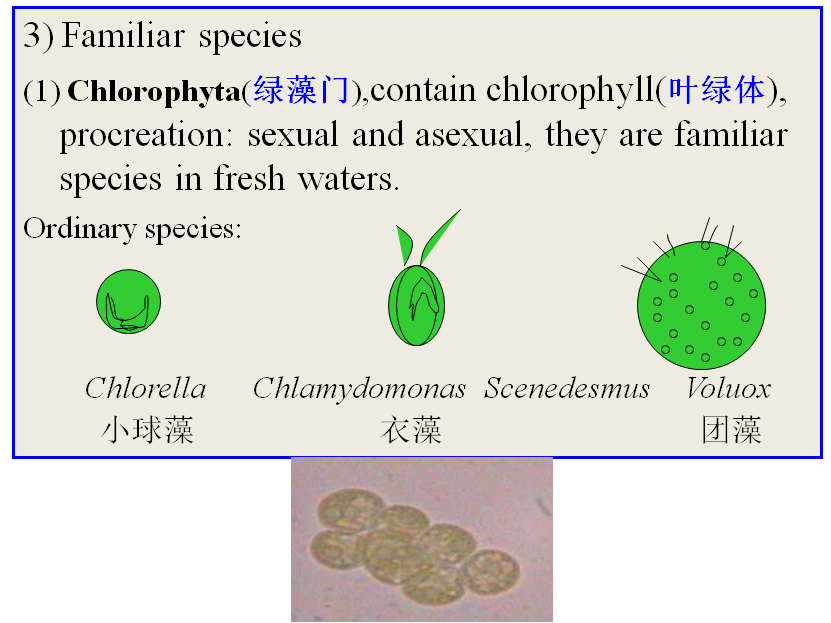
1) Shape andstructure            

        Their figures are various, majority ofthem have cell wall (细胞壁). Single cell alga can move from place to another by flagellum,so do spores of multi-cellular (多细胞) algae.

         There are chloroplasts(色素体)in cells,contain chlorophyll (叶绿素) a, b, c, d,β-carotene (胡萝卜素) and lutein (叶黄素).

2)Physiological characters  

       Carry through photosynthesis (光合) withsunlight. Most are mesothermal (中温的, but some cansurvive in hotspring with 85℃, others can exist iceberg (冰山).


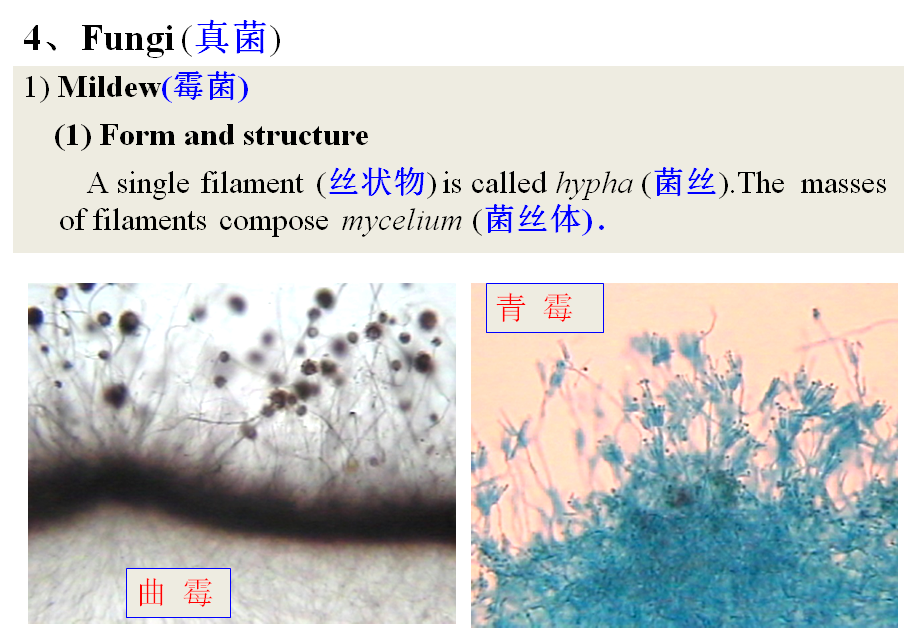
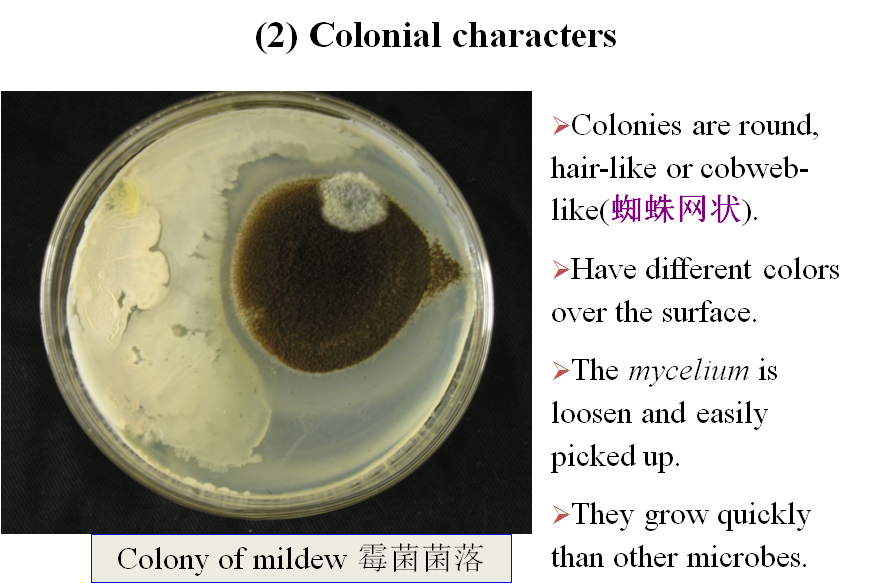
A)Hypha hasdifferentiation: vegetative mycelium, aerial mycelium and sporangium(孢子囊).

B) Differenceof hypha between mildew and actinomycete:

  a)The diameter of mildew hyphais decades times as   actinomycete (放线菌),

  b)The mildew aremulti-cellular individuals with section-area, and have the bigger vacuoles(液泡) in olderone.