目录

  • 1 Chapter 1  Introduction(概述)
    • 1.1 Basic conception
    • 1.2 The classification and naming of biology
  • 2 Chapter 2  Ordinary biology (生物)in water and wastewater treatment field
    • 2.1 Procaryote (原核微生物)
    • 2.2 Eucaryote (真核微生物)
    • 2.3 Virus  (病毒)
    • 2.4 Water plants, aquatics(水生动物)
    • 2.5 运动中的微型动物
  • 3 Chapter 3 Growth and metabolism(代谢)of  microorganism
    • 3.1 Enzyme and its action
    • 3.2 Microbial metabolism (微生物代谢)
    • 3.3 Bacterial growth (微生物生长)
    • 3.4 Microbial inheritance and variation (遗传和变异)
    • 3.5 Relationship between microorganisms(微生物间相互关系)
    • 3.6 Factors affecting microbial growth (微生物生长影响因子)
    • 3.7 课程视频链接
  • 4 Chapter4 The function of microorganism in pollutants’ decomposition and transfer(微生物对污染物质的降解与转化)
    • 4.1 Carbon cycle in nature
    • 4.2 Nitrogen cycle
    • 4.3 Mineral cycle in nature(自然界中的无机矿质循环)
    • 4.4 Microbial decomposition and transform of pollutants (微生物对污染物的降解与转化)
    • 4.5 课程视频链接
  • 5 Chapter 5 Microorganism’s hurt to water body and the methods of controlling of harmful microbes
    • 5.1 Pathogenic bacteria(病源菌) in water environment
    • 5.2 Eutrophication of water body(水体富营养化)
    • 5.3 Harmful aquatic plants and control(有害水生植物及其控制)
    • 5.4 课程视频链接
  • 6 Chapter 6 Microorganism’s action in environmental monitoring and analysis( 生物在水环境检测及水质分析中作用 )
    • 6.1 Cause-mutation  and carcinogenic substances measured by microbial methods 致突变与致癌物质的生物检测法
    • 6.2 The biological indicators of polluted waters(水质污染生物监测评价)
    • 6.3 Bacterial detection of water quality(水质细菌学检测)
    • 6.4 Biological inspection and mensure of toxicity
    • 6.5 课程视频链接
  • 7 Chapter 7  Biological methods in water treatment( 典型废水生物处理方法及其微生物特性)
    • 7.1 Generality on biologic treatment of wastewater
    • 7.2 Activated sludge process (活性污泥法) and microbial characters
    • 7.3 Biofilm(生物膜) and its microbial characters
    • 7.4 Anaerobic treatment(厌氧处理)
    • 7.5 The microbes with ability of phosphorous removal
    • 7.6 The ecological methods used in sewage treatment
    • 7.7 The aquatic’s function in water purification
    • 7.8 New methods used in water treatment
    • 7.9 课程视频链接
Procaryote (原核微生物)


§2.1 Procaryote (原核微生物)            

  category   characteristic 

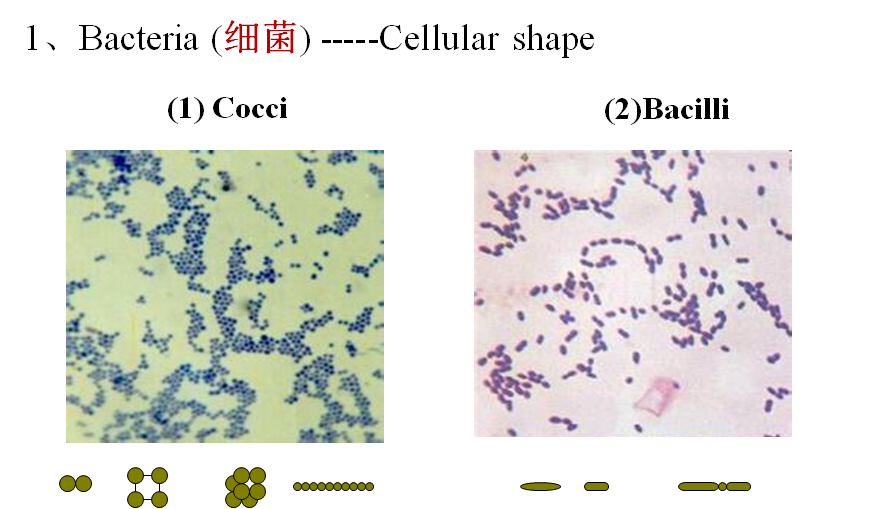
Bacteria 

   (细菌) 

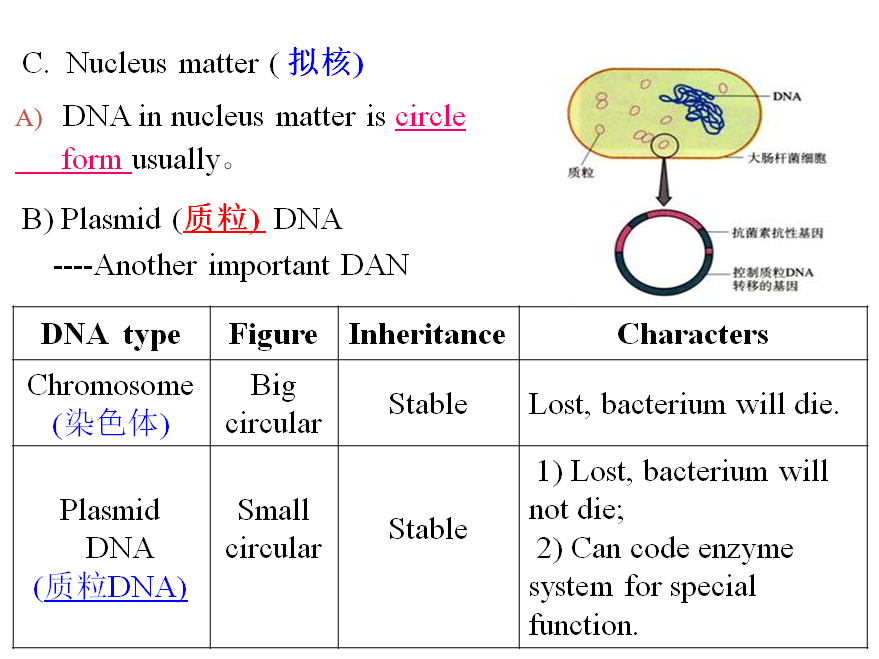
  They are unicellular(单细胞) organisms with nuclear region(拟核),  exposed DNA.
 

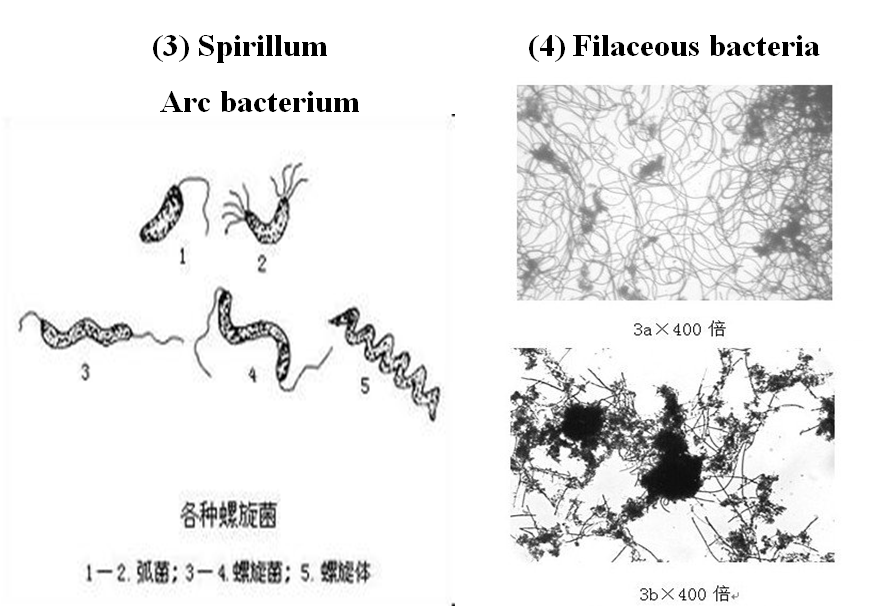
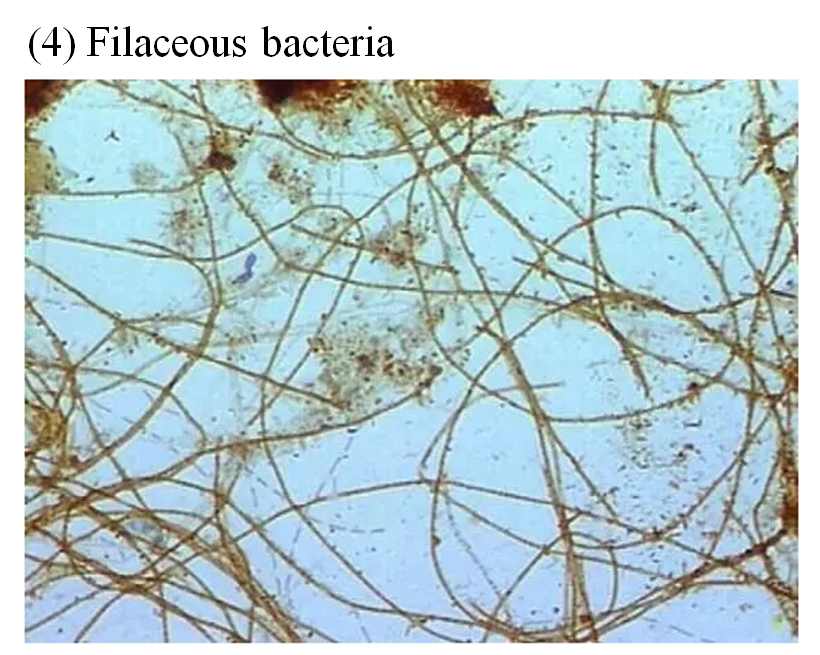
Filaceous bacteria

   (丝状菌) 
Filaceous bacteria is characterised by the shapes  of  the threadlike. They are important in bulking of activated sludge污泥膨胀).

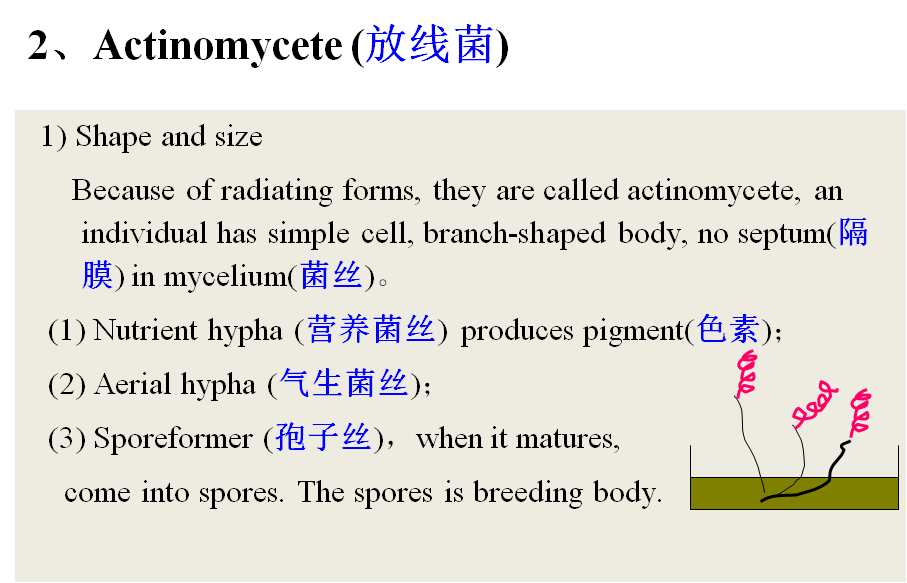
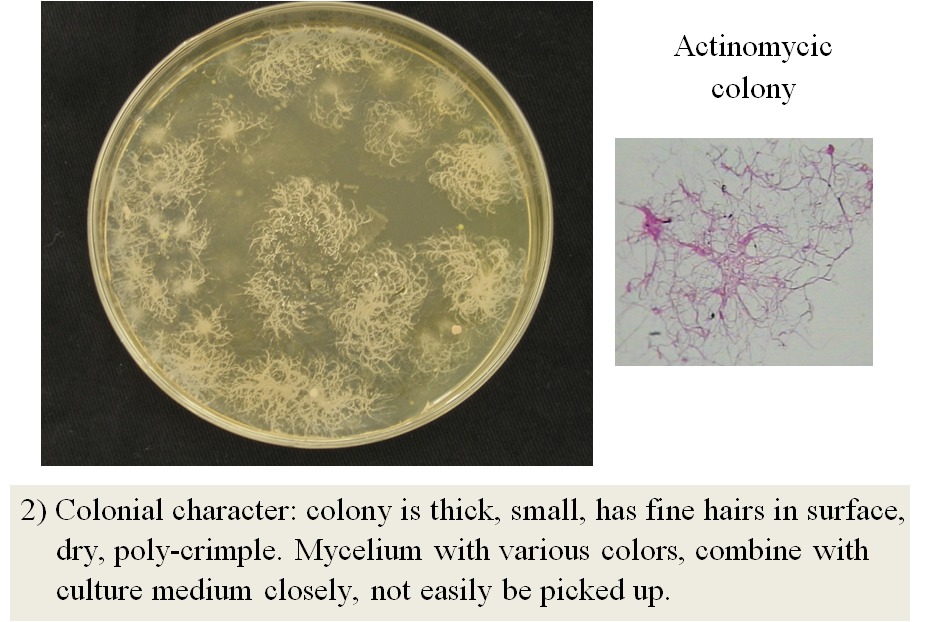
Actinomycete 

(放线菌) 

Outstanding character is radiating  forms放射状. 

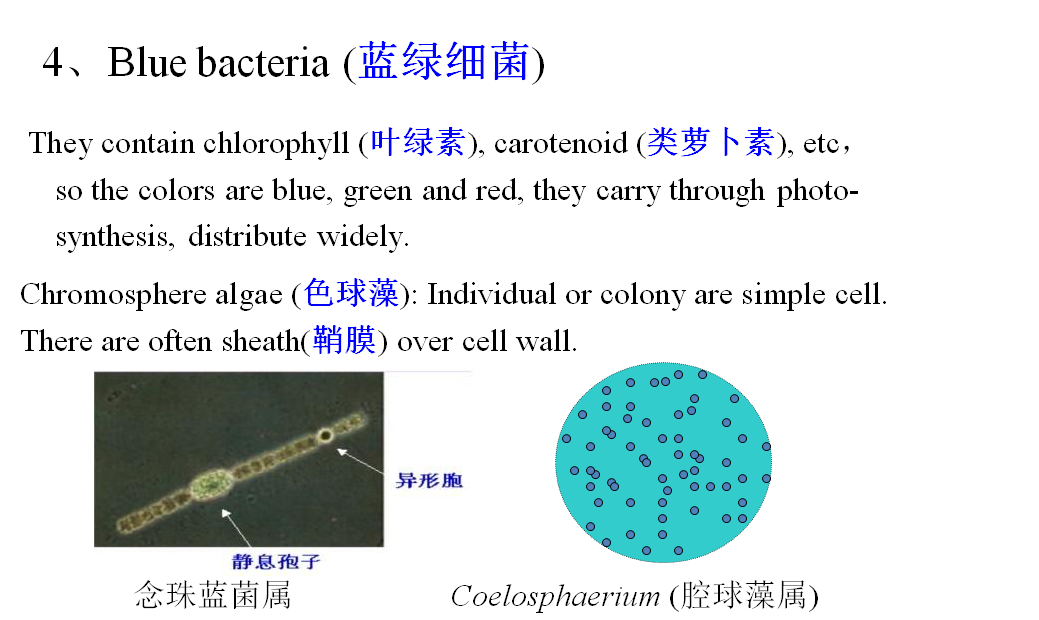
Blue  bacteria

(蓝绿细菌) 

Chlorophyll a(叶绿素a): photosynthesis(光合作用) 

光合细菌(PSB


In anaerobic(厌氧的) condition, it can carry out photosynthesis,  using H2S (或 organics有机物),but H2O. 


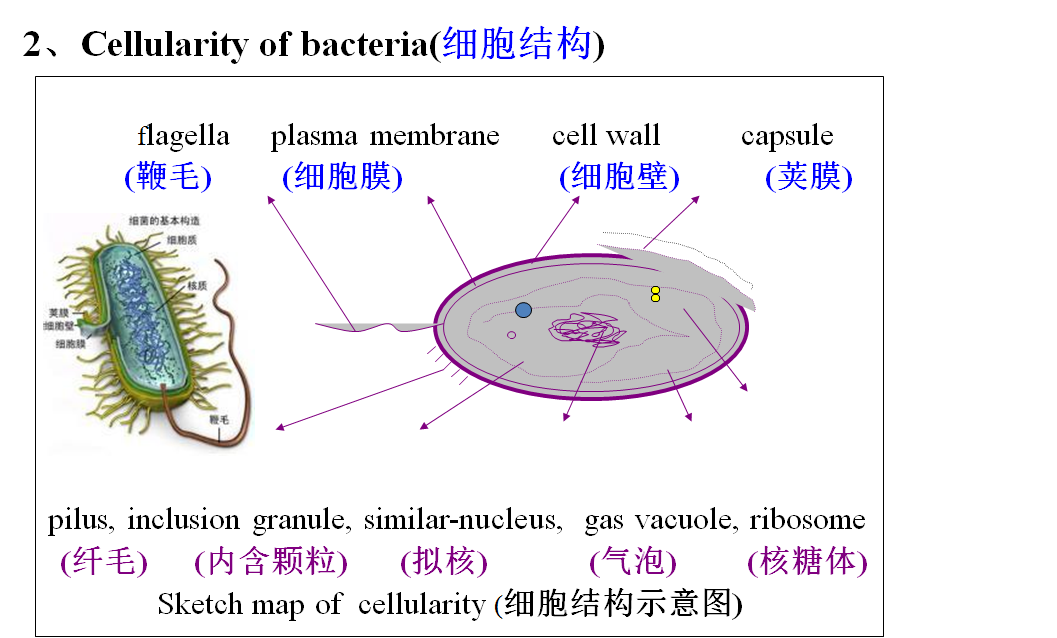
 2) Special structure

  (1) Slime layer(粘液层),  loosely clinging to cell wall

  (2) Capsule (荚膜):a thick biofilm生物膜 which completely envelops cell wall, is adhesive  substances including amylose, ploy-peptide(多肽).

Physiological(生理的) function

       ① It can keep cellular inner moisture, and make itself don’t be eaten by other microorganisms

       ② It stores nutriment , it is the resource of Nelement and energy

       ③ It can absorb inorganic compounds无机物from wastewater

       It increases bacteria infective(传染的) ability .