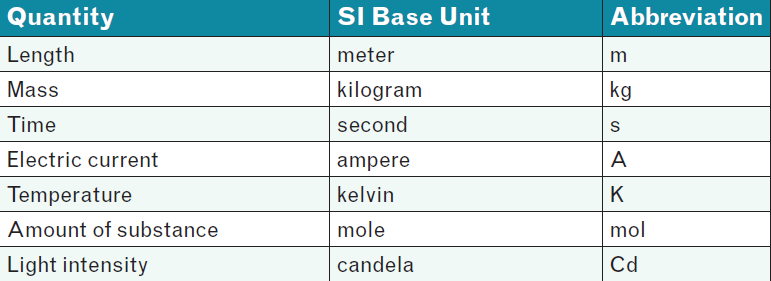
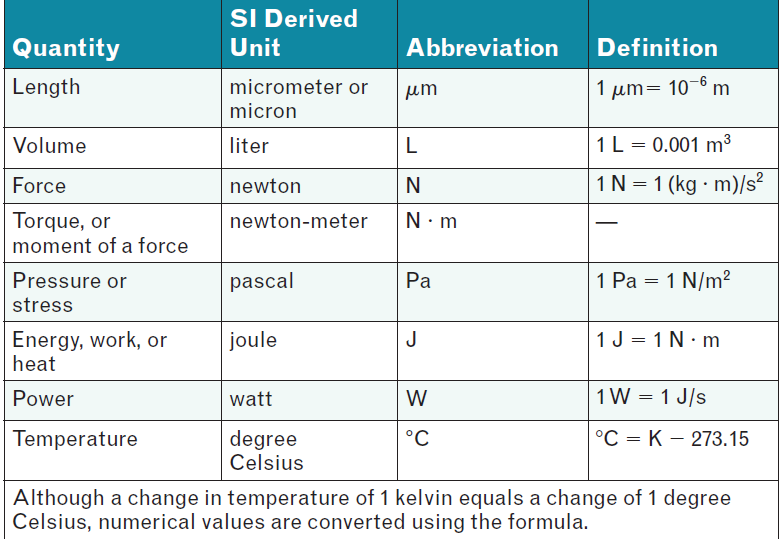
Base Units in the SI and Certain Derived Units in the SI

After completer chapitre 2, you should answer these questions:
Summarize the three major steps that should be followed when solving technical problems in order to present your work clearly.
What are the base units in the USCS and SI?
What are examples of derived units in the USCS and SI?
How are mass and force treated in the USCS and SI?
What is the major difference in the definitions of the slug and poundmass in the USCS?
What is the difference between the pound and pound-mass in the
USCS?What is the difference between the pound and pound-mass in the
USCS?One pound is equivalent to approximately how many newtons?
One meter is equivalent to approximately how many feet?
One gallon is equivalent to approximately how many liters?
How should you decide the number of significant digits to retain in a
calculation and to report in your final answer?Give an example of when the technical problem-solving process can be used to make order-of-magnitude approximations.
Give several examples of situations where engineers prepare written
documents and deliver verbal presentations.


