

Lead-in Questions
1.What do you think of human being’s role in nature?
2.What can we do to improve children’s environmental awareness?
(Text II)
Becoming a Child of Nature: It’s a Twofold Task for Parents and Children
1. If children discover the beauty of nature while they are young, they will respect nature and try to preserve it when they are older. Parents play an essential role in helping their children make this discovery. Although young children are not able to understand the complex relationship of man to his environment, they can be educated in this aspect and learn how to respectnature and gain a simplified understanding of the importance of a healthy ecological environment. Helping children to gain such an appreciation and understanding can be an exciting adventure which is available to all that are willing to explore and use their senses of touch, taste, smell, sight, and hearing.
2. Wonderful phenomena of nature are all around us. For example, have you ever awakened early to watch the sun rise? Have you ever stopped to observe a setting sun, a star-filled sky, or an October moon? Have you ever gone out after a rainfall and delighted in the scent of the fresh air? Have you ever taken time to listen to the song of the birds, the trees rustling in the wind or the music of the crickets? Have you ever held aseashell to your ear and heard the roar of the ocean? Have you ever tasted fresh berries, melon or spring water? Have you ever shared the above experiences with your children?
3. To help children gainan understanding of the world around them and the importance of ecology, parents can use interesting objects from their children’s everyday lives. Forexample, most children are familiar with rocks. They have seen them, touched them,and played with them. However, they will not discover the beauty and uses of rocks unless you help them. Collect some rocks and point out that some rocks are minerals, others may be used for decorations, like marbles used in building houses, and still other rocks are used to build roads.Visiting mountains if possible can help them gain a better understanding ofrocks.
4. Most young children love to play in dirt. You can help your children to gain the concept that soil is not just “dirt” but something necessary for life. Most plant life grows in some form of soil. Take your children for a visit to gardens and farms where food is grown.P erhaps your children can have their own plants or gardens. You can explain tothem that plants are necessary not only for food but also for controlling floods. During a time of heavy rain or snow, plants help to absorb the moisture.
5. It’s difficult for young children to gain an appreciation of rain because rain to young children means that they can’t go out to play. However, you can try to help your children realize that rain is vital to life. Without rain, plants and animals would die of thirst. Your children know what it feels like to be thirsty. If you have plants andallow your children to help you water them, this will help them to start recognizing the importance of water to life.
6. You can also help your children gain some understanding of the importance of clean oceans. Even young children realize that an ocean filled with garbage is not good for sea life.Many fish can die or become contaminated from the trash that is thrown into the ocean. People, who unknowingly eat fish contaminated by pollutants in the water, can become seriously ill.
7. Many children, through the examples, can begin to become more aware of man’s relationship to his environment. However, even more importantly, you can help them by example to learn to respect their environment. Young children learn not only from first-hand experiences but by imitation. If you show your children by your actions that you respect the environment in which you live, this will start them on this path.
8. Do you avoid putting pollutants in the air by never burning your leaves? Have you ever stopped smoking? Do you respect plant life? Do you stop anyone from carving in the bark of trees? Do you avoid walking on fresh grass? Do you conserve water and energy?
9. By setting a goodexample for your children, you are not only giving them a good model to imitate, you are also helping them to increase their chances for survival. It is not too soon to help your children to appreciate, understand, and respect the environment in which they live.
Notes
1. twofold (Title): having two important parts
e.g. The reason for the country’s economic collapse is twofold.
2. complex (Paragraph 1): consisting of many different parts or processes that are closely connected
e.g. There is a complex network of roads round the city.
3. simplified (Paragraph 1): being made easier or less complicated
e.g. She was reading a simplified version of Great Expectations.
4. ecological (Paragraph 1): connected with the way plants, animals, and people are related to each other and to their environment
e.g. The destruction of the rain forests is an ecological disaster that threatens the future of life on earth.
5. an exciting adventure (Paragraph 1): an exciting experience
e.g. We got lost on the Metro – it was quite an exciting adventure.
6. an October moon (Paragraph 2): a full moon
7. taken time (Paragraph 2): If doing something takes time, it needs a relatively long period of time.
e.g. Learning a foreign language isn’teasy – it takes time.
8. Have you ever tasted fresh berries, ...? (Paragraph 2): The verb taste can be used in three ways:
(1)We can describe the taste of food, drink, etc. by using taste +adjective or taste + noun.
e.g. This tastes delicious. What’s init?/I can taste almond in this pudding.
(2) We can describe our sensations by using taste with a personal subject.
e.g. I think I can taste garlic andmint in the sauce.
(3) We can also taste something in order to see whether it is all right, or to compare it with something else.
e.g.“Stop eating the cake.” – “I’mjust tasting it.”
9. Collect some rocks (Paragraph 3): The word "collect"is used especially when you want to keep things together to form a collection.
e.g. The family’s been collecting modern art for thirty years.
10. concept (Paragraph 4): sb's idea of something is or should be done
e.g. It’s difficult to grasp the concept of infinite space.
11. in some form of soil (Paragraph 4): The word some can be used with singular countable nouns to mean a person or thing, when you do not know or say exactlywhich.
e.g. There must be some reason for her behaviour. / She’s working for some insurance company in Birmingham.
12. vital to (Paragraph 5): extremely important and necessary for sth. to succeed or exist
e.g. Your support is vital to the success of my plan. / Such measures are vital to national security.
13. it feels like (Paragraph 5): it gives one a particular feeling of
e.g. I was only there two days but it felt like a week!
14. contaminated (Paragraph 6): made a place or substance dirty and dangerous by adding sth. to it, for example chemicals or poison
e.g. People feared that dumped waste would contaminate water supplies.
15. man’s relationship to his environment (Paragraph 7):
1) A relationship with sb. or sth.is usually close, and may involve strong feelings.
e.g. What kind of relationship does she have with her mother?
2) A relationship to sb. or sth. like a connection, is usually about a simple fact.
e.g.J ane’s relationship to Jeff is that he is her boss.
3) A relationship between people and otherpeople or things may be either close and full of emotion, or simply a matter off act.
e.g. They’re both called Smith, butthere is no relationships between them.
What’s the relationship between temperature and humidity?
16. … this will start them on this path. (Paragraph 7): …, this will help them learn torespect the environment in which they live because it will be good for them.
17. conserve (Paragraph 8):
Compare "conserve" and "preserve"."To conserve sth. "is to protect it and try to prevent it from changing or being damaged.
e.g. We must conserve our woodlandsfor future generations.
"To preserve sth."is to keep it as it is for a long time in a good condition, or keep it asit is now.
e.g. I think these traditional customs should be preserved. / The wreck was preservedby the muddy sea bed.
18. It is not too soon to help… (Paragraph 9): Something must be done about it right away…
Questions for Discussion
1. What is the twofold task of parents and children the author talks about in this article?
2. How important is it for children to discover the beauty of nature?
3. Why is children’s discovery of nature an exciting adventure?
4. Why does the author ask parents to share their own experience with their children?
5. Why does the author suggest that parents use interesting objects from their children?
6. What does the author regard as the main value of giving children examples?
7. What can we conclude from the passage about parents’ participation in the educational development of their children?
Key to Questions for discussion
1. Children discover and understand the beauty of nature and their parents take the initiative and help them to do so.
2. They will respect nature and try to preserve it when they are older.
3. By exploring their environment children can gain an understanding of the world inan interesting and more complex way and create their own intellectual conceptions of reality.
4. The author believes that parents’ own experience can stimulate the natural curiosity of children and nourish their innate desire to learn.
5. By continually interacting with their environment, children can keep adding to and reshaping their conceptions of the world.
6. Children have a natural power to learn and through the examples, they can begin to become more aware of man’s relationship to his environment.
7. Parents can provide an education which can fulfill and enrich the current lives of their children as well as prepare them for the future.
Memorable Quotes
Read the following quotes and tell what kind of qualities are needed in order to be honest.
Guidance:Honesty is considered one of the highest virtues among many cultures. Honesty is respected and greatly valued by many people across the globe. Honesty is one of the ingredients of a good human being. Being honest is being truthful, frank and sincere. Honesty also suggests strength of character and wisdom of the mind. An honest human being does not have anything to hide or camouflage from others, which indicates excellence.
Alexander Pope (1688 –1744) was an eighteenth-century English poet, best known for his satirical verse and for his translation of Homer.
George Washington (1732–1799) served as the first President of the U.S. from 1789 to 1797. He is often referred by Americans as the "Father of Our Country" because of his significant role in the revolution and in the formation of the United States.
1. An honest man’s the noblest work of God. 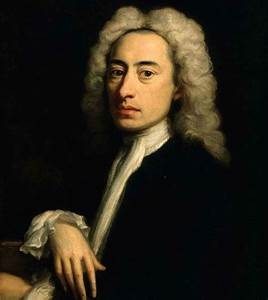
— Alexander Pope
Paraphrase: An honest man is the work with the highest moral qualities created by God.
2. I hope I shall always possess firmness and virtue enough to maintain wha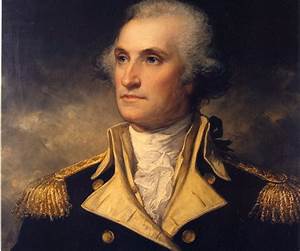 t Iconsider the most enviable of all titles, the character of an “Honest Man.”
— George Washington
Paraphrase: I consider an “Honest Man” is the most enviable title given to man. I hope I shall be strong-minded and righteous enough to keep to the qualities of an “Honest Man”.
maintain: to keep in existence, sustain
e.g. Water and air are necessary to maintain life.
Further Enhancement of English Writing (写作巩固提高训练)
1、 英语微课视频:
Excuse Me?Have You Misplaced Your Modifiers?
(请问你是不是把修饰语放错了位置?)
2、 课前自主学习任务单 & 教学视频规划说明 & 课堂学习任务单
3、 课前自主学习与课堂互评中可参考的微课知识点清单
4、微课课后任务及参考答案
5、微课配套学习资源

