

Lead-in Questions
1. How would you react to acrisis, especially when you feel scary?
2. Who do you think are better at handling crisis, men or women? Why?
(Text 1I) The Dinner Party
Mona Gardner
1. The country is
2. A spirited discussion springs up between a young girl who insists that women have outgrown the jumping-on-a-chair-at-the-sight-of-a-mouse era and a colonel who says that theyhaven't.
3. "A woman's unfailing reactionin any crisis," the colonel says, "is to scream. And while a man may feel like it, he has that ounce more of nerve control than a woman has. And that last ounce is what counts."
4. The American does not join in the argument but watches the other guests. As he looks, he sees a strange expression come over the face of the hostess. She is staring straight ahead,her muscles contracting slightly. With a slight gesture she summons the servant standing behind her chair and whispers to him. The servant’s eyes widen, and he quickly leaves the room.
5. Of the guests, none except the American notices this or sees the servant place a bowl of milk on the veranda just outside the open doors.
6. The American comes to with a start.In India, milk in a bowl means only one thing — bait for a snake. He realizes there must be a cobra in the room. He looks up at the rafters —the likeliest place —— but they are bare. Three corners ofthe room are empty, and in the fourth the servants are waiting to serve the next course. There is only one place left — under the table.
7. His first impulse is to jump back and warn the others, but he knows the commotion would frighten the cobra into striking. He speaks quickly, the tone of his voice so arresting that it sobers everyone.
8. "I want to know just what control everyone at this table has. I will count three hundred —that's five minutes — and not one of you is to move a muscle. Those who move will forfeit 50 rupees. Ready?"
9. The twenty people sit like stone images while he counts. He is saying "… two hundred and eighty..." when, out of the corner of his eye, he sees the cobra emerge and make for the bowl of milk. Screams ring out as he jumps to slam the veranda doors safely shut.
10. "You were right, Major!"the host exclaims. "A man has just shown us an example of perfectc ontrol."
11. "Just a minute," the American says, turning to his hostess. "Mrs. Wynnes, how did you know that cobra was in the room?"
12. A faint smile lights up the woman's face as she replies: "Because it was crawling across my foot."
Notes
1. Mona Gardner (1900-1981) was bornin Seattle, Washington. She lived in Hong Kong, South Africa, and California, among other places, and she also traveled widely. Many of her novels and stories are set in Asia.The Dinner Party, her best-known short story, takes place in India earlier last century, when India was still a colonyruled by Great Britain.
2. colonial official (Paragraph 1): a British citizen appointed to a governmental position in India, a British colony for many, many years until 1974
3. attaches (Paragraph 1): persons with special duties on the staff of an embassy to another country
4.…that women have out growing the jumping-on-a-chair-at-the-sight-of-a-mouse era (Paragraph 2): … that women have passed the time when they would jump on achair at the sight of a mouse. Here the word, a typical example of journalistic style,jumping-on-a-chair-at-the-sight-of-a-mouse is a compound adjective formed from an attributive clause.
5. And while a man may feel like it, he has that ounce more of nerve control than a woman has, and that last ounce is what counts.(Paragraph 3): Even though a man is also likely to “jump on a chair at the sight of a mouse,” he has at least the last bit of self-control to refrain himself from jumping up. And it is the self-control that matters.
6. The American comes to with a start(Paragraph6): The American becomes aware of the potential danger with a sudden shock. This sentence is grammatically loose, for the phrase “come to”, being used to express that sb. begins to realize sth., is not followed by a necessary object, i.e., sth. happening, etc.
7. Rupees (Paragraph 8): Indian coins.Ten rupees was worth about one US dollar at the time of the story.
Questions for Discussion:
1. On what topic did the colonel and the young girl disagree?
2. What kind of expression did the American notice came over the face of the hostess?
3. What did the American realize was happening when he noticed bowl of milk?
4. H ow did the American react to the crisis?
5. What did the American say to make sure that everyone remained perfectly still?
6. What qualities did both theAmerican and the hostess display?
Key to questions for discussion:
1. They disagreed on whether women were still easily scared.
2. A strange expression came over the face of thehostess: she was staring straight ahead and her facial muscles contracted slightly.
3. He realized that there must be a cobra in the room because the bowl of milk meant bait for a snake.
4. He stayed calm at the table and gave others a warning in an arresting voice. He let the others stay at the table and counted down the time or forfeited one who moved.
5. Because the hostess, with the help of the American, had just escaped the danger of a possible attack by a cobra.
6. Both of them, a man and a woman, demonstrated admirable self-control.
Memorable Quotes
Read the following quotes and interpret the importance of family or family bonds implied in them.
Guidance: Family is where our roots take hold and where we grow. A close family bond is like a safe harbor where we find refuge. Rituals of bedtime stories, hugs, holidays and daily meals shared together, provide a sense of warmth, and safety. These rituals and traditions, not only create memories, but create our first path in life — one that is positive.
1. The happiest moments of life have been the few which I have passed at ho me in the bosom of my family.
—Thomas Jefferson
Paraphrase: When I look at my life, those happiest moments are spent at home with my family who love me and make me feel safe.
in the bosom of sth.: in a situationin which you are with people who love and protect you
e.g. He spent the weekend in the bosom of his family.
2. Where we love is home,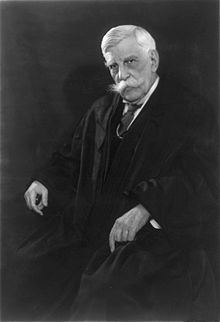 home that our feet may leave, but not our hearts.
—Oliver Wendell Holmes
Paraphrase: We love our home —the place our bodies may leave, but we are emotionally attached to it forever.
but not: used to introduce a word or phrase that contrasts with what was said before
e.g. We can buy a house, but not a home.
Further Enhancement of English Writing (写作巩固提高训练)
1、 英语微课视频:
Avoiding Run-on Sentences and Comma Splices
(如何避免流水句与逗号拼凑句)
2、 课前自主学习任务单 & 教学视频规划说明 & 课堂学习任务单
3、 课前自主学习与课堂互评中可参考的微课知识点清单
4、微课课后任务及参考答案
5、微课配套学习资源
6、课后巩固训练
1. Run-on sentences
A run-on sentence is a sentence that actually has two or more sentences combined into one without a punctuation mark or a sentence connector. Run-on Sentences can rarely be understood on first reading, and they are never acceptable in standard written English.
Example:
Run-on: The cat jumped from step to step it gracefully landed with each jump.
Correct: The cat jumped from step to step; it gracefully landed with each jump.
Generally, run-on sentences can be corrected in the following ways:
Run-on: Our foreign policy is not well defined it confuses many countries.
Correct:
A. Add a coordinating conjunction.
Our foreign policy is not well defined and it confuses many countries.
B. Add a subordinating conjunction.
Since our foreign policy is not well defined, it confuses many countries.
C. Add a full stop and capitalize the beginning of the latter sentence.
Our foreign policy is not well defined. It confuses many countries.
D. Add a semicolon.
Our foreign policy is not well defined; it confuses many countries.
2. Comma Splices
A comma splice is one of the common errors that inexperienced writers make—separating independent clauses by only a comma and a conjunctive adverb or a transitional phrase. Conjunctive adverbs include such words as furthermore, however, and moreover; transitional phrases are expressions such as in fact and for example.
Example:
Comma splice: Learning a new language is like learning to swim, it takes a lot of practice.
Correct: Learning a new language is like learning to swim and it takes a lot of practice.
Like the run-on sentences, a comma splice can be corrected in the following ways:
Run-on: The examination was finally over, Becky felt free to enjoy herself once more.
Correct:
A. Keep the comma and add acoordinating conjunction.
The examination was finally over, and Becky felt free to enjoy herselfonce more.
B. Keep the comma and add a subordinating conjunction.
Since the examination was finally over, Becky felt free to enjoy herself once more.
C. Replace the comma with a full stop and capitalize the beginning of the latter sentence.
The examination was finally over. Becky felt free to enjoy herself once more.
D. Replace the comma with a semicolon.
The examination was finally over; Becky felt free to enjoy herself once more.

