
4.3 力的体现 The Force
Q:物体为什么会动?
How can an object move?
4.3.1 牛顿运动定律Newton’s laws of motion
牛顿运动定律第一条:物体自身不会移动,除非有一个力加在物体上。
First law:An object at rest tends to remain at rest until a force moves it, and once it is moving it tends to keep moving in a straight line until another force stops it.
对无生命的物体来说,运动的内在原因是自然界的力,主要是地心引力。运动的外在原因是外部力量使其运动。
For inanimate objects, the intrinsic cause of motion is a natural force, primarily gravity. The external cause of motion is the external force that makes them move.
对有生命的物体来说,外部力量和自身肌肉收缩同样可以产生动作。
For living objects, the body can be actuated by external forces as well as the contraction of muscles.
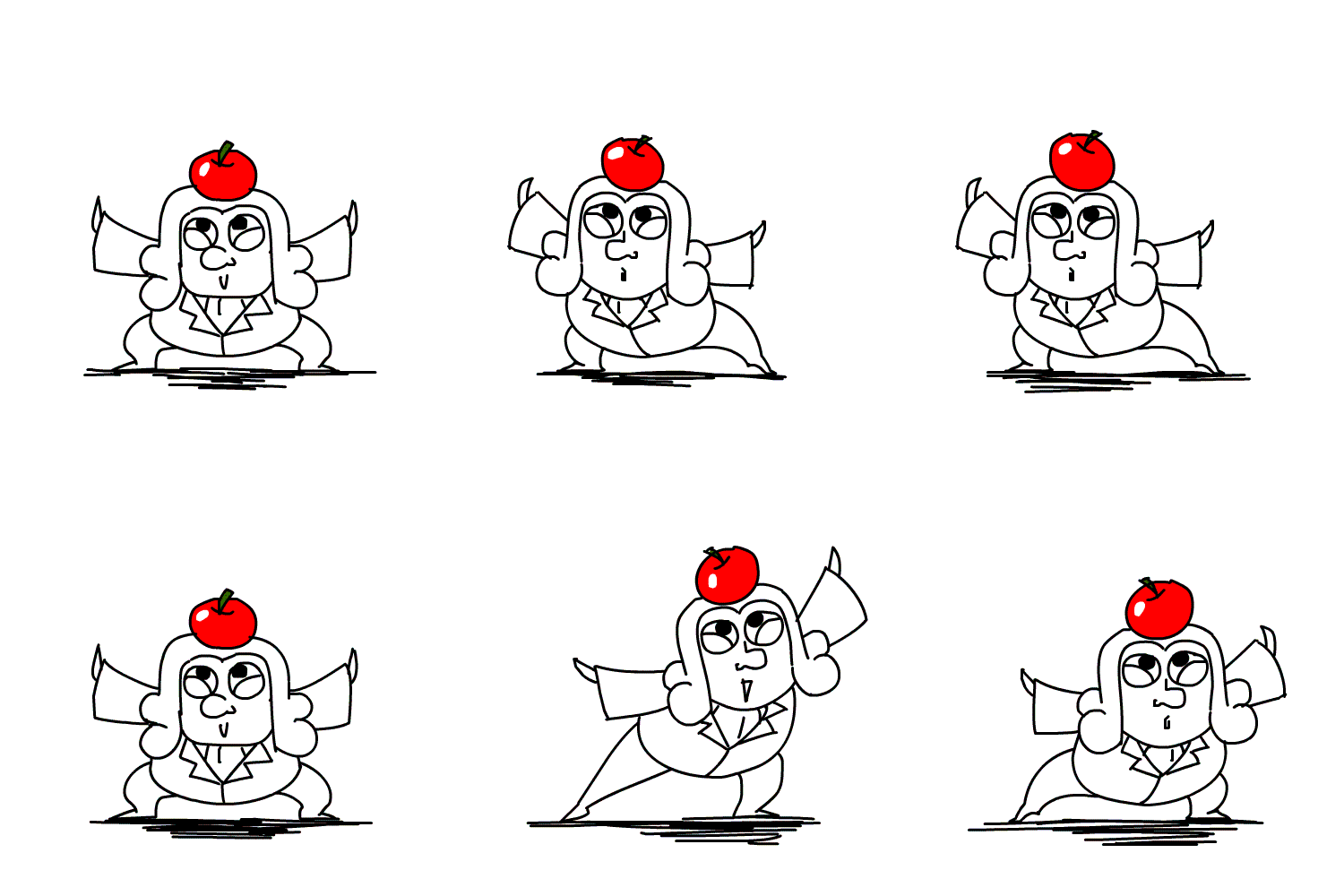
牛顿运动定律在动画中的应用 Application of Newton's law of motion in animation
在写实动画中,为了使动作有真实感,动画师须参照牛顿运动定律来设计动作。
In realistic animation, in order to make the motion realistic, the animator must refer to Newton‘s law of motion to design the motion.
但我们并不能只是记住这句话,而是要从对物体运动的观察中去理解。
But we cannot just remember that law, we need to understand it from observing the motion of the objects.
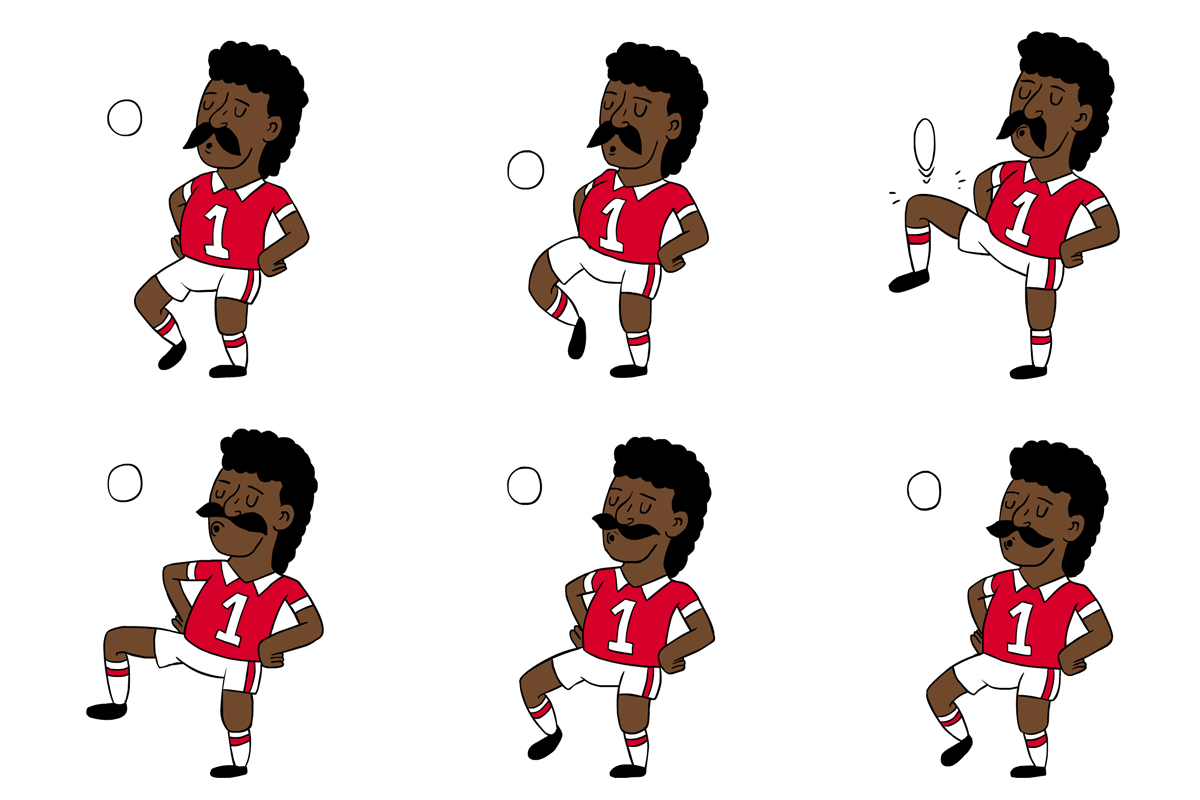
4.3.2 物体重量的表现 Animate the weight
每一个物体都有它的重量,只有在力加于它时,才开始运动。
Every object or character has weight and moves only when a force is applied to it.
物体越重,惯性越大,移动它所需的力量也就越大。
The heavier an object is (the greater its mass), the more force is required to change its motion.



一个重的物体比轻的物体有更大的惯性和动能。
A heavy body has more inertia and more momentum than a light one.
比起卡车,迷你更容易移动。
It is easy to move a mini-cooper than a big truck.
自然界所有的物体都有它自己的重量、结构和不同程度的柔韧性,所以,当力加于其上时,每种物体都有符合它自己的特性的反应。
All objects have their own weight, structure, and varying degrees of flexibility. When the force is applied to them, every object will respond in different ways based on its properties.
这种反应是时间与空间幅度的组合。如何组合,完全靠动画师来安排,来表现。
Animators should arrange timing and spacing in a reasonable way to represent movements.

在画很重的物体时,导演必须给较多的时间去表现动作的开始、停止或改变动向,以使物体有令人信服的沉重感。重量感完全取决于动画的间隔距离。
When dealing with very heavy objects, therefore, the director must allow plenty of time to start, stop or change their movements, in order to make their weight look convincing. The way an object behaves on the screen, and the effect of weight that it gives, depends entirely on the spacing of the animation drawings and not on the drawings itself.
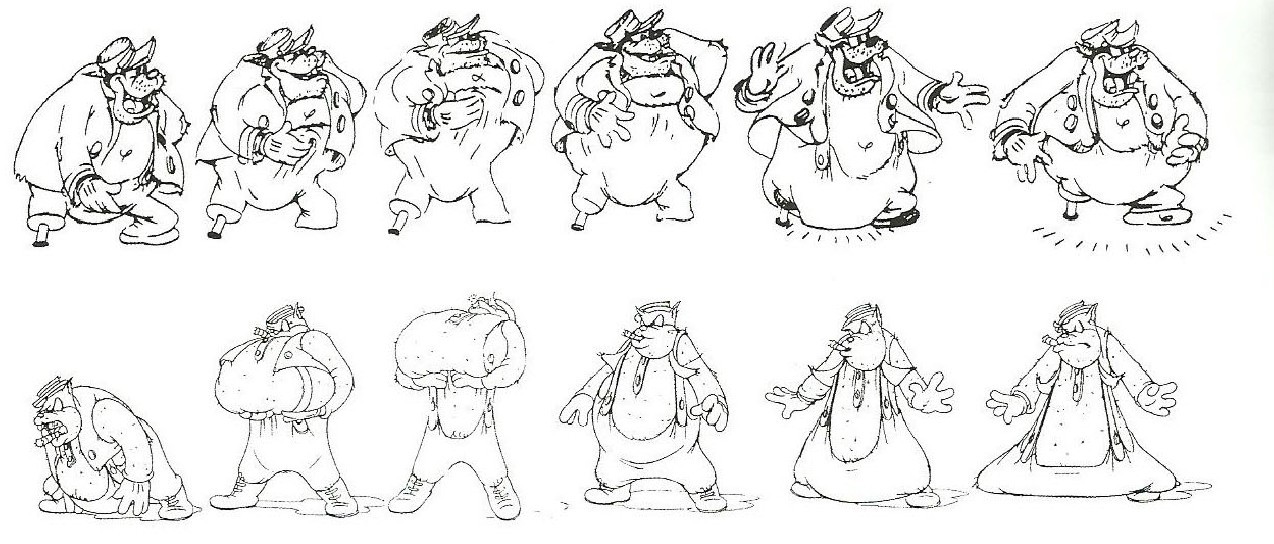
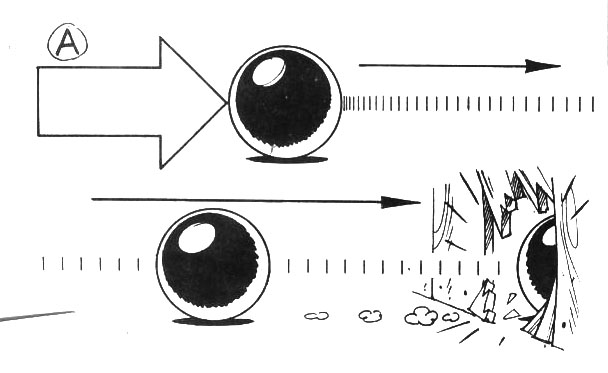
需要很大的力才能让一个铅球移动。一旦它移动了,同样也需要很大的力才能阻挡它前进。
A bowling needs a lot of force to start it moving. Once moving, it takes a lot of stopping.
轻的物体阻力小,当力加在它们之上时,情况会大不一样。
Light objects have much less resistance to change of movement and so behave very differently when forces acton them.
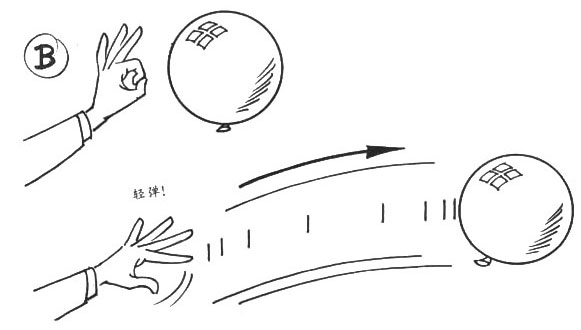
一只气球只需要很小的力去移动它,但是空气阻力使它很快停止动作
A balloon needs only a small force to move it, but air resistance quickly brings it to rest.
作业 Assignment
画保龄球掉落的动画,让它从画面上方掉下,到它在画面中停止的运动过程:
Animate a bowling ball from the time it falls into the screen to it stops in screen.
要求 Requirement
1、表现出它的重量 show its heavy weight
2、动画流畅 animate smoothly

