4.2 1拍1,1拍2,1拍3 Animate on ones, on twos, on threes
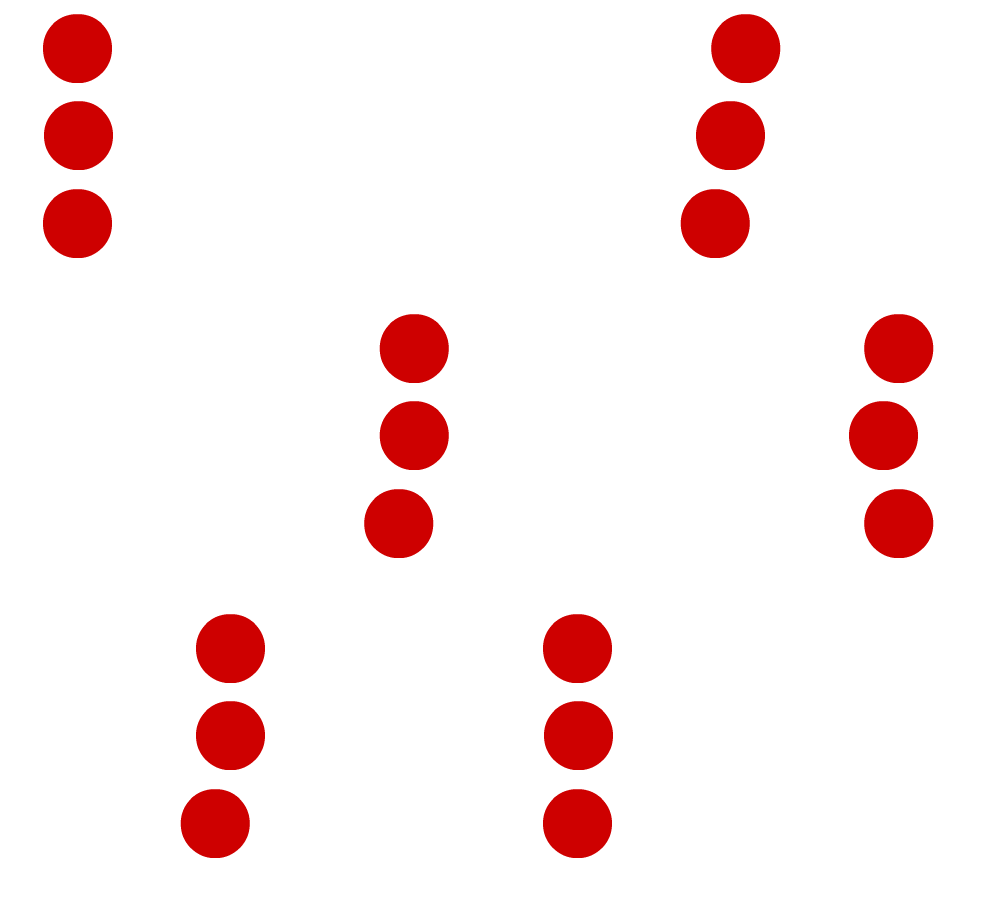
Q:下列运动有什么不同?What’s the differences between these three moving balls?
第一个球,使用了“一拍一”,也就是1张画面,拍摄了1帧。
The first ball was animated ‘on ones’, that means one image was shot on one frame.
第二个球,使用了“一拍二”,也就是1张画面,拍摄了2帧。
The second ball was animated ‘on twos’, that means one image was shot on two frames.
第三个球,使用了“一拍三”,也就是1张画面,拍摄了3帧。
The third ball was animated ‘on threes’, that means one image was shot on three frames.
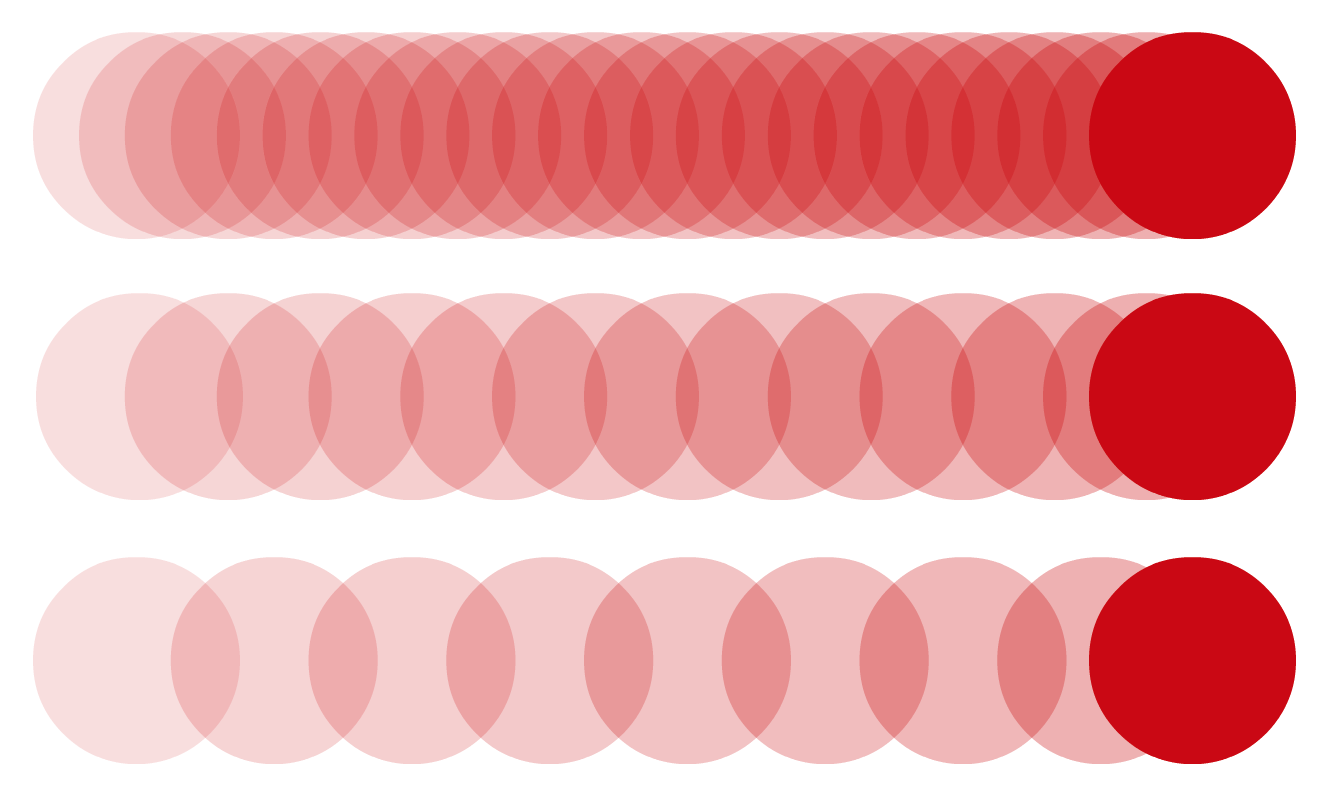
所以他们的流畅度是不一样的。哪个更流畅?
Their fluency is different. Which is smoother?
全动画与有限动画(full animation&limited animation)
全动画:动画完全描绘出动作的所有状态,每一张都画出全部身体。迪斯尼、梦工厂等欧美派动画公司经常使用,高质量动画电影也经常使用,因为钱多。
Full animation is the technique of making traditional animation that completely draw all the states of the action, each picture shows the whole body. Disney, Dreamworks and other big companies usually use this technique in high quality animated film because they have a big budget.
有限动画:动画中有对动作的省略,或将角色大部分部位静止只留下少许动作(分层),或将运动的中间状态用高速变形、速度线等代替。日本动画,和TV动画经常使用,因为钱少。
Limited animation is a process in the overall technique of traditional animation of creating animated cartoons that do not redraw entire frames but variably reuses common parts between frames. It is often used in Japanese Anime and other TV animation, for cutting budget and saving time. Anime features scenes of mouth moving with occasional eye blinks, rendered long shots of detailed backgrounds and rare use of 2D fluidity on motion-blur filled action alongside reused drawings.

Full animation

Limited animation
人类的视觉系统每秒可以处理10到12幅图像,并分别感知它们,而较高的速率则被感知为运动。
The human visual system can process 10 to 12 images per second and perceive them individually, while higher rates are perceived as motion.
所以,商业动画大多数动作使用“一拍二”来画就可以了,这样可以节省人力、物力、财力和时间。Therefore, for commercial animation, most of the action can be animate‘on twos’, that can save human resource, material resource, financial resource and time.
只有在一拍二的拍摄达不到效果时,才需要画一拍一。
It is only necessary to animate ‘on ones’ when ‘on twos’ doesn't work.
一般来说,动作越快,越需要用一拍一。在慢的动作中,连续的动画相隔距离很近,眼睛从一张跳到另一张并没有什么困难。但在快动作中,因为动作时间的限制,每张相隔距离很大,如果一拍二的话,人眼会有察觉。
Generally, the faster the movement, the more we need to animate ‘on ones’. In slow motion, the space between two frames are closed that it is not difficult for the eyes to feel skipping. However, in fast motion, due to the limit time, the distance between each frame is large, if we do ‘on ones’, the audience might feel ‘jumping’.
作业Assignment
乒乓球弹跳
要求
1. 画乒乓球从画面一边入镜,最后停在同一个画面中。
2. 先规划好路径
3. 弹跳要流畅

