-
1 Artical
-
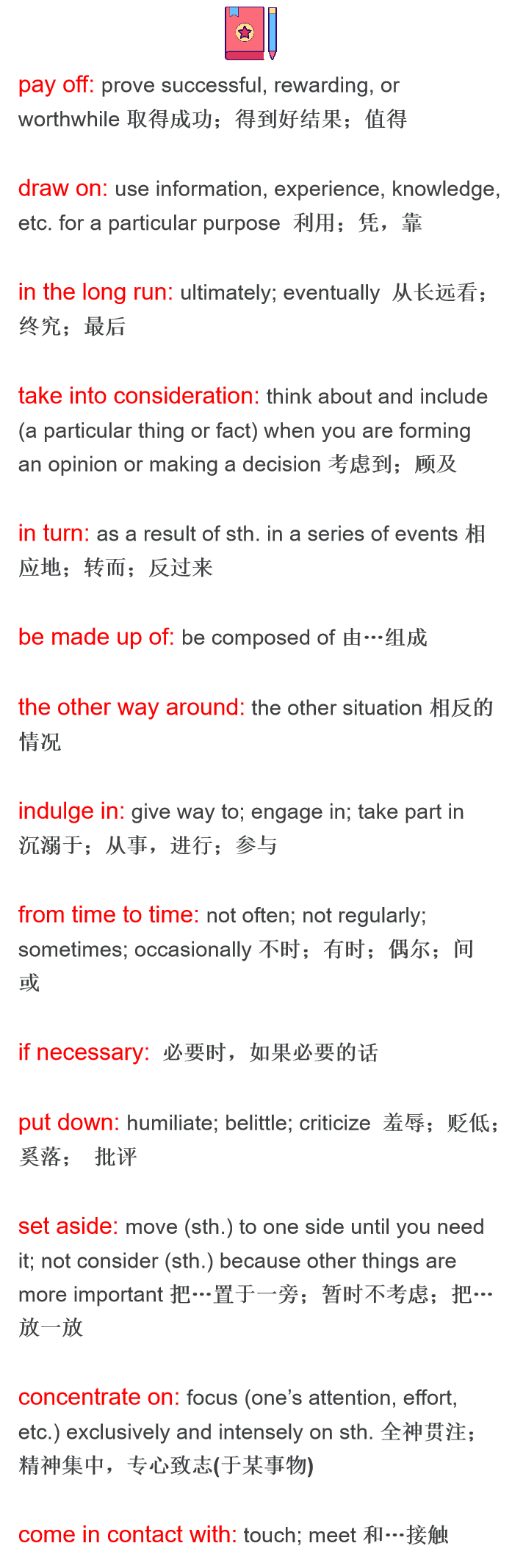
2 Words and&nb...
-
3 Notes on&nbs...
-
4 Exercises



1 I like to listen. I have learned a great deal from listening carefully. Most people never listen. They don’t know that being an attentive listener pays off in the long run.
2 There is a very interesting ancient Turkish maxim which conveys the value of listening: “If speaking is silver, then listening is gold.” Whereas hearing (e.g. noise of traffic on the road) relies on ears, listening (not only hearing the words but also understanding their meaning) draws on the mind and is influenced by attitude. There is a difference between merely hearing the words and really listening for the message.
3 Making listening “active” in the true sense is a technique that requires the listener to understand, interpret and evaluate what the speaker says. It also takes into consideration the fact that you must be able to remember what was said and analyse the ideas or the speaker’s thoughts. Active listening has the power to strengthen personal relationships through reduced conflict, enhanced understanding and improved cooperation. This in turn helps make people feel valued and also contributes to one’s own personal growth.
4 Let’s introspect. Why do we listen to people as students or employees or maybe in other roles of listeners? Basically, we listen to obtain information, to understand, to learn and also to enjoy. As young seekers, it becomes all the more important to develop these skills, which will help us to grow professionally as well as personally. Active listening is a way of listening and responding to people in order to improve shared understanding. It is made up of three components: attitude, attention and adjustment.
5 Here are the main elements of active listening.
6 Be positive: As you enter a lecture room or wherever you are going to hear someone speak, focus your thoughts on the subject. Cease all unrelated or distracting activities. Keep your mind open and free from any bias. You are there to learn what the speaker has to say — not the other way around.
7 Pay full attention: Give your undivided attention. Look at the speaker directly. Watch his body language. Acknowledge the message. Use appropriate non-verbal communication signs. Don’t indulge in side conversations when listening in a group setting. Once you are listening with your complete attention, your train of thought will follow the speaker’s line of thinking.
8 Let the speaker know that you are listening:Make gestures from time to time. Give occasional verbal comments like “yes” and “uh huh.” Assume a posture that signals openness and invitation.
9 Do not interrupt:Even if you have questions, do not raise them while the speaker is presenting. Try to engage in a conversation rather than an argument or disagreement.
10 Give feedback: Sometimes our beliefs colour what we hear — resist this temptation. Reflect on what the speaker says. Ask questions to clarify certain points, if necessary, such as: “What do you mean when you say…?” and “Is that what you mean?”
11 Avoid immediate judgment: If you interrupt a speaker, besides wasting time, it will frustrate him and limit understanding of the message. Let the speaker finish what he wants to say.
12 Give an appropriate response: You will not gain anything by attacking the speaker or putting him down. You can assert your opinion but do it respectfully. Treat the other person as you would like to be treated by him.
13 Always remember that it requires tremendous concentration and willpower to be an active listener. Old habits are hard to break, and new ones difficult to form. However, be purposeful with your listening and remind yourself that your objective is not merely to hear but to understand what the other person is saying. Set aside all other thoughts and actions and concentrate on the message. You will be surprised at the gradual change in you. Develop active listening in yourself to become a better communicator, as it will lead to your improved efficiency at work and harmonious relationships with all those you come in contact with.