-
1 Artical
-
2 Words and&nb...
-
3 Notes on&nbs...
-
4 Exercises



1 Habits: we all have them. The good ones we want to keep; the bad ones we want to eliminate. According to the experts, it takes about a month to break a bad habit. Let’s resolve to give it a try.
2 You should only attempt to change one bad habit at a time. After all, if you succeed, you could get rid of twelve in one year! At that rate, a person would soon be perfect.
3 Here are suggested steps to help you achieve your first goal:
4 (A) Identify the habit you want to change. Think about the adverse effects it has on your life and on the lives of those close to you. Since my weakness is over-eating, I will focus on overcoming that habit this month.
5 (B) Decide to make a change — not forever, just for one month. Set a definite date to start, about three days hence, and a definite date to finish. In the meantime make preparations. Buy a journal or notebook to record your progress, any special supplies or equipment you may need, and decide on a reward you will give yourself if you persevere for one month.
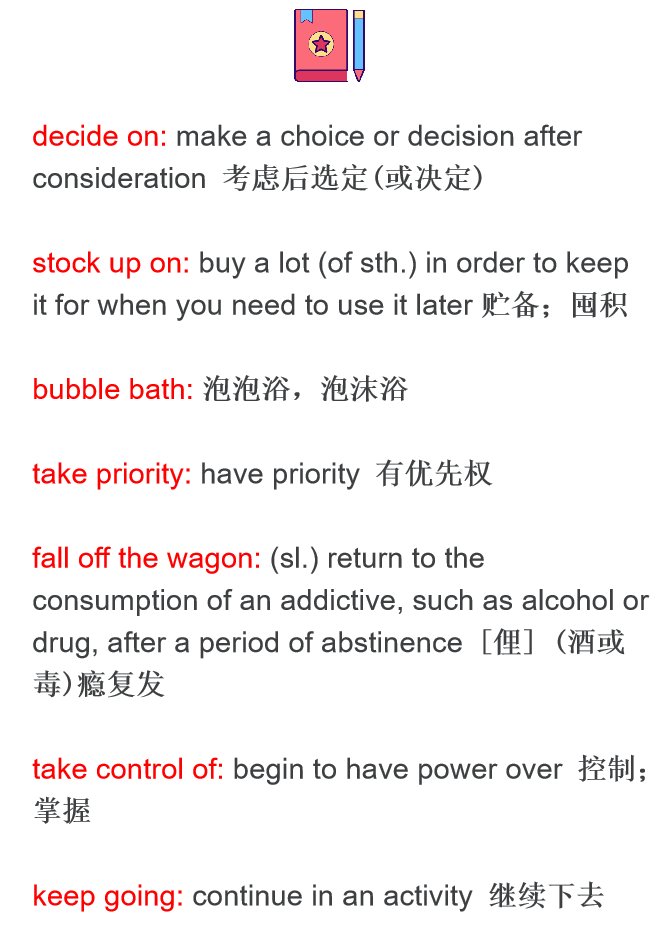
6 I need to get rid of all the junk food and stock up on fruit, vegetables, diet pop, gum, and Slim-Fast or Weight Watchers frozen dinners. Since I plan to limit myself to 1,000 calories daily, I’ll need a book listing the calorie count for common foods.
7 (C) Identify and remove all the triggers for the old behavior. If you usually go out weekly for a big dinner with the gang, cancel for this month. If you like to munch during movies, bring a bag of celery sticks. It can be done; it just needs a little bit of creative pre-planning.
8 (D) Enlist support of family and friends. If you’re really committed and brave, you can promise to publish your progress on Facebook. Sorry, I’m not that confident yet.
9 (E) Begin. The first few days, pamper yourself. Take warm bubble baths, and do things you enjoy. Keep careful track of your behavior. If dieting, don’t let yourself get hungry. Eat lots of raw fruit and vegetables. Write down your starting weight, and every single thing you eat and drink and its calorie count. At bedtime, record the total number of calories ingested.
10 (F) Be consistent. Eliminate excuses. It’s extremely rare for anyone to faint from hunger or starve to death in North America, especially not someone who is overweight. Practice relaxation techniques. When negative thoughts surface, visualize blowing them to bits with a stick of dynamite.
11 Get lots of rest, avoid stress. Overcoming the bad habit takes priority for this one month. Meditate on how your life will improve once you’ve conquered this bad habit. Arrange little rewards along the way: get your hair done, buy a best-seller, visit a casino.
12 (G) Persevere. Every temptation you overcome will make you stronger. If you fall off the wagon, get right back on. A slip-up doesn’t mean failure unless it makes you give up. Continue to track your progress every day for the entire month.
13 At the end of the month, you will feel extremely proud of yourself. Collect your reward and enjoy it! You will be a stronger person. You have taken control of your habit, rather than letting it control you.
14 Some of us will not be finished in one month. If you need to lose more weight, keep going. You will have established a good basis for effective weight control.
15 If your bad habit has elements of addiction, such as alcoholism, drug use or nicotine addiction, you may need extra support, such as an Alcoholics Anonymous group or medical assistance, but never doubt that a bad habit can be overcome.
16 “Feeling sorry for yourself and your present condition, is not only a waste of energy but the worst habit you could possibly have.”