目录

  • 1 UK-General Survey
    • 1.1 Introduction to the Course
    • 1.2 Official Name & Other Names
    • 1.3 Component Parts
    • 1.4 Capital City
    • 1.5 Language
    • 1.6 Currency
    • 1.7 Religion
    • 1.8 National Flag
    • 1.9 National Anthem
    • 1.10 National Emblem
    • 1.11 Quiz
    • 1.12 quiz
    • 1.13 checklist
  • 2 UK - Geography
    • 2.1 Position
    • 2.2 The Land
    • 2.3 Geographical Features of the Components
    • 2.4 Major Cites
    • 2.5 Climate
    • 2.6 checklist
  • 3 History
    • 3.1 The Founding of the Nation
    • 3.2 Transition to the Modern Age
    • 3.3 The Rise and Fall of the British Empire
    • 3.4 The History of the English Language
    • 3.5 checklist
  • 4 UK-Politics
    • 4.1 Political System
    • 4.2 Constitutional Monarchy
      • 4.2.1 The Constitution
      • 4.2.2 The Monarch
        • 4.2.2.1 Functions of the Monarch
        • 4.2.2.2 Present Monarch
      • 4.2.3 Quiz
    • 4.3 Separation of Powers
      • 4.3.1 Legislature – Parliament
        • 4.3.1.1 House of Lords
        • 4.3.1.2 House of Commons
          • 4.3.1.2.1 General Election
          • 4.3.1.2.2 Two-party System
      • 4.3.2 Executive – Government
        • 4.3.2.1 Prime Minister
        • 4.3.2.2 The Cabinet
      • 4.3.3 Judiciary - Court
      • 4.3.4 Quiz
    • 4.4 checklist
  • 5 UK-People and Their Lives
    • 5.1 Social Class
    • 5.2 General Characters of Britons
    • 5.3 Ways of Life
      • 5.3.1 Marriage and Family
      • 5.3.2 Housing
      • 5.3.3 Transportation
      • 5.3.4 Clothing
      • 5.3.5 Eating
      • 5.3.6 Working
      • 5.3.7 Sports
      • 5.3.8 Media
    • 5.4 Welfare System
    • 5.5 Social Problems
    • 5.6 checklist
    • 5.7 quiz 2A
    • 5.8 quiz 2B
  • 6 UK-Celebrities
    • 6.1 Who are they?
    • 6.2 Famous Britons
    • 6.3 Checklist
  • 7 UK & US -Major Holidays
    • 7.1 Intro
    • 7.2 New Year (UK&US)
    • 7.3 Birthday of Martin Luther King Jr. (US)
    • 7.4 Valentine's Day (UK&US)
    • 7.5 Easter (UK&US)
    • 7.6 April Fool's Day (UK&US)
    • 7.7 Queen's Birthday (UK)
    • 7.8 Independence Day (US)
    • 7.9 Labor Day (US)
    • 7.10 Columbus Day (US)
    • 7.11 Halloween (UK&US)
    • 7.12 Bonfire Night (UK)
    • 7.13 Rememberance Day (UK) / Veterans Day (US)
    • 7.14 Thanksgiving (US)
    • 7.15 Christmas (UK&US)
    • 7.16 Boxing Day (UK)
    • 7.17 Holiday Types
    • 7.18 Checklist
  • 8 Chapter 8 US-General Survey
    • 8.1 Country Name
    • 8.2 Capital City
    • 8.3 Language
    • 8.4 Religion
    • 8.5 Currency
    • 8.6 National Flag
    • 8.7 National Anthem
    • 8.8 National Bird
    • 8.9 Great Seal
    • 8.10 Population
    • 8.11 Checklist
    • 8.12 QUIZ
      • 8.12.1 QUIZ 3A
      • 8.12.2 QUIZ 3B
  • 9 Chapter 9 US-Geography
    • 9.1 Position
    • 9.2 Territory
    • 9.3 Time Zone
    • 9.4 State Region
    • 9.5 Geographical Features
    • 9.6 Waters
    • 9.7 Major Cities
    • 9.8 Climate
    • 9.9 Natural Disasters
    • 9.10 Quiz
    • 9.11 Checklist
  • 10 Chapter 10 US-History
    • 10.1 First Inhabitants
    • 10.2 Colonial Period
    • 10.3 War of Independence
    • 10.4 Westward Expansion
    • 10.5 American Civil War
    • 10.6 US in the 20th Century
    • 10.7 US in the 21st Century
    • 10.8 Resource for this chapter
      • 10.8.1 movie
    • 10.9 Quiz
    • 10.10 Checklist
  • 11 Chapter 11 US-Politics
    • 11.1 Government Principles
    • 11.2 Constitution
    • 11.3 Branches of Power
      • 11.3.1 Legislative
      • 11.3.2 Executive
      • 11.3.3 Judicial
      • 11.3.4 Checks and Balances
    • 11.4 Major Parties
    • 11.5 Election
    • 11.6 Quiz
    • 11.7 Checklist
  • 12 Chapter 12 US-People and Their Lives
    • 12.1 Basic Values
    • 12.2 Cultural Groups
      • 12.2.1 Caucasians
      • 12.2.2 Hispanics
      • 12.2.3 African Americans
      • 12.2.4 Native Americans
      • 12.2.5 Jewish Americans
      • 12.2.6 Asian Americans
    • 12.3 Social Welfare
    • 12.4 Tourism
    • 12.5 Life Style
      • 12.5.1 Family Structure
      • 12.5.2 Housing
      • 12.5.3 Commuting
      • 12.5.4 Food and Cuisine
      • 12.5.5 Fashion and Dress
      • 12.5.6 Transportation
      • 12.5.7 Media
      • 12.5.8 Sports
    • 12.6 Quiz 3
      • 12.6.1 Quiz 3A
      • 12.6.2 Quiz 3B
    • 12.7 Checklist
  • 13 Chapter 13 US-Celebrities
    • 13.1 Who are they?
    • 13.2 Influential Americans
  • 14 Chapter 14 UK & US-Education
    • 14.1 Education in the UK
      • 14.1.1 Education Policy
      • 14.1.2 Education System
        • 14.1.2.1 Primary Eduction
        • 14.1.2.2 Secondary Education
        • 14.1.2.3 Higher Education
    • 14.2 Education in the US
      • 14.2.1 Education Policy
      • 14.2.2 Education System
        • 14.2.2.1 Elementary & Secondary Education
        • 14.2.2.2 Higher Education
Social Welfare

中美看病大不同?(这个可以点哦)

在美国叫一次救护车要900刀?(这个可以点哦)

Traditionally in America, helping the poor was a matter for private charity or local government. Arriving immigrants depended mainly on predecessors from their homeland to help them start a new life. In the late 19th and early 20th centuries, several European nations instituted public-welfare programs. But such a movement was slow to take hold in the United States because the rapid pace of industrialization and the ready availability of farmland seemed to confirm the belief that anyone who was willing to work could find a job.

The Great Depression, which began in 1929, shattered that belief. For the firsttime in history, substantial numbers of Americans were out of work because ofthe widespread failures of banks and businesses.

Within days after taking office as president in 1932, Franklin D. Roosevelt proposed recovery and reform legislation to the U.S. Congress.

There has been concern that the Social Security fund may not have enough money to fulfill its obligations in the 21st century, when the population of elderly Americans is expected to increase dramatically.

In the years since Roosevelt, other American presidents, particularly Lyndon Johnsonin the 1960s, have established assistance programs. These include Medicaid and Medicare; food stamps, certificates that people can use to purchase food; and public housing, which is built at federal expense and made available to persons with low incomes.

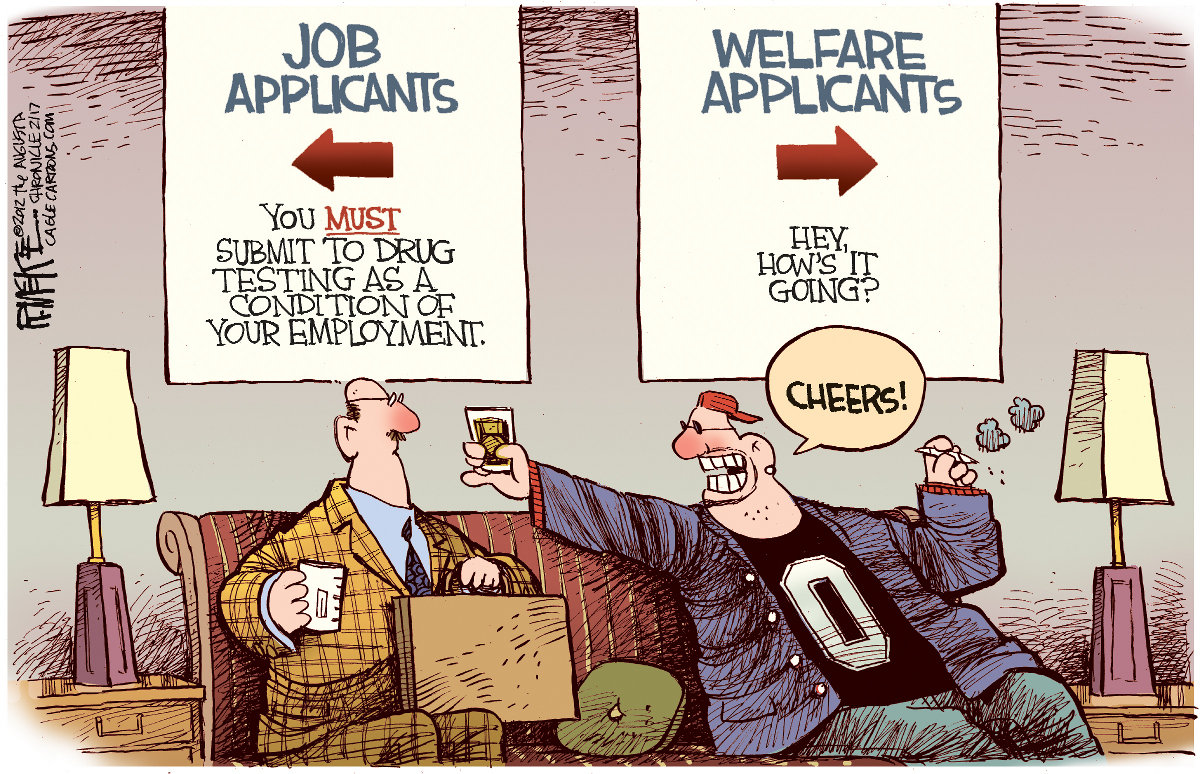
In 2018, 38.1 million people in the US lived in Poverty. That means the poverty rate for 2018 was 11.8%. In addition to the benefits discussed above, many families below the poverty line receive welfare payments, sums of money provided by the government each month to those whose income is too low to obtain such necessities as food, clothing, and shelter.

The total cost of all federal assistance programs -- including Social Security, Medicare, Medicaid, and various welfare programs -- accounts for nearly one-half of all money spent by the federal government.