
The House of Hanover
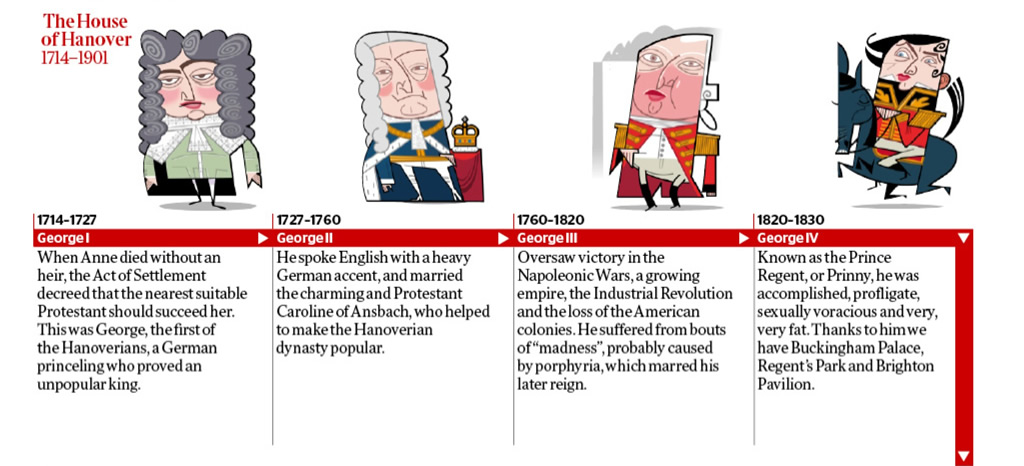
England and Scotland were united in 1707 by the Act of Union. The House of Hanover succeeded the House of Stuart as monarchs of Great Britain and Ireland in 1714 and held the office until the death of Victoria in 1901. George I of Hanover was the first monarch of the House of Hanover and Queen Victoria was the last. The Dynasty provided six British monarchs:
George I (r.1714-1727)
George II (r.1727-1760)
George III (r.1760-1820)
George IV (r.1820-1830)
William IV (r. 1830-1837)
Victoria (r. 1837-1901)

Georgian Era (乔治时代)(1714-1830)

The Georgian era saw the gradual complete ascendancy of the middle class with the beginnings of the Industrial Revolution(工业革命), which began the process of intensifying class divisions(加剧阶级分化). Meanwhile, during George I’s reign, the power of the monarchy diminished and Britain began a transition to the modern system of Cabinet (内阁)government led by a Prime Minister (首相), which plays an important part in connecting the King and Parliament together.
The Georgian also saw continual warfare, including the Seven Year’s War(1756-1763), the American Revolutionary War (美国独立战争)(1775-1783), the French Revolutionary Wars(法国革命战争)(1792-1802), the Irish Rebellion of1798 (爱尔兰叛乱), and the Napoleonic Wars(拿破仑战争)(1803-1815). The British won all the wars except for the American Revolution.
Additionally, it also witnessed the union of Ireland with Scotland and England into the nation of Great Britain and Ireland in 1800.
Victorian Era (维多利亚时期)(1837-1901)
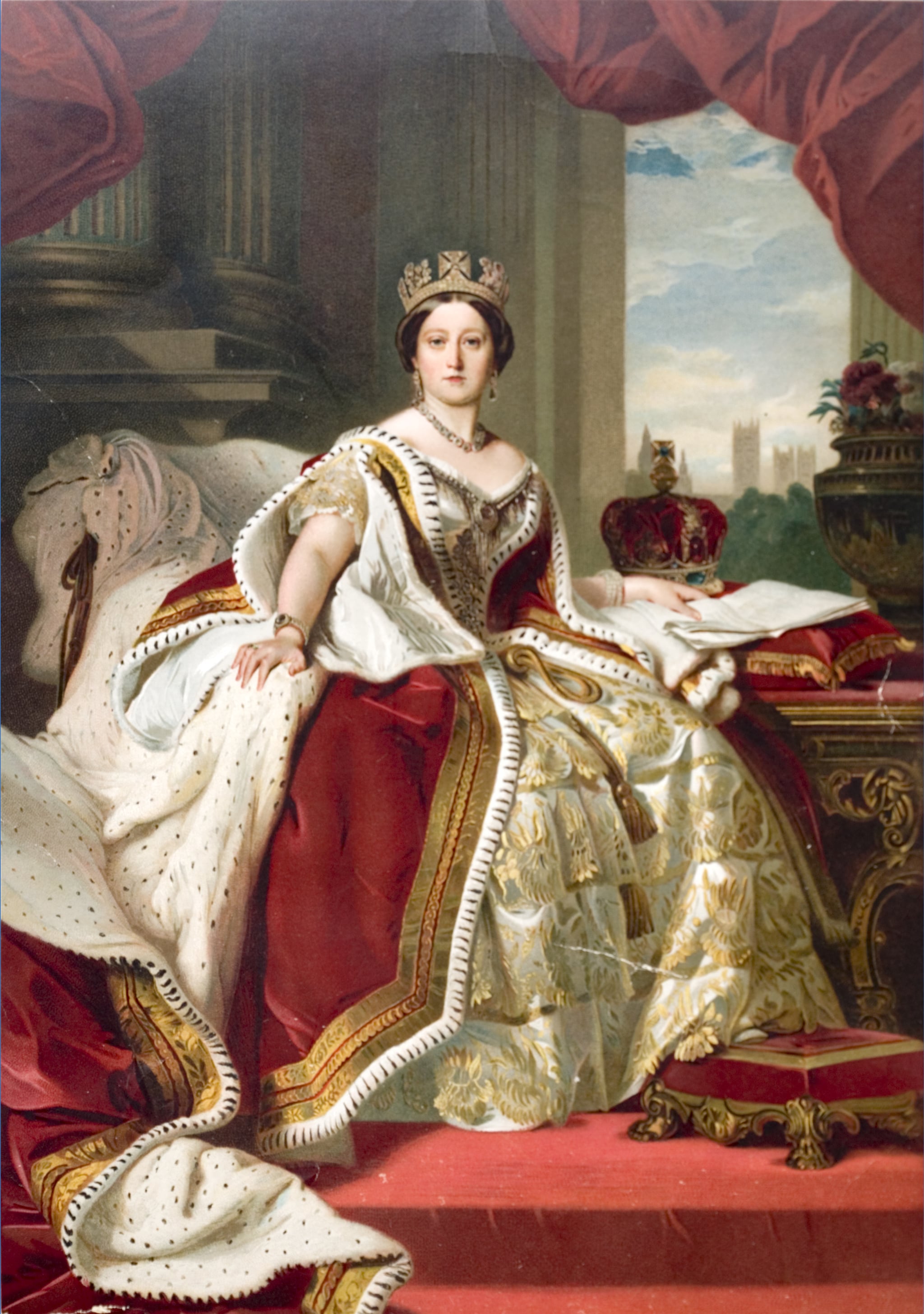
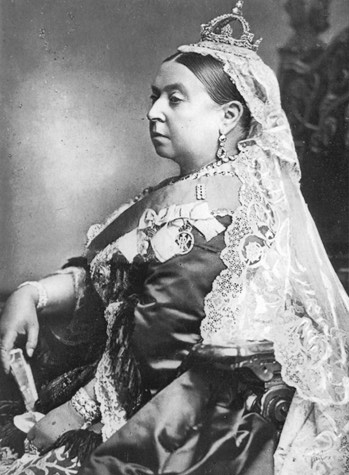
The Victorian era was a period in which Britain became the strongest world power, not only in finance and commerce, but also in sea and colonial power, which is characterized as a long period of peace and prosperity for British people, as profits gained from home and abroad. Under the reign of Queen Victoria, Britain stepped into the stage of imperialism(帝国主义).
The Victorian Age was a time of tremendous scientific progress and ideas. The Industrial Revolution had already occurred,but it was during this period that fully developed. With the innovation of new techniques, the transportation and agriculture were mechanized. It was also a tremendously exciting era when many artistic styles, literary school, as well as, social and political movements flourished.
Industrial Revolution (1760-1850)
The Industrial Revolution refers to the mechanization(机械化)of industry and the consequent changes in social and economic organization in Britain in the late 18th and early 19thcenturies. It started with the mechanization of the textile industries(纺织业), the development of iron-making techniques and the increased use of refined coal. Most important of all, James Watt improved his steam engine(蒸汽机) to the machines used in the textile industry in 1769, which helped the immense expansion in manufacture of cotton cloth.Steam engines also powered factories and drove the trains carrying goods over long distances.
As a result of the growth of industry,population was increasingly concentrated in towns and cities. Many new cities sprang up. Manchester, Leeds, Birmingham and Sheffield were notable examples.By the 1840s, England had been transformed from an agricultural country into a manufacturing country, and the urban population was half of the total population.
The Industrial Revolution marked a major turning point in human history, which forever transformed the way people live and work in most parts of the world.
World War I(第一次世界大战)(1914-1918)
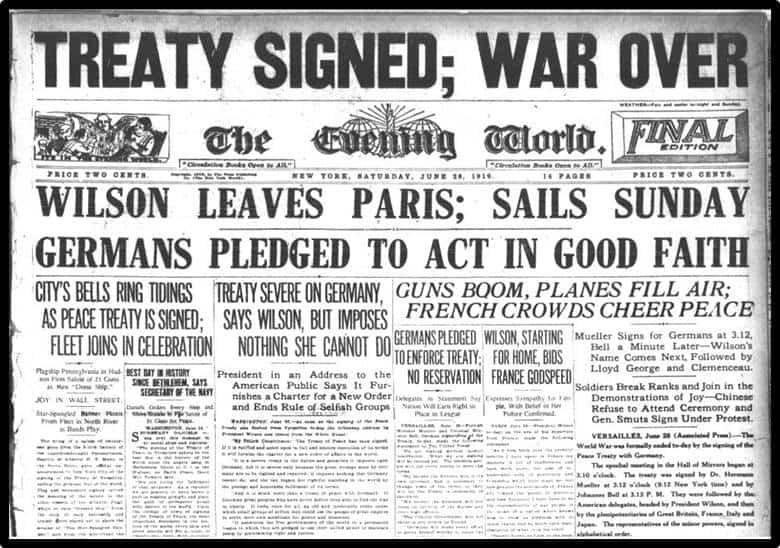
The World War I was from 1914 to 1918 primarily between two European Powers: the Central power (同盟国) (including Germany, Italy and Austria-Hungary) and the Allied power(协约国) (including Britain, France and Russia). It was only in 1918 that the Allied Power, with the Americans’ involvement, began to make advances. A better battle plan and the use of the new tanks gave the Allies the breakthrough. Within three months the war was over. Both sides had suffered immense losses. In spite of a victorious country, Britain had encountered a heavy blow. Losing 70% of its merchant ships and borrowing 1,000 million dollars from the US. Britain changed from a creditor nation (债权国) to a debtor nation (债务国). Its supremacy in the world began to be replaced by the US.
World War II (第二次世界大战) (1939-1945)
World War II was a continuation of World War I. According to the Treaty of Versailles(《凡尔赛公约》)which was signed at the end of WWI in 1919, Germany was required to relinquish(放弃) all its colonies and permanently disarm(永久解除武装). In addition, Germany was compelled to pay a vast sum in reparations(赔款). The Great Depression(大萧条) made things worse and led to the rise of facism(法西斯主义). Adolph Hitler(希特勒) aroused strong nationalism and racism in Germany, embarking on an abitious plan to conquer Europe.
The Second World War was fought between two sides: the fascist countries(法西斯主义国家), with Germany, Japan, Italy in one, and the international anti-fascist countries(反法西斯国家), with Britain, France, Russia, America,China etc. in the other.
Because of its appeasement policy (绥靖政策),Britain had not been preparing for the fighting. So cities were devastated by bombing and Britain was beaten by Hitler’s “blitz” (闪电战).
After several years of fierce fighting, the war came to an end in 1945. Britain and its allies won the war, but Britain suffered heavy losses.

The Fall of the Empire
As a result of WWII, Britain's financial position was greatly weakened and it had to rely on America for help in economy. What’s more, many of its colonies demanded their independence, which was accepted by Britain later one by one. The former colonies became independent members of the British Commonwealth(英联邦), who were united for their common profits, but politically independent and took their seats among the United Nations(联合国).
NOTE: The Commonwealth of Nations is an international organization, consisting of 53 members. Most of the members were British colonies. The head of the commonwealth now is the Queen Elizabeth II of Britain. The UK is a member of the Commonwealth, but do not have any priviledge over other members.

