The history of the United Kingdom is rather complex, which had
entangled a lot with the European continent, and later on with the whole
world.
The video clips in this chapter is just a thread to help you link all the events together.
For further detailed information about the major events in each period, please read the texts under each video clip.
Stonehenge (巨石阵)

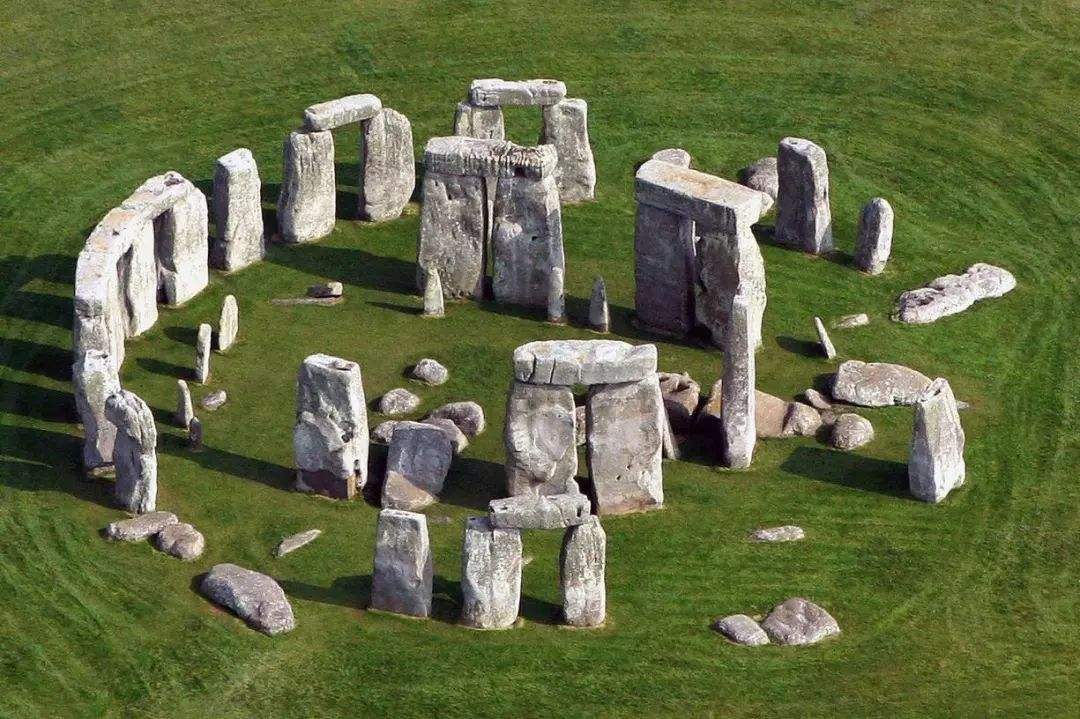
Thousands of years ago, Great Britain was joined to Europe and was covered with ice. About 15,000 years ago, the weather became warmer. The ice melted and the sea level rose. Great Britain became an island about 8000 years ago. Little is known about people inhabiting the British Isles in the pre-Celtic period (before 800 BC). Some monuments built by them have been preserved such as Stonehenge, erected some time before 1000 BC.
NOTE: BC = Before Christ (基督教历法:公元前)
The Celts (凯尔特人)
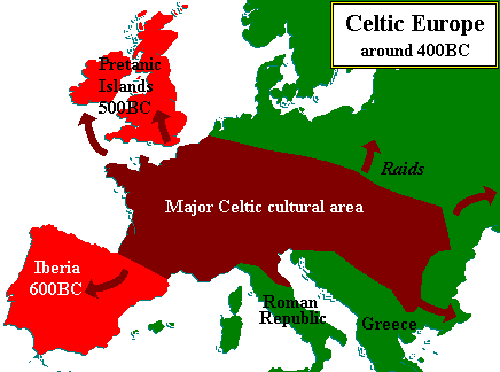
As there is no actual written history about the origin of the earliest natives in Britain, the Celts were taken as the early natives in British history. Their languages were assimilated(同化,吸收) into the English language and served as the origin of the Scots (苏格兰人) and Welsh (威尔士人) languages. The Celtic tribes migrated from northwestern Europe to the Great Britain from about 750 BC,in search for empty land, living in a primitive society(原始社会). They became the ancestors of the Scots, the Irish (爱尔兰人) and the Welsh, and created their own civilization.
Roman Conquest (罗马征服)(55 BC – 410 AD)
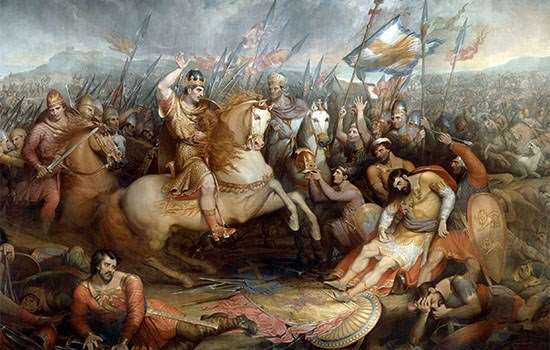
British recorded history begins with the Roman Conquest. The first Roman Invasion was led by Julius Caesar (朱利叶斯·凯撒) in 55 BC. But what is now England was not conquered until some 90 years later, under Emperor Claudius (克劳迪), in 43 AD. But Romans never conquered the whole nation because of the native’s resistance in the mountainous areas.
The Romans introduced their own civilization into England by building baths and temples, draining marshes(排水系统), cultivating land(耕地), and clearing away forests. They also introduced the system of governing, with an intention to transform England into a slavery society. What’s more, the Roman traders and soldiers brought their own religion – Christianity(基督教) to Britain, which had thoroughly replaced the old Celtic gods(凯尔特神祗) by the close of the 4th century. However, the Roman influence upon Britain was too limited to change the language and customs of the ordinary people. Only the English upper classes were organized to become Roman landlords and officials. With the decline of the Roman Empire, the Romans had to withdraw from England to fight against the Germanic(日耳曼人)invasion in 410 AD, which ended the Roman occupation.
NOTE: BC = Before Christ (基督教历法:公元前); AD = Anno Domini (拉丁语:公元)

The Anglo-Saxon (盎格鲁-萨克逊) Conquest
In the 5th century, the Romans progressively abandoned England, as their Empire was falling apart and legions (军团) were needed to protect Rome.
With the Romans vacated (撤退), the Celtic tribes started warring with each other again, and one of the local chieftains (酋长) had the (not so smart) idea to request help from some of the Germanic tribes from the North of present-day Germany and South of Denmark. These were the Angles(盎格鲁人), Saxons(萨克逊人) and Jutes(朱特人), who arrived in the 5th and 6th centuries.
When the fighting ceased, the Germanic tribes did not, as expected by the Celts, return to their homeland. In fact, they felt strong enough to seize the whole of the country for themselves, which they ultimately did, pushing back all the Celtic tribes to Wales and Cornwall (康沃尔), and founding their respective kingdoms of Kent (肯特) (the Jutes), Essex(埃塞克斯), Sussex(苏塞克斯) and Wessex(威塞克斯) (the Saxons), and further northeast, the kingdoms of Anglia(安格利亚), Mercia (麦西亚) and Northumbria(诺森布里亚) (the Angles). These 7 kingdoms, which ruled over the United Kingdom from about 500 to 850 AD, were later known as the Anglo-Saxon heptarchy(七王国).
NOTE: hept- 前缀:七

Viking Invasions (维京入侵) (793-1066)
The Viking people came from three countries of Scandinavia(斯堪的纳维亚): Denmark, Norway and Sweden. Many Vikings were great travelers and sailed all over Europe. They came across the North Sea, just as the Anglo-Saxons had done 400 years earlier. In order to search for better land for their farms, the Vikings drove the Saxons out of part of the country and took it for themselves.
The Viking invasions began in the 8th century and lasted for 300 years. King Alfred(阿尔弗雷德大王), king of Wessex, fought them in a great battle, but he could not drive the Vikings right away and agreed a treaty with them to divide the country. The Saxons retained the west, while the east was to be Viking territory,which is later known as the Danelaw (丹麦区). Alfred’s descendants gradually pushed the Vikings northwards and finally into the sea. Some Vikings chose to stay on the island and eventually these people were assimilated.

The Norman Conquest (诺曼征服)(1066)
After Alfred’s grandson's ruling over a united England, government became centralized and the king ruled the whole country. A decade later, Earl Harold(哈罗德) controlled Wessex and was in a powerful position. So when Edward the Confessor(忏悔者爱德华), the last Saxon king, died in 1066 without a male heir,Harold claimed the throne. However, his claim was disputed by William(威廉) of Normandy (诺曼底,a region in Northern France today), who was a distant cousin of Edward the Confessor and also claimed that Edward the Confessor had promised him the throne of England on his death. So Duke William and his army crossed the English Channel and landed in England, and won the decisive (决定性的) victory at the battle of Hastings(黑斯廷斯战役). He was crowned William I (威廉一世)on Christmas Day 1066.
The uniqueness of the Norman Conquest in British history is that it introduced England the feudalism (封建制度) and French language. William confiscated (没收) almost all the land and gave it to his Norman followers. Meanwhile, it linked England more closely with Continental Europe, while set the stage for rivalry with France. The Norman Conquest also had important consequences for the rest of the British Isles, paving the way for further Norman invasions in Wales and Ireland.
NOTE: emperor 皇帝; king 国王; queen 女王,王后;duke 公爵; duchess 女公爵,公爵夫人;marquis 侯爵;marchioness/marquise 女侯爵,侯爵夫人;earl 伯爵;countess/comtesse女伯爵,伯爵夫人;viscout 子爵;viscountess 女子爵,子爵夫人;baron 男爵; baroness 女男爵,男爵夫人; lord 地主,领主;knight 骑士,爵士