
4. 匹配题
特征:匹配题衍生类较多,包括段落信息匹配(句子信息和相应段落进行匹配)、关系型匹配(人物观点、事件匹配、类别匹配等);匹配题多乱序,不可遵循“带着问题找答案”思路; 注意题目有NB提示(同一选项选多次)
概率:三篇文章基本上会有一个匹配题
解题思路:判断匹配类型,选择正确阅读方法,实时调整阅读顺序。解题关键在于原文定位后的同义替换处理。
例子1:段落信息匹配
出题标志:Which paragraph contains the following information?
解题:看一段(主旨信息+重要细节信息)→提炼一段→选择一段→排除一段→循环
利用排除法
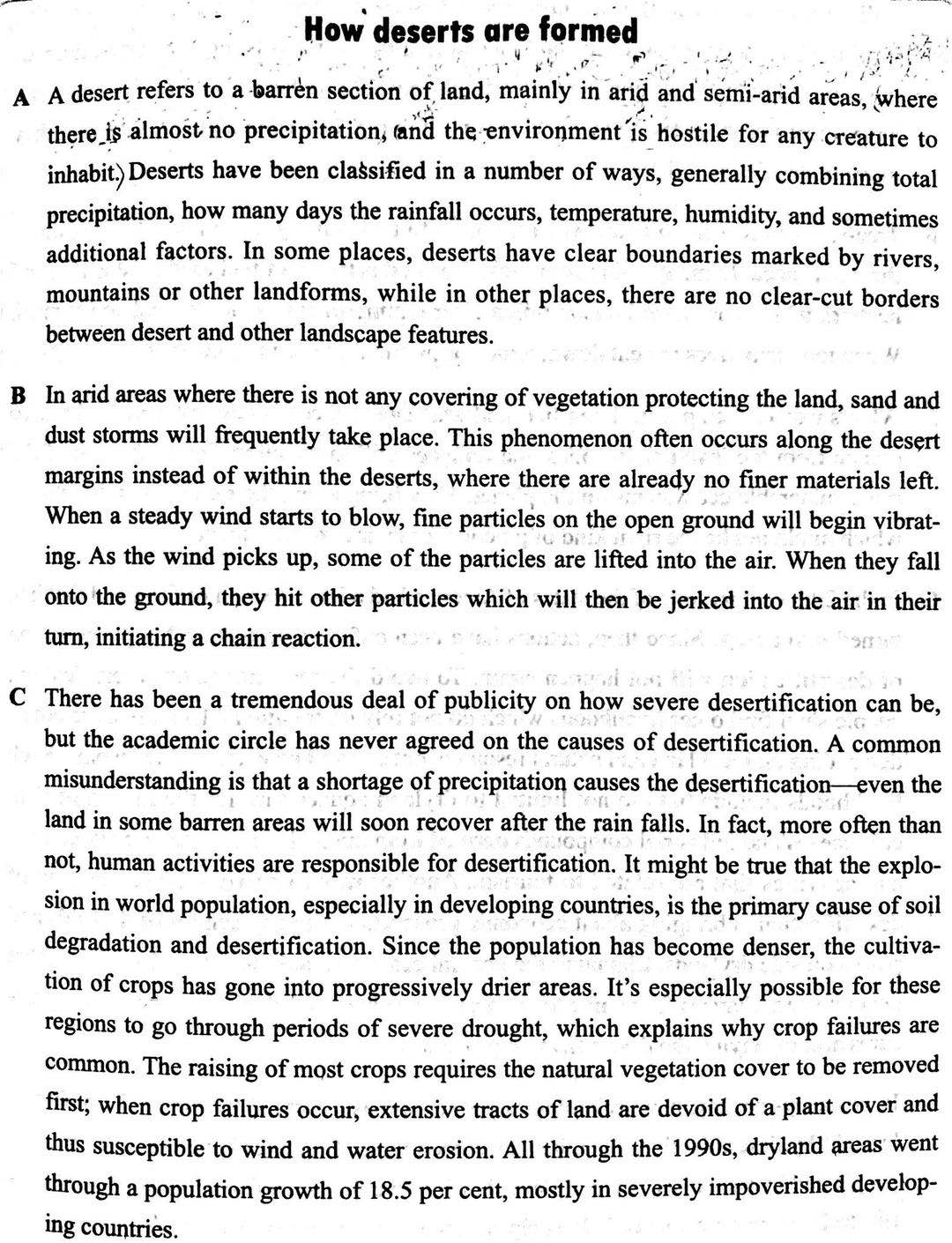
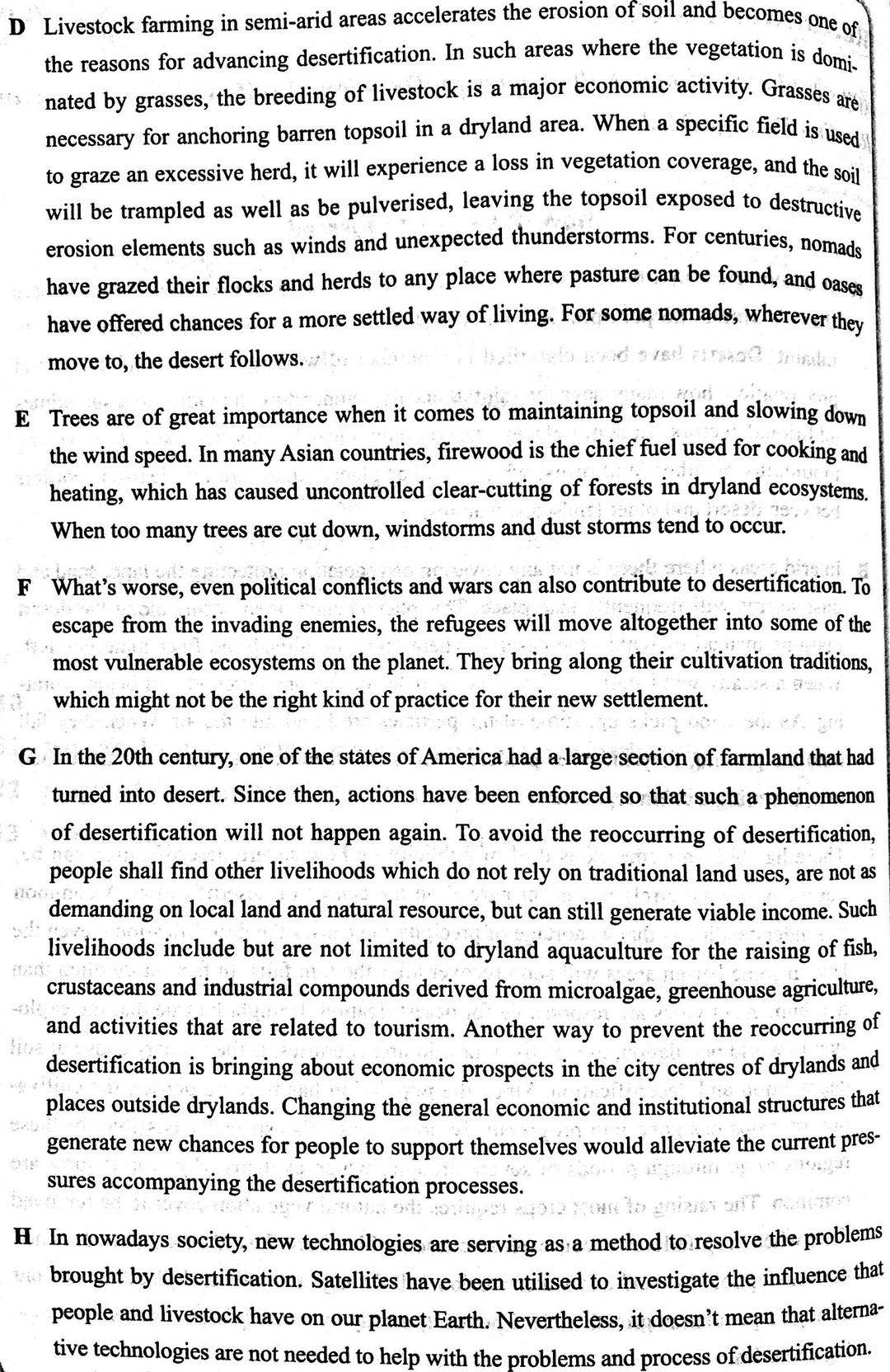
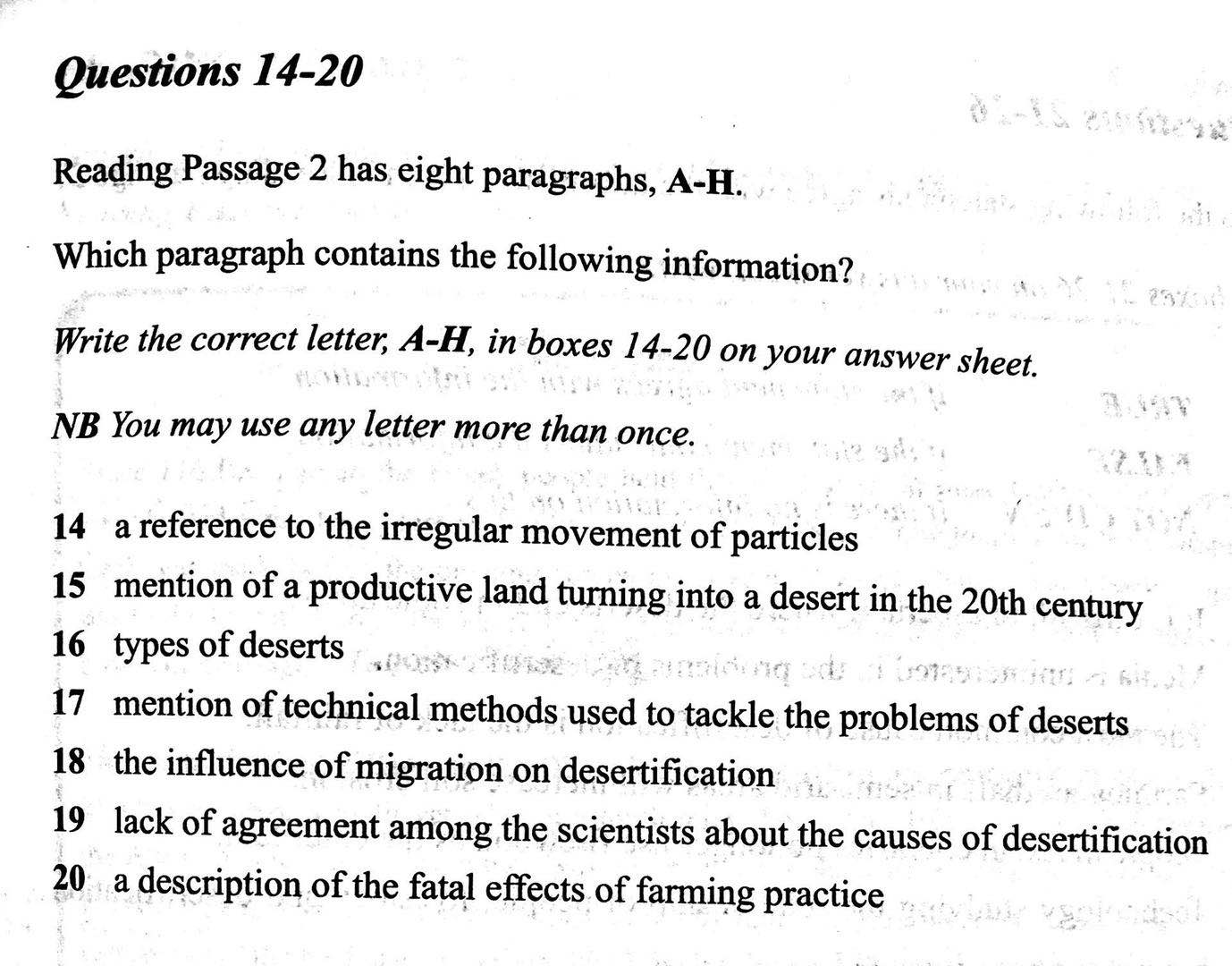

答案:
14. B
15. G
16. A
17. H
18. D
19. C
20. C
例子2:关系型匹配之人物观点匹配
出题标志:Look at the following opinions or deeds and the list of people below.
Match each opinion or deed with the correct person, A, B, C or D.
NB You may use any letter more than once.
解题:确认题型→确认匹配信息类型(是段落信息匹配还是关系型匹配,如果是后者直接回原文进行阅读定位)→圈出相应人物及同义替换词,注意区分不同人物→一一比对排除
Education Philosophy
A Although we lack accurate statistics about child mortality in the pre-industrial period, we do have evidence that in the 1660s, the mortality rate for children who died within 14 days of birth was as much as 30 per cent. Nearly all families suffered some premature death. Since all parents expected to bury some of their children, they found it difficult to invest in their newborn children. Moreover, to protect themselves from the emotional consequences of children’s death, parents avoided making any emotional commitment to an infant. It is no wonder that we find mothers leaving their babies in gutters or referring to the death in the same paragraph as a reference to pickles.
B The 18th century witnessed the transformation from an agrarian economy to an industrial one - one of the vital social changes taking place in the Western world. An increasing number of people moved from their villages and small towns to big cities where life was quite different. Social supports which had previously existed in smaller communities were replaced by ruthless problems such as poverty, crime, substandard housing and disease. Due to the need for additional income to support the family, young children from the poorest families were forced into early employment and thus their childhood became painfully short. Children as young as 7 might be required to work full-time, subjected to unpleasant and unhealthy circumstances, from factories to prostitution. Although such a role has disappeared in most wealthy countries, the practice of childhood employment still remains a staple in underdeveloped countries and has rarely disappeared entirely.
C The lives of children underwent a drastic change during the 1800s in the United States. Previously, children from both rural and urban families were expected to participate in everyday labour due to the bulk of manual hard work. Nevertheless, thanks to the technological advances of the mid-1800s, coupled with the rise of the middle class and redefinition of roles of family members, work and home became less synonymous over time. People began to purchase toys and books for their children. When the country depended more upon machines, children in rural and urban areas were less likely to be required to work at home. Beginning from the Industrial Revolution and rising slowly over the course of the 19th century, this trend increased exponentially after the Civil War. John Locke, one of the most influential writers of his period, created the first clear and comprehensive statement of the ‘environmental position’ that family education determines a child’s life, and via this, he became the father of modern learning theory. During the colonial period, his teachings about child care gained a lot of recognition in America.
D According to Jean Jacques Rousseau, who lived in an era of the American and French Revolution, people were ‘noble savages’ in the original state of nature, meaning they were innocent, free and uncorrupted. In 1762, Rousseau wrote a famous novel - Emile - to convey his educational philosophy through a story of a boy’s education from infancy to adulthood. This work was based on his extensive observation of children and adolescents, their individuality, his developmental theory and on the memories of his own childhood. He contrasted children with adults and described their age-specific characteristics in terms of historical perspective and developmental psychology. Johan Heinrich Pestalozzi, living during the early stages of the Industrial Revolution, sought to develop schools to nurture children’s all-round development. He agreed with Rousseau that humans were naturally good but were spoiled by a corrupt society. His approach to teaching consisted of both general and specific methods, and his theory was based upon establishing an emotionally healthy and homelike learning environment, which had to be in place before more specific instruction occurred.
E One of the best-documented cases of Pestalozzi’s theory concerned a so-called feral child named Victor, who was captured in a small town in the south of France in 1800. Prepubescent, mute, naked, and perhaps 11 or 12 years old, Victor had been seen foraging for food in the gardens of the locals in the area, and sometimes accepted people’s direct offers of food before his final capture. Eventually, he was brought to Paris and expected to answer some profound questions about the nature of humanity, but that goal was quashed very soon. A young physician, Jean Marc Gaspard Itard, was optimistic about the future of Victor and initiated a five-year education plan to civilise him and teach him to speak. With a subsidy from the government, Itard recruited a local woman called Madame Guerin to assist him to provide a semblance of a home for Victor, and he spent an enormous amount of time and effort working with Victor. Itard’s goal to teach Victor the basics of speech could never be fully achieved, but Victor had learnt some elementary forms of communication.
F Although other educators were beginning to recognise the simple truth embedded in Rousseau’s philosophy, it is not enough to identify the stages of children’s development alone. There must be specific education geared towards those stages.One of the early examples was the invention of kindergarten, which was a word and a movement created by a German-born educator, Friedrich Froebel, in 1840. Froebel placed a high value on the importance of play in children’s learning. His invention would spread around the world eventually in a variety of forms. Froebel’s ideas were inspired through his cooperation with Johann Heinrich Pestalozzi. Froebel didn’t introduce the notion of kindergarten until he was 58 years old, and he had been a teacher for four decades. The notion was a haven and a preparation for children who were about to enter the regimented educational system. The use of guided or structured play was a cornerstone of his kindergarten education because he believed that play was the most significant aspect of development at this time of life. Play served as a mechanism for a child to grow emotionally and to achieve a sense of self-worth. Meanwhile, teachers served to organise materials and a structured environment in which each child, as an individual, could achieve these goals. When Froebel died in 1852, dozens of kindergartens had been created in Germany. Kindergartens began to increase in Europe, and the movement eventually reached and flourished in the United States in the 20th century.
Questions 9-13
Look at the following opinions or deeds (Questions 9-13) and the list of people below.
Match each opinion or deed with the correct person, A, B, C or D.
Write the correct letter, A, B, C or D, in boxes 9-13 on your answer sheet.
NB You may use any letter more than once.
| List of People | |
| A | Jean Jacques Rousseau |
| B | Johan Heinrich Pestalozzi |
| C | Jean Marc Gaspard Itard |
| D | Friedrich Froebel |
9 was not successful in proving a theory
10 observed children’s records
11 suggested a setting for study which prioritized emotional comfort
12 proposed that corruption was not a characteristic of people’s nature
13 was responsible for an increase in the number of a type of school
答案:
9. C
10. A
11. B
12. A
13. D

