Main Content
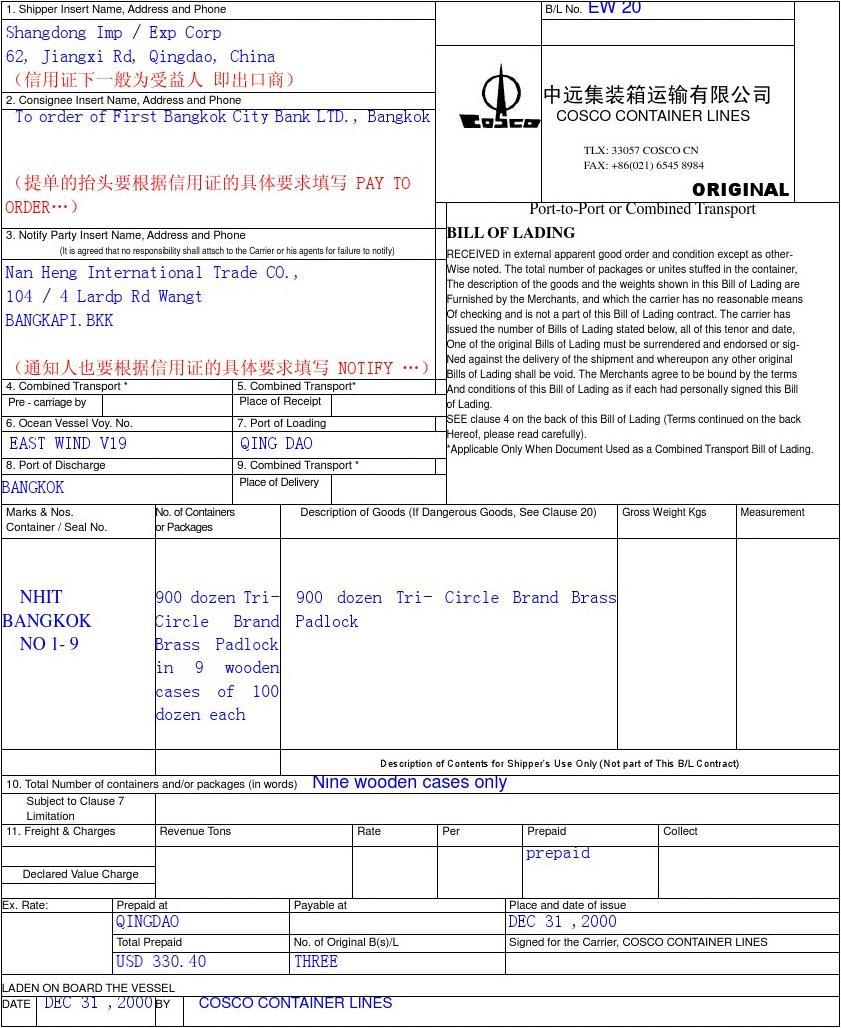
⦁ It is a document given by a shipping company
⦁ representing both a receipt for the goods shipped and a contract for shipment.
⦁ giving to the holder or the assignee the right to possess the goods.
是船方或其代理人签发,证明已收到货物,允许将货物运至目的地,并交付给收货人的书面凭证。
是承运人和托运人之间的契约证明,在法律上具有物权证书的效用。
5.3.1 Functions of bill of lading
three important functions:
a. receipt for goods signed by the shipping company and given to the shipper
轮船公司签发并给发货人的收据
b. evidence of a contract of carriage between the shipping company and the shipper
轮船公司与托运人之间的合同证明
c. document of title because the legal owner of the B/L is the owner of the goods.
证明货物所有权的单证
5.3.2 Contents of Bill of Lading
⦁ A bill of lading doesn't only contain a full description of the goods.
⦁ It quotes the name of the shipper and the carrying vessel, the ports of shipment and destination, the freight rate, the name of consignee, and the date of shipment.
⦁ It may also contain other terms and conditions.
5.3.3 Classification of Bill of Lading
According to whether there are notes on the B/L, it falls into two kinds:
⦁ Clean B/L 清洁提单
the goods have been shipped in good order and condition, no modification of the ship-owner.
⦁ Foul(Unclean) B/L 不清洁提单
generally marked “insufficiently packed”, “covers old and stained”, “wet by rain”, “packed in damaged condition”, “unclean”, “foul”, etc.
According to whether the goods are loaded or not, classified into two kinds:
⦁ On board B/L 已装船提单
the goods have been loaded on board a certain steamer.
⦁ Received for shipment B/L 备运提单
the goods have been received, waiting for shipment but have not yet been actually loaded.