Major contents:
Understand six sub-systems of the System
Six Sub-systems of IL System 国际物流系统的构成(六个子系统):
Transportation 运输
Warehousing 仓储
Packaging 包装
Material Handling 物料运输
Inspection and Customs Declaration 检验报关
Information Management 信息管理
2.2.1 Transportation sub-system
子系统的作用
Transportation: the physical movement of goods from origin to consumption. 货物流动
Transport plays an essential role. 重要角色
Goods or materials are transported from areas of low utility to areas of high utility. -- value is added to the products. 提供附加价值
It is a work of strong timeliness, wide involved aspects, long distance and complicated processes and risks. 及时、广泛、远距离、复杂
Eight major forms of transportation:
Marine transport (Ocean shipping) 海运
Railway transport 铁路
Airway transport 航空
Road transport 公路
Pipeline transport 管道
Postal transport 邮件
(航空信封)
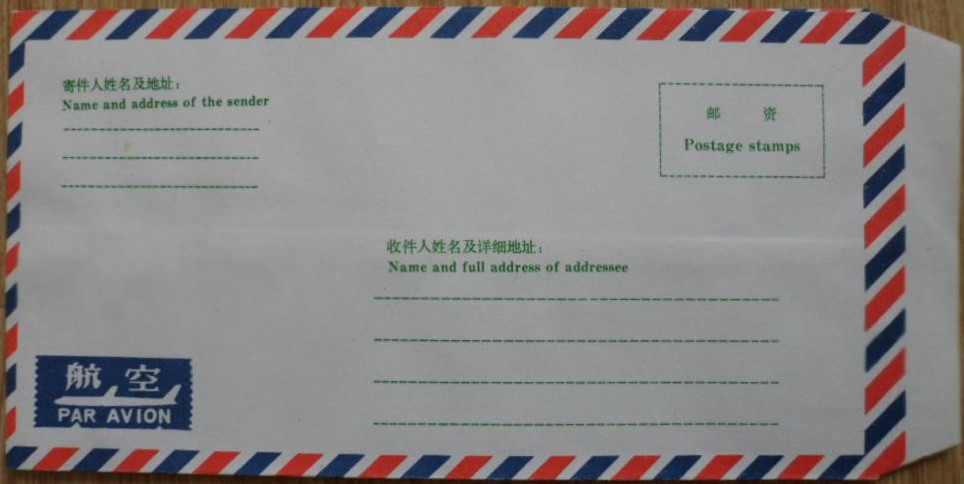
(普通信封)

Inland waterway transport 内陆水域

International combined transport 国际多式联运
(1) Marine Transport
• the most widely used form of transportation in international trade; the most efficient form in terms of energy. 运用广泛,高效
• a cheap modes of transport for delivering large quantities of goods over long distance. 节约
• foreign trade transport is mostly (over 2/3 of in volume) done by ocean vessels. 主要方式
• can be divided into liners and charters.
(2) Railway Transport
Advantages: relatively high speeds with large quantities, safe, at low cost, punctual, economical and less influent by weather.
相对高速、大量、安全,低成本,守时,经济,受天气影响小
(3) Airway Transport
the quickest mode, low risk 快速 低风险
suitable for of time pressing (fresh goods), small quantity with urgent need, but light and precious, etc. 生鲜、紧急需求
the most expensive mode, the limited capacity of air freight 昂贵,运量小
air transport can be divided into :
Scheduled airliner 班机运输 liner
Charted carrier 包机运输 charter
Consolidation 集中托运
Air express 航空快递
(4) Road Transport
ship in and out at the border
Door to door 门到门
Very flexible 灵活
(5) Pipelines Transport
transporting crude oil and gases etc. 运输石油、原油、天然气
long distances over land and under the sea. 长距离跨陆地海洋
an attractive economical alternative. 经济
Safety in transferring flammable 安全
(6) Postal Transport
the seller delivers the parcel to the post office, pays off the postage, and gets the receipt.
The post office delivers the goods
the consignee goes to the post office to pick up goods.
a. Regular mail; b. Air mail.
(7) Inland waterway transport
• an important component of water transport 水运的重要组成部分
• linkage between inland area and costal area 连接内陆和大洋
(8) International Combined Transport
• Explanation: includes at least two modes of transport
• the container is used as an inter-medium
• joint transport mode by sea, air and land
Decision on transportation mode
国际物流对运输方式的选择主要考虑:
(1)Cost(运输成本):据统计,在外贸的价格中,物流费有时可占出口货价的30%~70%。一般而言,海运成本低于陆运成本,但如果海运有大迂回则选用大陆桥在运载成本方面有一定的优势。
(2)Speed(运行速度):国际物流速度也很重要,主要有两个原因,一是运距长,需时日较多,资金占用时间长,加快速度有利于解放占用的资金;另一原因,是市场价位,由于速度慢错过了好的价位使经济效益下降。
(3)Cargo features(货物的特点及性质):货物特点及性质有时对物流方式选择起决定作用。经常是由于国际物流方式的限制,有些货物无法进入国际物流中而失去了市场时机。
(4)Quantity(货物数量)。由于国际物流距离长,使大数量货物运输受到了限制,因为国际货物流通距离往往超出了汽车等运输工具的经济里程,大数量货物也不可能选择航空运输,因为航空运输不具备那样大的运输能力,更不用讲价格了。
(5)Logistics infrastructure(物流基础设施条件):由于国家之间发展的不平衡,一个国家中可以选择的物流方式,到另一个国家便不能采用,原因是另一个国家缺乏这种方式的必要基础设施。在选择时,如不考虑这个问题,是无法形成有效的物流通渠道的。
2.2.2 Warehousing sub-system
function: overcome the time differentials that exist between producers and consumers; create time utility. 时间效用
warehousing and transportation are two pillar links. 重要支柱
also include a series of logistical work such as processing, sorting, packing, marking, assembling… 包含一系列工作
warehousing 和 distribution center
Trend: the storage of goods in bonded warehouses has become main form 保税仓
A bonded warehouse, in which dutiable goods may be stored and manipulated without payment of duty. 先操作后交税
Many foreign firms use bonded warehouse to cut down costs of customs duties. 降成本
仓储作业子系统的意义:
物流中的仓储作业主要是克服商品使用价值在供需时间上的差异,从而创造商品的时间价值。国际物流仓储同国际物流运输一样,都是国际贸易和国际物流不可缺少的环节。国际物流仓储不仅包括对外贸商品的储存保管,而且还包括出口加工、拣选、整理、包装、刷唛、备货、组装、配送和发运等一系列工作。
国际物流仓储子系统中的储存、保管和加工等作业使商品在其流通过程中处于一种相对停滞状态,这是因为外贸商品的流通是一个由分散到集中,再由集中到分散的源源不断的流通过程。如外贸商品从生产厂或供应部门被集中运送到装运出口港(站、机场),以备出口,有时需临时存放一段时间,再装运出口,是一个集和散的过程
近年来,保税仓库存储作业已经成为国际物流仓储的主要形式。由于服务性强以及灵活性大,保税仓库对于促进国际贸易以及加工贸易的发展起到了很重要的作用。保税仓库是经海关核准的专门存放保税货物的专用仓库。特定的进口货物,在进境后尚未确定内销或复出的最终去向前,可以暂缓缴纳进口税,在保税仓库内存储,并进行包装、分级分类、加刷唛码、分拆、拼装等简单加工,不得进行实质性加工。因此,很多外国企业利用保税仓库来进行货物存储以降低关税和存储费用。
2.2.3 Packaging sub-system
Definition:
packaging is the technology of enclosing or protecting products. 密封和保护产品
It is an integral link of logistics. It’s the final point of production and the starting point of logistics. 是产品的终点和物流的起点
2.2.3 Packaging sub-system (P21)
Purpose:
Its basic purposes is to protect the product; 保护产品
to make the product look appealing to the buyer; 吸引顾客
Other common purposes are to provide information about the product, make it easy to carry, and provide convenience in using. 提供便利
2.2.4 Material Handling Systems
Definition:
short distance transfer of goods.
the vital linkage between warehousing and transportation operations. 连接仓库和运输
major function: is to ensure the continuity of storage and transportation. 保证储存和运输的连续性
is of great importance for accelerating international logistics process and cutting down logistics costs. 增速、降费
(including loading and unloading, receiving, moving and transferring, checking, re-packing, etc., )
装卸搬运子系统的意义:
装卸搬运是指短距离的商品搬移。尽管它是物流系统中的辅助性业务环节,但却是仓库作业和运输作业的重要桥梁和纽带。
它的主要功能是保证商品运输和保管的连续性。搞好商品的装船,卸船,商品进出库以及在库内的搬移、清点、换装等装卸搬运作业,对于加快国际物流进程以及降低物流成本有着非常重要的意义。
2.2.5 Inspection and Customs Declaration Subsystem
Inspection and Customs Declaration are two special operations of international logistics.
Purpose:
1. to guarantee that quality and quantity of delivered goods and packaging conditions;
2. goods go through customs declaration in order to safeguard its political, economic and cultural interests.
The commodities shall be checked and released only by customs.
2.2.5 Inspection and Customs Declaration Subsystem
检验和报关是国际物流中的两大特殊环节。一方面,为了确定交货品质、数量和包装条件等是否符合合同规定,在国际贸易买卖合同中,一般都订有商品检验条款。
国际物流往往跨越关境的物品流通,为了维护国家政治、经济、文化利益,各国海关都对进出口货物实施必要的监督管理。在我国,海关一律凭报关地检验检疫机构签发的通关单验放货物。
2.2.6 Information Management Subsystem
Purpose:
Information reflects the real state of international logistics activities
• Importance: it serves as the basis of organizing, coordinating and controlling logistics activities.
• It contains various types of information.
• Main functions: to collect, store and process information in all stages.
• Requirement: Accurate and timely information transfer is the cornerstone.
信息管理子系统的意义:
国际物流信息是国际物流活动的反映,也是组织、调节和控制国际物流活动的依据。其主要内容包括进出口单证的作业过程信息、支付方式信息、客户资料信息、市场行情信息和供求信息等。
国际物流信息子系统的主要功能是采集、存储和管理国际物流和商流的信息情报。准确而及时的信息传递是国际物流管理的重要基石。
随着国际市场竞争的日趋激烈,世界各国日益加强了对国际物流系统中信息流的管理,把提高信息管理水平作为提高国际物流服务水平和降低国际物流成本的长期发展战略。目前,已应用于国际物流系统的信息技术主要有电子数据交换、条形码技术和全球卫星定位系统等。

