酒店英语

刘海林

目录

  • 1 Chapter 1 Front Office
    • 1.1 An Introduction to Hotel Industry
    • 1.2 Reservation
    • 1.3 Check-in
    • 1.4 Front Desk
    • 1.5 Supplementary reading
      • 1.5.1 5 Customer Experience Strategies That Will Make Your Business Conversion Friendly
      • 1.5.2 13 Customer Service Tips You Should Practice
      • 1.5.3 5 Best Practice Tips for your Company’s Internal Communication Strategy
      • 1.5.4 TAKING THE EXTRA STEP TO DELIVER AMAZING SERVICE
      • 1.5.5 Another Way to Amaze Your Customers: Pay Attention
  • 2 Chapter 2 Housekeeping
    • 2.1 Supplementary reading
      • 2.1.1 2020 U.S. hotel forecast slightly upgraded; full recovery still unlikely until 2024
      • 2.1.2 Fewer Americans Traveling This Thanksgiving Amid Pandemic
  • 3 Chapter 3 Food and Beverage
    • 3.1 Supplementary reading
      • 3.1.1 What Skills Does a Culinary Arts Professional Need?
  • 4 Hotel Revenue Management
    • 4.1 An Overview of Hotel Revenue Management
    • 4.2 Necessary Conditions for Revenue Management
    • 4.3 Revenue Management Evaluation Guide
    • 4.4 Where Can You Apply It
    • 4.5 An Implementation Overview
    • 4.6 Measuring Revenue
    • 4.7 Redefining Duration
    • 4.8 Reducing Duration Uncertainty
    • 4.9 Variable Pricing
    • 4.10 What Prices Will You Charge
    • 4.11 Who Pays Which Price
    • 4.12 Component Parts of Implementation
    • 4.13 Managing Revenue in Other Industries
    • 4.14 Thank You and Farewell
  • 5 Hello China 专辑
    • 5.1 1 Introduction to China
    • 5.2 2 Ni Hao An Introduction
    • 5.3 3 Confucius and Chinese philosophy
    • 5.4 4 Sun Tzu   The Ultimate Master of War
    • 5.5 5 Lao Tzu   Father of Chinese Philosophy
    • 5.6 6 Sun and Chinese solar terms
    • 5.7 7 Moon and its significance in Chinese culture
    • 5.8 8 Chinese Lunar Calendar
    • 5.9 9 The Chinese compass and explorer Zheng He
    • 5.10 10 Gunpowder   An explosive Chinese invention
    • 5.11 11 Paper   Chinese inventions
    • 5.12 12 Invention of printing
    • 5.13 13 Peking opera   An introduction
    • 5.14 14 Traditional Chinese painting   Water, ink and poetry
    • 5.15 15 Chinese frescoes   Ancient artworks
    • 5.16 16 Dance brings Chinese people together
    • 5.17 17 Chinese music and its natural origins
    • 5.18 18 Traditional Chinese chime bells   Bianzhong
    • 5.19 19 Gu Qin   Chinese musical instrument
    • 5.20 20 Calligraphy   The ancient art of expression
    • 5.21 21 Chinese writing brush   Calligraphy
    • 5.22 22 Journey to the West   Chinese novel
    • 5.23 23 Bamboo in Chinese culture
    • 5.24 24 Dragons   A Chinese symbol of power
    • 5.25 25 Phoenix   King of birds
    • 5.26 26 Kung Fu   The Oriental martial art
    • 5.27 27 Tai chi chuan   Internal Chinese martial art
    • 5.28 28 Chinese sword   Jian
    • 5.29 29 Traditional Chinese medicine   TCM
    • 5.30 30 Acupuncture and Moxibustion TCM   Acupuncture, which is called zhen jiu in Chinese, is a medical treatment that originated in China. Zhen means “needles that pierce one’s body”. Jiu means ‘moxibust...
  • 6 Hello China 专辑2
    • 6.1 31 Spring Festival and its colourful traditions
    • 6.2 32 Qingming Festival
    • 6.3 33 Dragon Boat Festival and its tragic origins
    • 6.4 34 Qixi Festival   Chinese Valentine's Day
    • 6.5 35 Mid-Autumn Festival   An introduction
    • 6.6 36 Water-Splashing Festival   Love and luck
    • 6.7 37 Animals of the Chinese zodiac
    • 6.8 38 Feng Shui   A system of ancient Chinese knowledge
    • 6.9 39  Chinese Lion Dance An introduction
    • 6.10 40 Door Gods   Menshen
    • 6.11 41 Chinese wedding customs
    • 6.12 42 Chinese Cupid   The Matchmaker
    • 6.13 43 Chrysanthemums in Chinese culture
    • 6.14 44 Chinese etiquette   Respect for nature
    • 6.15 45 Number one Chinese scholar   Zhuangyuan
    • 6.16 46 Welcome to Beijing   Chinese capital
    • 6.17 47 Great Wall of China   An introduction
    • 6.18 48 Forbidden City   Chinese imperial palace
    • 6.19 49 Temple of Heaven Beijing
    • 6.20 50 Xi'an   Ancient Chinese capital
    • 6.21 51 Terracotta Warriors
    • 6.22 52 Yellow River The Mother of China
    • 6.23 53 West Lake The pearl of Hangzhou
    • 6.24 54  Chinese gardens
    • 6.25 55 Three Gorges Yangtze River
    • 6.26 56  Dujiangyan Irrigation Dam  Sichuan Province
    • 6.27 57 Mount Tai A UNESCO World  Heritage Site
    • 6.28 58 Thousand Buddha Grottoes Dunhuang
    • 6.29 59 Shaolin Monastery Home to  kung fu
    • 6.30 60 Dumplings and the Chinese family
  • 7 Hello China 专辑3
    • 7.1 61 Beijing Roast Duck   A culinary experience
    • 7.2 62 Tanghulu   A traditional Chinese snack
    • 7.3 63 Hotpot   Chinese food
    • 7.4 64 Tofu   Vegetarian meat
    • 7.5 65 Chinese alcoholic drinks
    • 7.6 66 Noodles   Chinese food
    • 7.7 67 Fish   A Chinese cultural symbol
    • 7.8 68 Legend behind Chinese ethnic groups
    • 7.9 69 Chinese names   An introduction
    • 7.10 70 Chinese family values
    • 7.11 71   Courtyard Uniting Chinese families
    • 7.12 72 Hutong   Chinese alleyways
    • 7.13 73 Tulou Building
    • 7.14 74  Chinese tea An introduction
    • 7.15 75 Chopsticks Chinese food
    • 7.16 76 Papercutting An introduction
    • 7.17 77  Chinese silk and its ancient beauty
    • 7.18 78  Porcelain Ware
    • 7.19 79 Jade More valuable than gold
    • 7.20 80 Money Chinese history
  • 8 Hello China 专辑4
    • 8.1 81 Chinese lantern customs
    • 8.2 82 Kites in Chinese folklore
    • 8.3 83 Shadow Puppetry A Chinese folk art
    • 8.4 84 Batik Chinese wax dyeing
    • 8.5 85  Chinese brocade
    • 8.6 86 Cheongsam fashion
    • 8.7 87  Tang Suit Chinese fashion
    • 8.8 88  Chinese fan
    • 8.9 89 Chinese abacus
    • 8.10 90 Giant panda A Chinese symbol  for peace
    • 8.11 91  Magpie The lucky bird
    • 8.12 92 Chinese Characters Introduction
    • 8.13 93 Contradiction A Chinese tale of  swords and shields
    • 8.14 94  Carelessness Chinese language
    • 8.15 95 Why ‘drinking vinegar’ means jealousy
    • 8.16 96 Bosom Buddy
    • 8.17 97 Things Chinese language
    • 8.18 98 Baobei A precious Chinese word
    • 8.19 99 Numerals Chinese Dao philosophy
    • 8.20 100 Ru Yi From back scratcher to lucky Buddhist scepter
90 Giant panda A Chinese symbol  for peace


90

Giant panda A Chinese symbol for peace


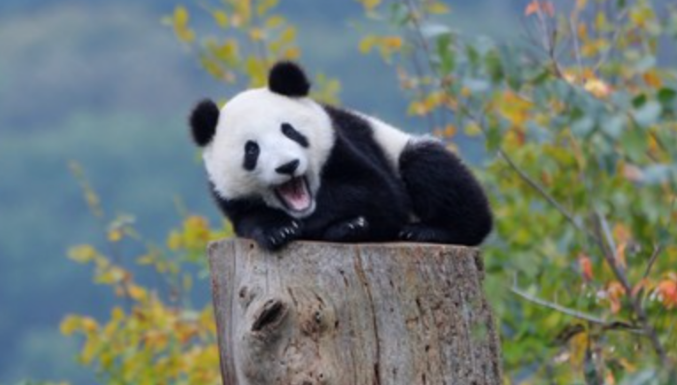
“I’m a panda, xiong mao, the national treasure of China.”“I like to be alone just like a drifter.”“Mmmm, bamboo is my favorite food!”“Our family has lived on the earth for more than a million years.”

At first, we lived on wheat. Later, we ran out of food with a tremendous change of the temperature on earth. We survived on bamboo.Now xiong mao are one of the most endangered species.We are regarded as beasts for peace because we feed on bamboo instead of other animals.

“A truce was agreed whenever the flags printed with images of xiong mao were raised 1,700 years age.”“These flags represent peace and friendship and both side of the war would stop fighting.”“Now we’re know far and wide, and we’re often sent abroad as gifts”

“There are only around 1,000 xiong mao remaining in our family all over the world.”“We hope that people will offer more protection for animals.”