
Lead-in Questions
1. Share one of your stories about your most respected teacher with the class and tell the reasons for your admiration for him/her.
2. In addition to transmitting knowledge, what do your think are the teacher’s other responsibilities?
(Text 1I) An Educator’s Moral Responsibility
1. It happens to me often. I read newspaper articles about violent crime, see the ravages of inhumanity on the evening news, and hear sound-bites on the radio describing cruelty and in tolerance. It becomes difficult, sometimes impossible, for me to push from my consciousness thoughts about the danger and the hostility of the world in which we live. I worry, particularly, about the effects on our children ofour own society, a society that is less safe and less hospitable than the one I experienced as a child growing up during the 1950’s and 1960’s.
2. In many school districts throughout thecountry, there is already compelling evidence that adolescents have been affected negatively by changing social conditions, including by what many Americans believe to be a decline of basic human values. Parents and teachers must contend often with disturbing levels of adolescent aggression, profanity, and disrespect. We are fortunate that most students at New Fairfield High School are respectful, considerate, and tolerant of differences among their peers. I am proud ofthe majority of our students’ behavior and, generally, pleased with the social climate of our school. There are, however, some students at our school who display antagonistic attitudes and behave inappropriately. Some students are insensitive and unkind to their classmates, discourteous to adults, and quick to express their anger by raising their voices or by using profanity.
3. It is the responsibility of parents to teach their children to be polite, courteous,and forbearing. It is one of their most fundamental responsibilities to impart to their children the values of integrity, decency, and respect for others. Teachers and school administrators should never become, however, ethical bystanders. If we wish to realize our school district’s philosophy not only to educate our students but also to encourage them to accept the innate worth of every human being, we must not surrender the ideal of maintaining a moral community at New Fairfield High School, where all people have an obligation to be polite and tolerant of individual differences.
4. Some individuals believe that school personnel should not interfere with the behavior of students unless it is directly related to learning or affects the safety of individuals who are inside the school building or somewhere on campus. Not long ago Idisciplined a student for using an extremely offensive profanity in addressing another student in the main lobby of the school. When I described the incident to the student’s parent, I was told by the parent that the student’s choice ofwords did not hurt anyone, and that I was too strict and had to change with the times. The conviction of the parent was that I should be busy with more important things rather than finding fault with an adolescent’s vocabulary.
5. The parent’s response disappointed me, but I was equally disturbed by the reaction of a friend to whom I recounted the incident. In essence, his response was, “What can you do? You can’t teach values anymore.” I recognize that there is pervasive concern among parents thattheir prerogatives to raise their children and to teach them proper values are sometimes interfered with by people outside thefamily or by other outside influences. I understand this concern. It is neithereducators’ responsibility nor their right, for example, to promote among students political ideology or religious principles. But good teachers and administrators do teach values, not personal, private values but common values of courtesy, mutual respect, persistence, responsibility, and self-reliance. Ideally, competent educators affirm socially responsible values taught at home.They should demand appropriate vocabulary and good manners. They should remind students to say “please” and “thank you” and remind them not to interrupt when others are speaking. It is very much the responsibility of teachers and administrators to promote New Fairfield’s traditions of proper behavior and good sportsmanship. As a principal, I expect to be judged by the moral and ethical climate of our school. All the academic improvements of New Fairfield High School notwithstanding, I would neverconsider myself a successful educator unless our students graduated not only as successful learners but also as ladies and gentlemen.
Notes
1. sound-bites (Paragraph 1): short sentences or phrases that are easy to remember, often included
in a speech made by a politician and repeated in newspapers and on television and radio
2. for me to push from my consciousness thoughts about the danger (Paragraph 1): for me to stop thinking about thedanger
3. adolescents (Paragraph 2): A very young child is a baby or more formally an infant. A child who has just learned to walk is atoddler. People aged 13 to 19 are teenagers and a younger teenager may also be called an adolescent. An adult is afully-grown person over an age stated by law, usually 18 or 21.
4. profanity (Paragraph 2): "Profanity" shows a lack of respect for a god or a religion,e specially through language. Here it refers to offensive language used by somestudents.
5. peers (Paragraph 2): persons of thesame age, class, position, etc., as oneself
e.g. The opinions of his peers are more important to him than his parents.
Peer pressure is a great influence on the way people behave.
6. ethical bystanders (Paragraph 3): people who watch sth. that is happening, but do not want to say whether they think it is right or wrong in human behaviour
7. the innate worth of every human being (Paragraph 3): the value that every human being is born with
8. … I should be busy with more important things rather than finding fault with …(Paragraph 4): Note the use of the-ing form after rather than, which joins two -ing forms.
e.g. He likes starting early rather than staying late.
However, when two infinitive structures are joined by rather than, the second infinitive is usually without "to".
e.g. Rather than wait any more, I decided to go home by taxi.
9. prerogatives(Paragraph 5): rightsor privileges exclusive to an individual or class
e.g. Our company exercises our prerogative to employ people according to their ability, but not according to the number of certificates they have.
10. notwithstanding (Paragraph 5): in spite of the fact or thing mentioned. It is apreposition used either before or afterits object. It is usually used in formal language.
e.g. They are determined to go ahead with the plan, widespread public opposition notwithstanding.
The plane landed on time, notwithstanding the terrible weather conditions.
Questions for Discussion
1. What worries does the author express at the beginning of the article?
2. What evidence does the author provide to prove that basic human values are declining?
3. Do parents and school educators agree with each other concerning the responsibility for the moral education of the children? If not, how do they disagree?
4. Apart from lack of responsibility, do you think that the author is also criticizing some parents’ attitude towards the teacher? Cite an example to prove this.
5. What values does the author think should be taught to students?
6. What is the author’s conception of a successful educator?
7. What are your ideas of an educator’s moral responsibility?
Key to Questions for discussion
1. He worries about the negative effects of violent crime, the ravages of inhumanity, cruelty and in tolerance, etc. on our children.
2. Parents and teachers must contend often with disturbing levels of adolescent aggression, profanity, and disrespect.
3. Someparents think they are solely responsible for the moral education of their own children, and they do not want any outside interference. But educators, withthe author as a representative, think teachers and school administrators should never become ethical bystanders.
4. Yes. For instance, a student’s parent told the author that the words his/her childhad used did not hurt anybody and that the author was too fussy about the child’s vocabulary.
5. The author thinks that students should be taught common values of courtesy, mutual respect, persistence, responsibility, and self-reliance.
6. An educator can be considered successful only when his students graduated not only as successful learners but also as well-behaved citizens.
7. (This is an open question.)
Memorable Quotes
Compare the following quotes with the ones given by the textbook and analyze what do they have in common.
"A man's own manner andcharacter is what most becomes him."
–Marcus T. Ciccro
"Consideration for others isthe basic of a good life, a good society."
– Confucius
Guidance: Good manners show respect, care, and consideration. If you practice good manners, you are showing those around you that you are considerate of their feelings. You are also setting standards for others' behavior and encouraging them to treat you with similar respect.
1. Manners must adorn knowledge and smooth its way through the world.
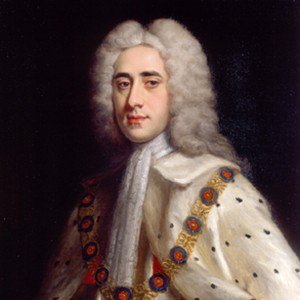
—Philip Dormer Stanhope
Paraphrase: Knowledge can not do without manners and can spread through the world in a easier way with the helpof manners.
smooth one’s way: to make it easier forsb./sth. to develop or make progress
e.g. Some parents believe that a diploma from the prestige university would smooth the way to better job and higher salary.
2. Civility costs nothing and buys everything.

--Mary Wortley Montagu
Paraphrase: Having good manners to others cost you nothing but can help you get everything.
civility: (fml) polite behavior, courtesy
e.g. Family education plays a pivotalr ole in fostering civility.

