

Lead-in Questions
1. Is it the father or mother who plays a more important role in building up a child?
2. What do you think are the benefits of having one parent stay at home to care for the children?
(Text II)
Changing Roles: Stay-at-Home Dads
1. British mechanic Neil Walkingshaw was looking for a way to care for his newborn child when he approached his boss with a proposal in early 2000. Reluctant to hire a babysitter once his wife’s maternity leave ended and she returned to work, Walkingshaw asked if he could switch to part-time hours in order to spend half of each day at home looking after his son. His employer refused, saying the paperwork would be “to messy” and that it would be difficult to get anyone to share Walkingshaw’s job. Knowing that the company he worked for had granted similar requests to female employees,Walkingshaw sued on the grounds of sex discrimination.On November 20, 2001, an industrial tribunal ruled that Walkingshaw had been discriminated against and awarded him £3,600. The ruling is believed to be the first of its kind, and demonstrates just how much views on parental roles have changed over the years.
2. As little as thirty years ago, few people questioned the gender roles that had prevailed for centuries. The conventional wisdom was that a woman’s place was in the home and that a man’s main responsibility was to put food on the table.In the 1970s and 1980s, however, greater numbers ofworking women meant that men were no longer the sole breadwinner. A father’s emothinal involvement with his family also became more important. Fifty years ago, almost no husbands were present in the delivery room when their wives gave birth. Today, it is generally expected formale partners to attend childbirth classes, be there for the delivery, and to make more responsibility for child rearing than their fathers or grandfathers did.
3. In addition to society the role men play in relation to childcare, social scientists are also re-examining the contribution a father makes to his child’s welfare and development. Researchers have found evidence to suggest that a father plays a role in child development that is quite different from that of the mother. According to the research, fathers tend to be more playful, thus encouragingc hildren to develop in a different way emotionally and physically than a child might under a mother’s exclusive care.
4. Studies have also found that the presence of the father in the home can contribute to lower juvenile crime rates, a decrease in child poverty, and lower rates of teenage pregnancy.Differences in parenting styles between men and women are also believed to contribute to children’s ability to understand and communicate emotions in different ways. The research supports claims by some groups that the absence of a father in the family is the single biggest social problem in modern society.
5. In recent years, organizations like the US-based National Fatherhood Initiative have begun to argue that the presence of the father is vital to a child’s development. These organizations aim to encourage fathers to take a more active role in their children’s lives. The movement also calls for the creation of a new image of fatherhood, one that goes beyond the traditional view of the father solely as provider, and also includes the equally crucial roles of nurturer, moral example, disciplinarian, and teacher.
6. Many family experts believe that the abilityof a family to raise well-adjusted children has much to do with a society promoting healthy families. If this theory is true, and if the father’s role is as important as mother’s in raising children, it’s possible to imagine a day when society will value the role of the father more, and when all men will learn to take their paternal duties as seriously as Neil Walkingshaw.
Notes
1. babysitter (Paragraph 1): a babysitteris one who temporarily takes care of a child on behalf of the child’s parents.
2. maternity leave (Paragraph 1): time that a mother is allowed to spend away from work when she has a baby
3. part-time hours (Paragraph 1): working less than the normal hours, perhaps by working fewer days per week
4.... the paperwork would be “too messy”…(Paragraph 1): … switching to part-time hours would involve tasks such as filling in forms, keeping files up to date, or writing reports and letters which are complicated and unpleasant to deal with …
5. ... Walkingshaw sued on the grounds of sex discrimination.(Paragraph 1): … Walkingshaw took legal action against the company for treating him differently because of prejudice.
6. an industrial tribunal (Paragraph 1): acourt which judges disagreements between workers and their employers
7. The ruling is believed to be the first ofits kind, and demonstrates just how much views on parental roles have changed over the years. (Paragraph 1): This official decision is said to be the first case of its category, and shows how greatly opinions of parental roles have altered in recent years. Attention should be paid to that fact that the word much in the sentence is not an adjective modifying the noun views, but an adverb in the meaning of a great deal modifying the verb changed.
8. As little as thirty years ago, few people questioned the gender roles that had prevailed for centuries. (Paragraph2): Only thirty years ago, few people expressed doubts about general beliefs ofthe social functions performed by males and females that had been widely held for centuries.
9. The conventional wisdom was that a woman'splace was in the home and that a man's main responsibility to his family was to put food on the table. (Paragraph 2): A belief most people held was that a woman should play the role of a housewife or homemaker, and a man a bread-earner.
10. A father’s emotional involvement with his family also became more important. (Paragraph 2): It was also getting more important that a father should have stronger emotional links with his family.
11. … fathers tend to be more playful,… (Paragraph3): … fathers tend to be active, and more capable of providing fun for the child, …
12. ... under a mother’s exclusive care: taken care of by the mother only
13.... the presence of the father in the home can contribute to lower juvenile crime rates, a decrease in child poverty,and lower rates of teenage pregnancy. (Paragraph 4): With the father in the home, young people can be helped to prevent against legal offense and sexual misbehavior that might result in chance pregnancy.
14. National Fatherhood Initiative (Paragraph 5): The National Fatherhood Initiative is a US-based non-profit,non-partisan organization that aims to improve the well-being of children through the promotion of responsible fatherhood. It was launched on 7th March,1994 by Don Eberly, a former George H.W. Bush advisor and civil society scholar and Wade F. Horn, a child psychologist.
15. The movement also calls for the creationof a new image of fatherhood, one that goes beyond the traditional view of the father solely as provider, and also includes thee qually crucial roles of nurturer, moral example, disciplinarian, and teacher. (Paragraph 5): According to the movement, the traditional view on the role of the fathers hould change. He should support his family, devote his time to child rearing, set an example for his children, discipline them and teach them knowledge and skills.
16. well-adjusted children (Paragraph 6): children who are emotionally healthy and able to deal well with the problems of life
Questions for Discussion
1. What was the traditional view on the roles of men and women?
2. What does Walkingshaw’s case imply about the problem with children?
3. What are society’s changing views of the role of men play in relation to childcare?
4. According to the passage, what do children need most from their fathers?
5. What can we conclude from the passage about the father’s role in child rearing?
Key to Questions for discussion
1. Traditionally, Western civilization viewed a woman as a wife and mother whose place should be in the home and a man the sole wage-earner of the family.
2. Many women decide to get jobs because of financial need or to achieve freedom from women’s traditional roles of child rearing and housework. So many families no longer have an adult at home during the day, and the demand for childcare has risen.
3. People are re-thinking men’s values and their role in family life. They should be more active in the care of children and the home.
4. What kids need most from their father is probably his simple presence with the live and time for children. Mutual trust and unconditional love are still the keys to successful child rearing.
5. (Open to discussion.)
Memorable Quotes
Read the following quotes and identify the relationship between blessing and bother, childhood and man, morning and day.
Guidance: Chinese old saying goes, “An hour in the morning is worth two in the evening, and a year's plan starts with spring.” The morning is as important to the dayas the childhood to the man. If one does not exert oneself in youth, one will regret it in old age.
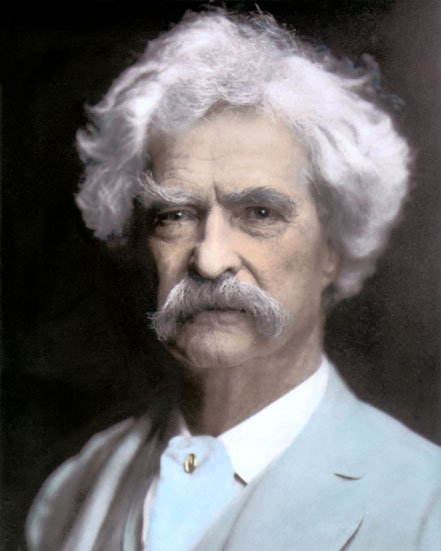
1. A baby is an inestimable blessing and bother.
— Mark Twain
Paraphrase: Bringing up a babytakes very great efforts, which will bring enormous happiness at the same time.
inestimable: impossible to estimate or calculate
e.g. What he said at my birthday party serves as an inestimable gift for all my life.
2. The childhood shows the man, as morning shows the day. 
— John Milton
Paraphrase: An anticipation of the adult’s future features can be discerned with the present character of a child. The same is true with the anticipation of the day which can be told by what the morning is like.
as: used as conjunction here to say the way in which sth. happens.
e.g. Books are important to the mind, as water is to the fish.
Further Enhancement of English Writing (写作巩固提高训练)
1、 英语微课视频:
Achieving Emphasis in Writing
(在写作中表达强调)
2、 课前自主学习任务单 & 教学视频规划说明 & 课堂学习任务单
3、 课前自主学习与课堂互评中可参考的微课知识点清单
4、微课课后任务及参考答案
5、微课配套学习资源

