

Lead-in Questions
1. What kind of weird jobs do you know that people can make a living at?
2. Do you find those jobs appealing? Why or why not?
(Text 1I) The Laughter
Heinrich Böll
1. When someone asks me what business I am in, I am seized with embarrassment: I blush and stammer, I who am otherwise known as a man of poise. I envy people who can say:I am a bricklayer. I envy barbers, bookkeepers and writers the simplicity of their avowal, for all these professions speak for themselves and need no lengthy explanation, which I am constrained to reply to such questions: I am a laugher.An admission of this kind demands another, since I have to answer the second question “Is that how you make your living?” Truthfully with “Yes,” I actually do make a living at my laughing, and a good one too, for my laughing is—commercially speaking—much in demand. I am a good laugher, experienced, no one else laughs as well as I do, no one else has such command of the fine points of my art. For a long time, in order to avoid tiresome explanations, I called myself an actor, but my talents in the field of mime and elocution are so meager that I felt this designation to be too far from the truth: I love the truth, and the truth is: I am a laugher. I am neither a clown nor a comedian, I do not make people gay, I portray gaiety: I laugh like a Roman emperor, or like a sensitive schoolboy, I am as much at home in the laughter of the seventeenth century as in that of the nineteenth, and when occasion demands I laugh my way through all the centuries,all classes of society, all categories of age—itis simply a skill which I have acquired, like the skill of being able to repairshoes. In my breast I harbor the laugher of America, the laughter of Africa,white, red, yellow laughter—and for theright fee I let it peal out in accordance with the director’s requirements.
2. I have become indispensable; I laugh on records, I laugh on tape, and television directors treat me with respect. I laugh mournfully, moderately, hysterically; I laugh like a street car conductor or like a helper in the grocery business; laughter in the morning, laughter in the evening, nocturnal laughter and the laughterof twilight. In short: wherever and however laughter is required—I do it.
3. It need hardly be pointed out that a profession of this kind is tiring, especially as I have also—this is my specialty—mastered the art of infectious laughter; his has alsomade me indispensable to third- and fourth-rate comedians, who are scared—and with good reason—that their audiences will miss their punch lines, so I spend most evenings in nightclubs as a kind of discreet claque, my job being to laugh infectiously during the weaker parts of the program. It has to be carefully timed: my hearty, boisterous laughter must not come too soon, but neither must it come too late, it must come just at the right spot: at the prearranged moment I burst out laughing, the whole audience roars with me, and the joke is saved.
4. But as for me, I drag myself exhausted to the checkroom, put on my overcoat, happy that I can go off duty at last. At home I usually find telegrams waiting forme: “Urgently require your laughter. Recording Tuesday.” and a few hours laterI am sitting in an overheated express train bemoaning my fate.
5. Ineed scarcely say that when I am off duty or on vacation I have little inclination to laugh: the cowhand is glad when he can forget the cow, the bricklayer when he can forget the mortar, and carpenters usually have doors at home which don’t work or drawers which are hard to open. Confectioners like sour pickles, butchers like marzipan, and the baker prefers sausage to bread; bullfighters raise pigeons for a hobby, boxers turn pale when their children have nose bleeds: I find all this quite natural, for I never laugh off duty. I am a very solemn person, and people consider me – perhaps rightly so - a pessimist.
6. During the first years of our married life, my wife would often say to me: “Do laugh!” but since then she has come to realize that I cannot grant her this wish. I am happy when I am free to relax my tense face muscles, my frayed spirit, in profound solemnity. Indeed, even other people’s laughter gets on my nerves, since it reminds me too much of my profession. So our marriage is a quiet, peaceful one, because my wife has also forgotten how to laugh: now and again I catch her smiling, and I smile too. We converse in low tones, for I detest the noise of the night clubs, the noise that sometimes fills the recording studios. People who do not know me think I am taciturn. Perhaps I am, because I have to open my mouth so often to laugh.
7. I go through life with an impassive expression, from time to time permitting myself a gentle smile, and I often wonder whether I have ever laughed. I think not. My brothers and sisters have always known me for a serious boy.
8. So I laugh in many different ways, but my own laughter I have never heard.
Notes
1. Heinrich Böll (1917-1985) is a German novelist and Nobel laureate. Boll’s fiction is an uncompromising, yet compassionate, survey of modern Germany, depicting the absurdity of war and the dehumanization of theindividual.
2. I envy barbers, bookkeepers and writers the simplicity of their avowal,… (Paragraph 1):I am jealous of barbers, bookkeepers and writers, who can openlytell people what they are, … The verb "envy" can be followed by two objects: the direct object and the indirect object. The indirect object usually refers to a person, and often comes first.
e.g. I don’t envy you your journey in this bad weather.
However, the indirect object canalso be put after the direct object, with a preposition in between. This happens particularly when the direct object is much shorter than the indirect object, or when we want to lay special emphasis on the indirect object.
e.g. He envied Rosalind for her youth and strength.
avowal: (an) open declaration or act of admitting
e.g. She made (an) avowal of her ambition to be a movie star.
3. speak for themselves (Paragraph 1): show sth. so clearly that no explanation is necessary
e.g. The company has had a very good year: the figures speak for themselves.
4. the fine points of my art (Paragraph 1): the impressively detailed techniques of my laughing that requires great skill, talent, or precision
5. at home in (Paragraph 1): happy or confident about doing or using sth.
e.g. By the end of the week she was beginning to feel at home in her new job.
6. In my breast I harbor the laughter of America, the laughter of Africa, white, red, yellow laughter… (Paragraph 1): I have acquired the skill of imitating the laughter of people of different nationalities…
7. let it peal out in accordance with the director (Paragraph 1): The phrase peal out is “to say sth. loudly.” Here the author means that he laughs loudly according to the director’s requirements.
8. indispensable (Paragraph2):too important or useful to live without
e.g. A diving suit is a piece of equipment that modern divers regard as indispensable.
She is good but not indispensable for the team.
9. infectious laughter (Paragraph 3): Infectious laughter spreads quickly from one person to another.
e.g. Her giggles were infectious and soon we were all laughing.
10. punch lines (Paragraph 3): the last few words of a joke or story that give meaning to the whole and cause amusement or surprise
e.g. The punch line for the joke “How do you know an elephant has been inyour fridge?” is “You can see its footprints in the butter!”
11. claque (Paragraph 3): a group of people hired to givesupport by clapping at a performance
12. bemoaning my fate (Paragraph 4): complaining about my fate
13. marzipan (Paragraph 5): a sweet paste made of ground almonds and sugar, often with egg whites oryolks, used as a layer in cakes or molded into ornamental shapes
14. gets on my nerves (Paragraph 6): annoys me, esp. by repeatedly doing sth.
e.g. Her constant moaning really gets on my nerves.
Questions for Discussion
1. Why does the narrator envy such professions as bankers, bookkeepers and writers?
2. What does the narrator say about his talents in the field of mime and elocution?
3. What can we infer from the passage about the narrator’s occupation?
4. Why does the narrator mention the skill of repairing shoes?
5. Why are third- and fourth-rate comedians scared?
6. Why does the author bemoan his fate?
7. What change can you find in the author when he is off duty?
Key to Questions for discussion
1. He thinks that the nature of all these professions is easy to explain.
2. His talents in the field of mime and elocution are not good enough to meet the requirements of an actor.
3. He is a professional laugher, imitating the laughter of different kinds of people and of different occasions.
4. He wants to stress that skill comes from practice.
5. They do not feel at home in punch lines. As a result, their performance may fail to entertain its audience.
6. He feels sad because he cannot change or control the way that things will happen.
7. He goes back to normal, and in fact he feels happy because he does not have to play the laugher.
Memorable Quotes
What is science and art? Read the following quotes and analyze the significance of science and art to all of us.
Guidance: Science has discovered some ofthe wonderful knowledge about how the natural world works, the place of humans in the world, and the science-based technology on which modern civilization exists.Science follows truth, and truth is universal. Art is the expression without language, allowing individuals to relate to one another on human levels transcending nationality. Art is capable of bringing about understanding amongst people regardless of faith or nationality.
1. Books must follow sciences, not sciences books. 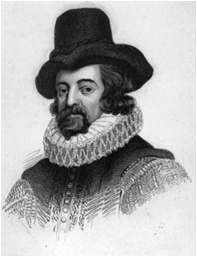
—Francis Bacon
Paraphrase: Books must follow truths themselves, not vice versa.
e.g. Not wanting to get lost in the city, I preferred to follow the guidebook.
2. Science and art belong to the whole world, and before them vanish the ba rriers of nationality.
—Johann Wolfgang von Goethe
Paraphrase: Science and art are universal, have no ethnic or cultural biase sand can be appreciated by all.
vanish: disappear completely
e.g. Some species of animals have now vanished from the earth.

